Spinosaurus Skull: Exploring the Iconic Theropod Fossil

Introduction to the Spinosaurus Skull
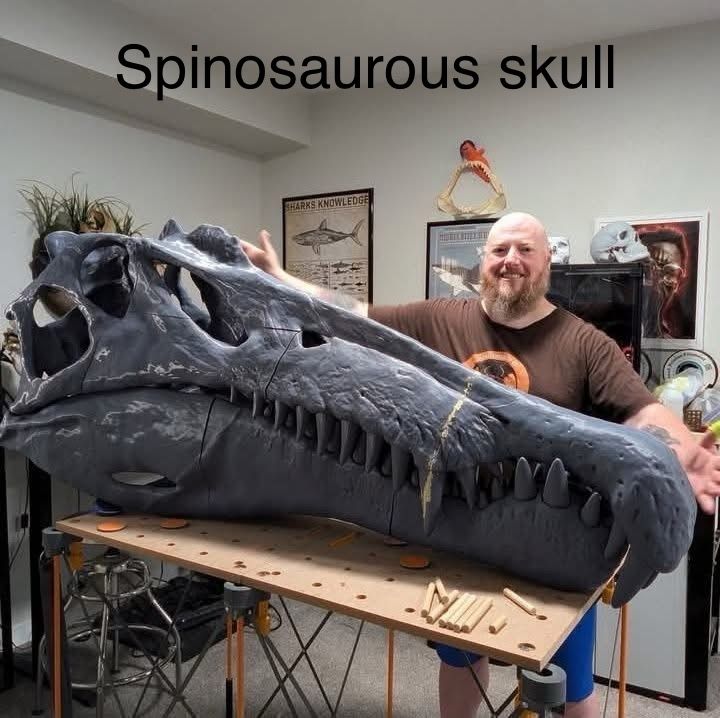
The image highlights an impressive Spinosaurus skull, a key feature of one of the most enigmatic theropod dinosaurs of the Cretaceous period, approximately 99–93 million years ago. Displayed on a workbench in what appears to be a workshop or research setting, this large, reconstructed skull showcases the unique morphology of Spinosaurus aegyptiacus, known for its elongated snout and conical teeth. The individual in the image, surrounded by tools and other fossils, suggests ongoing study or restoration work. This detailed guide, structured as a professional paleontological tutorial, delves into the anatomy, taxonomy, and ecological significance of the Spinosaurus skull, using the image as a foundation for educating enthusiasts and researchers about this semi-aquatic predator.
The skull’s prominent size—approximately 1.5–2 meters long based on visual scale—and its distinctive features make it a focal point for understanding Spinosaurus’s adaptations and lifestyle.
Taxonomy and Evolutionary Context
Spinosaurus is classified within the following taxonomic framework:
- Kingdom: Animalia
- Phylum: Chordata
- Class: Reptilia
- Clade: Dinosauria
- Order: †Saurischia
- Suborder: †Theropoda
- Family: †Spinosauridae
- Genus: †Spinosaurus (Stromer, 1915)
- Species: †S. aegyptiacus (Stromer, 1915)
First described by Ernst Stromer from fossils found in Egypt’s Bahariya Formation, Spinosaurus is part of the spinosaurid family, which includes related genera like Suchomimus and Baryonyx. These dinosaurs lived during the Cenomanian stage of the Late Cretaceous, coexisting with other North African fauna such as Carcharodontosaurus. Its semi-aquatic adaptations mark it as a unique theropod, bridging terrestrial and aquatic predatory niches.
Physical Description and Anatomy
The skull in the image reveals several defining characteristics:
- Elongated Snout: The narrow, crocodile-like rostrum, resembling that of modern gharials, suggests a specialized feeding strategy. This shape is optimized for catching fish, supported by the conical, unserrated teeth visible along the jaw.
- Dentition: The teeth are straight, robust, and spaced, differing from the blade-like teeth of typical theropods like Tyrannosaurus. This indicates a diet heavy in soft prey, such as fish or small aquatic animals.
- Nasal Openings: The large, elevated external nares (nostrils) are positioned toward the top of the snout, an adaptation likely aiding in breathing while partially submerged.
- Cranial Structure: The skull appears robust yet lightweight, with large fenestrae (openings) reducing weight while maintaining structural integrity. The reconstruction includes some visible seams, indicating it may be a cast or composite from multiple specimens.
- Size: Based on the workbench scale and the individual’s height, the skull likely represents a large individual, consistent with Spinosaurus estimates of 12–15 meters (40–50 feet) in total length.
The workshop setting, with tools and wooden dowels, suggests active preparation or assembly, possibly for a museum exhibit or educational model.
Habitat, Diet, and Paleobiology
Spinosaurus inhabited the riverine and coastal environments of what is now North Africa, thriving in a warm, humid climate with extensive waterways. Its skull morphology supports a semi-aquatic lifestyle, likely hunting fish, crocodilians, and pterosaurs. Isotopic analysis of teeth indicates it spent significant time in water, unlike other theropods.
The elongated snout and conical teeth suggest a piscivorous diet, with the ability to snatch prey from the water surface or shallow depths. Its large sail-like neural spines (though not visible in the skull alone) may have aided in thermoregulation or display, influencing social behavior or mating rituals.
Discovery and Preservation
The original Spinosaurus fossils were discovered in Egypt in 1912 but were destroyed during World War II. Subsequent finds in Morocco and other North African sites, including more complete skeletons, have informed modern reconstructions. The skull in the image is likely a cast or 3D-printed model, a common practice in paleontology to preserve original fossils while allowing study and display. The workshop environment indicates ongoing efforts to refine or replicate the specimen.
Scientific and Educational Significance
The Spinosaurus skull is a critical resource for understanding theropod diversity and the evolution of semi-aquatic adaptations. Studies using CT scans and biomechanical modeling have explored its bite force and skull strength, revealing a feeding strategy distinct from terrestrial predators. This specimen’s display value makes it ideal for educational outreach, inspiring interest in dinosaur paleobiology and the Cretaceous ecosystems of Gondwana.
Conclusion: A Window into a Semi-Aquatic Giant
The Spinosaurus skull in the image represents a remarkable evolutionary experiment, blending theropod traits with aquatic adaptations. Its presence in a workshop setting underscores the ongoing efforts to reconstruct and study this dinosaur, offering a tangible link to the ancient rivers of North Africa. For enthusiasts, visiting museums with Spinosaurus exhibits or engaging in fossil replication projects can deepen understanding. This guide serves as a starting point for exploring Spinosaurus, encouraging further research into its unique place in prehistoric life.
Pro Tip for Aspiring Paleontologists: When analyzing theropod skulls, measure the snout-to-orbit ratio and compare tooth morphology to infer dietary preferences and ecological niches.