Mastering the Art of Drawing Female Poses: A Comprehensive Guide to Anatomy and Proportions

Welcome to our in-depth tutorial on mastering the art of drawing female poses, designed for artists of all skill levels looking to enhance their figure drawing techniques. This detailed guide, inspired by a meticulously crafted reference image, breaks down the essentials of anatomical accuracy, pose dynamics, and stylistic rendering, focusing on the female form in various states of undress and movement. Whether you’re a beginner seeking foundational knowledge or an advanced artist refining your skills, this tutorial offers step-by-step insights to elevate your artwork.
Understanding Proportions and Anatomy
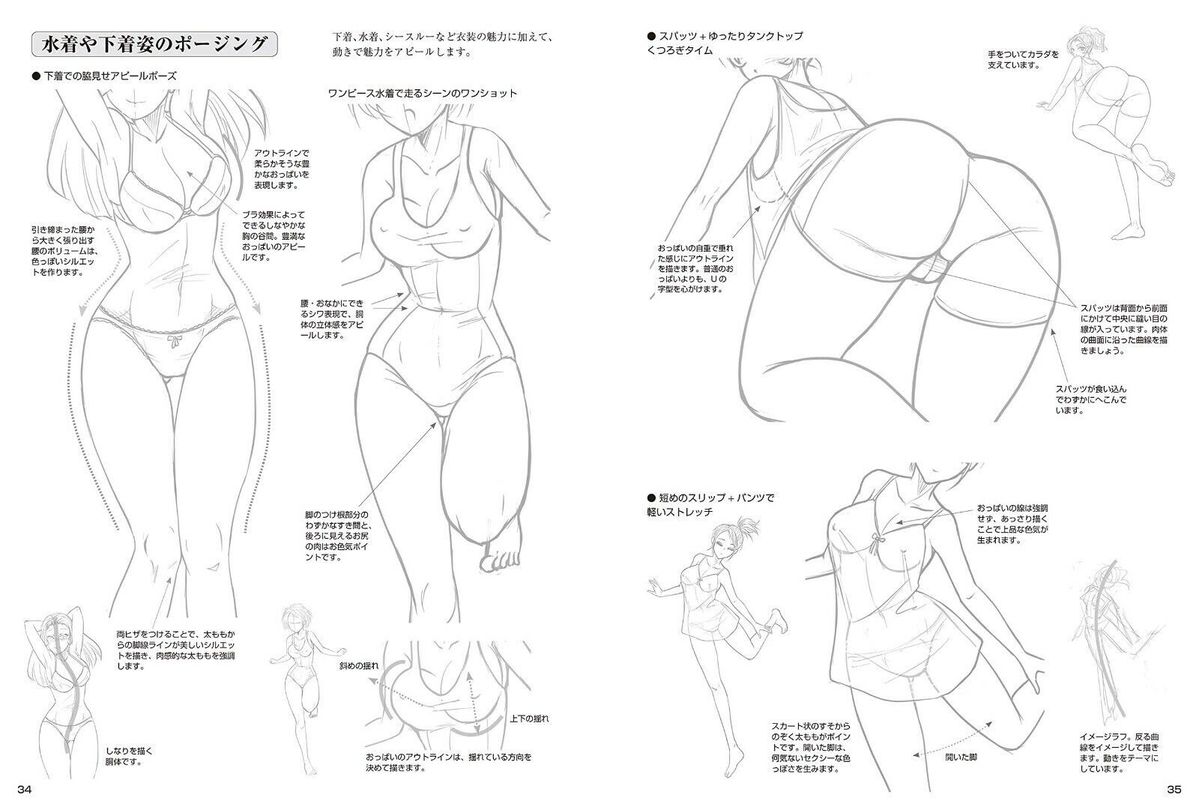
The reference image provides a side-by-side comparison of two primary female figures, showcasing the front and side profiles. Key anatomical landmarks are highlighted with precise measurements and annotations, such as the alignment of the spine, the curve of the hips, and the positioning of the shoulders. These elements are critical for maintaining realistic proportions. The tutorial emphasizes the importance of observing the torso’s natural S-curve and the slight inward tilt of the pelvis, which are essential for dynamic posing. Detailed labels indicate muscle groups and skeletal structure, offering a roadmap for sketching the underlying framework before adding flesh and clothing.
Exploring Pose Dynamics
This guide delves into a variety of poses, from standing and walking to more complex, expressive stances. The image features multiple angles, including a three-quarter view and a bent-over pose, demonstrating how weight distribution and balance affect the body’s silhouette. Annotations explain how to capture the tension in the legs and the natural arch of the back, providing tips on exaggerating these features for dramatic effect or softening them for a relaxed appearance. Artists are encouraged to practice sketching these poses to develop an intuitive understanding of movement and flow.
Clothing and Fabric Rendering
The tutorial addresses the challenge of drawing clothing on the female form, with examples ranging from minimal coverage like bikinis to loose-fitting dresses. The image includes detailed notes on fabric folds, such as how they drape over the hips or bunch around the thighs, influenced by the body’s contours and the pose’s tension. Techniques for shading and highlighting are explored, with suggestions to use light hatching for soft fabrics and bolder strokes for structured materials, ensuring a realistic texture that complements the underlying anatomy.
Step-by-Step Drawing Process
- Sketch the Framework: Begin with light pencil strokes to outline the basic skeletal structure, focusing on the head, spine, and limb proportions as shown in the reference.
- Add Muscle Definition: Layer muscle groups over the skeleton, referring to the annotated areas to place key muscles like the quadriceps and abdominal obliques accurately.
- Pose Refinement: Adjust the pose based on the reference images, paying attention to the angle of joints and the distribution of weight.
- Clothing Application: Drape clothing over the figure, using the fold guides to create natural creases and shadows.
- Final Detailing: Enhance the drawing with fine lines for hair, facial features, and subtle shading to add depth and realism.
Practical Tips for Artists
- Reference Usage: Regularly consult the provided image to compare your sketches, ensuring accuracy in proportion and pose.
- Practice Consistency: Dedicate time to drawing each pose multiple times to build muscle memory and confidence.
- Tool Selection: Use a range of pencils (HB to 2B) for sketching and shading, and consider blending stumps for smooth transitions.
This tutorial is an invaluable resource for artists aiming to master female figure drawing, offering a blend of theoretical knowledge and practical application. Dive into the reference image, replicate the poses, and watch your skills transform. For further inspiration and advanced techniques, continue exploring our series on figure drawing and anatomy. Happy sketching!