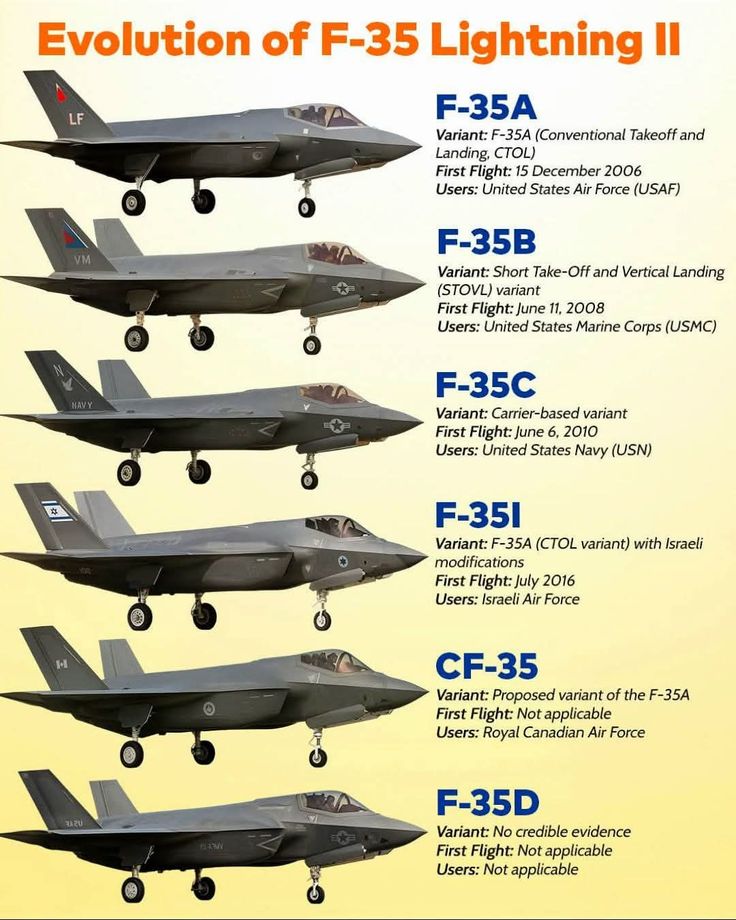
The Lockheed Martin F-35 Lightning II is more than just a single fighter jet; it is a versatile family of aircraft designed to dominate the skies across different branches of the military and international alliances. While they share a common DNA of stealth and advanced sensor fusion, each variant is engineered for a specific combat environment.
Here is a breakdown of the primary iterations of the world’s most advanced multi-role fighter.

The Core Variants
-
F-35A (Conventional Takeoff and Landing) The most common version, the F-35A is designed for traditional runways. It is the only variant equipped with an internal cannon and is the primary choice for the United States Air Force (USAF) and most international partners. Its first flight took place on December 15, 2006.
-
F-35B (Short Take-Off and Vertical Landing) Engineered for the United States Marine Corps (USMC), the “B” model features a unique lift-fan system that allows it to take off from short runways and land vertically like a helicopter. This allows it to operate from amphibious assault ships and austere forward bases.
-
F-35C (Carrier-Based) Built specifically for the United States Navy (USN), the F-35C features larger wings and more robust landing gear to handle the stresses of catapult launches and arrested landings on aircraft carriers. Its increased wing area also allows for greater fuel capacity, extending its range.