Speed Painting vs. Slow Painting: Which Painting Technique Is Better?
Painting is more than putting color on a surface—it’s a conversation between the artist, time, and emotion. Among the many approaches artists use, speed painting and slow painting stand out as two powerful but very different techniques. Each has its own strengths, challenges, and ideal use cases.
So… which one is better?
The answer depends on your goals, personality, and artistic journey.
Let’s break it down.
🎨 What Is Speed Painting?

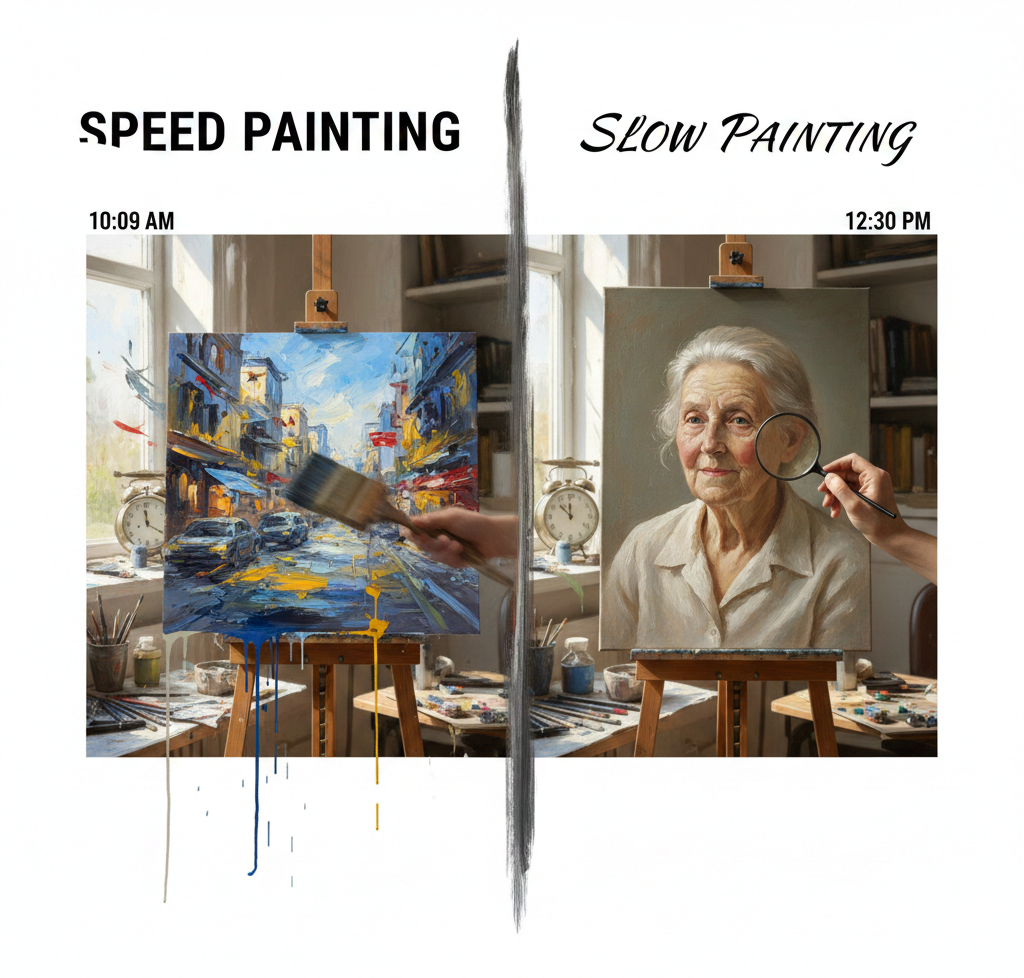
Speed painting focuses on completing a painting quickly—sometimes in minutes, sometimes within a few hours. The goal isn’t perfection, but energy, movement, and spontaneity.
Key Characteristics
-
Fast execution
-
Loose brushstrokes
-
Emphasis on mood and composition
-
Minimal corrections or overworking
Best For
-
Concept art
-
Digital illustration
-
Warm-up exercises
-
Social media content
-
Capturing fleeting ideas
🖼️ Image Ideas
-
A time-lapse sequence showing a painting from blank canvas to finished piece
-
Close-ups of expressive, loose brushstrokes
-
Before-and-after comparison of a 30-minute painting
🎥 Video Ideas
-
Time-lapse speed painting video
-
“10-minute speed painting challenge”
-
Screen recording of a digital speed paint
🖌️ What Is Slow Painting?

Slow painting is deliberate and methodical. Artists may spend days, weeks, or even months refining a single piece. Every layer is intentional, and details matter deeply.
Key Characteristics
-
Careful planning and sketching
-
Multiple layers and refinements
-
High attention to detail
-
Strong focus on realism or precision
Best For
-
Realism and hyper-realism
-
Classical and fine art
-
Portraits and still life
-
Gallery or commissioned work
🖼️ Image Ideas
-
Step-by-step progress shots over multiple days
-
Detail close-ups (eyes, textures, fabric, skin tones)
-
Layering process (underpainting → mid-tones → highlights)
🎥 Video Ideas
-
Multi-part painting process series
-
“Day 1 to Day 7 painting progress”
-
Close-up videos of blending and detailing techniques
⚖️ Speed Painting vs. Slow Painting: A Quick Comparison
| Aspect | Speed Painting | Slow Painting |
|---|---|---|
| Time | Minutes to hours | Days to months |
| Style | Loose, expressive | Detailed, refined |
| Creativity | High spontaneity | High control |
| Stress Level | Low pressure | High patience required |
| Learning Benefit | Improves confidence | Improves technique |
🧠 Which Technique Is Better?
Neither is objectively better—they simply serve different purposes.
-
Choose speed painting if you want to:
-
Improve creativity and confidence
-
Generate ideas quickly
-
Build consistency and momentum
-
-
Choose slow painting if you want to:
-
Master details and realism
-
Create professional, polished artwork
-
Develop patience and precision
-
✨ Pro Tip: Many professional artists use both. Speed painting for exploration, slow painting for final pieces.
🔄 Why You Should Practice Both
Combining speed and slow painting can dramatically improve your skills:
-
Speed painting loosens your hand and mind
-
Slow painting sharpens your eye and discipline
-
Together, they create a balanced, confident artist
Try starting with a speed sketch, then turning your best idea into a slow, detailed painting.
🎬 Final Thoughts
Whether you paint fast or slow, the “best” technique is the one that keeps you creating. Art thrives on consistency, curiosity, and enjoyment—not just time spent.
So grab your brush, set a timer (or ignore it), and paint in the way that feels right today 🎨