Massive Fossil Jaw Displays: A Thrilling Wall of Prehistoric Predators

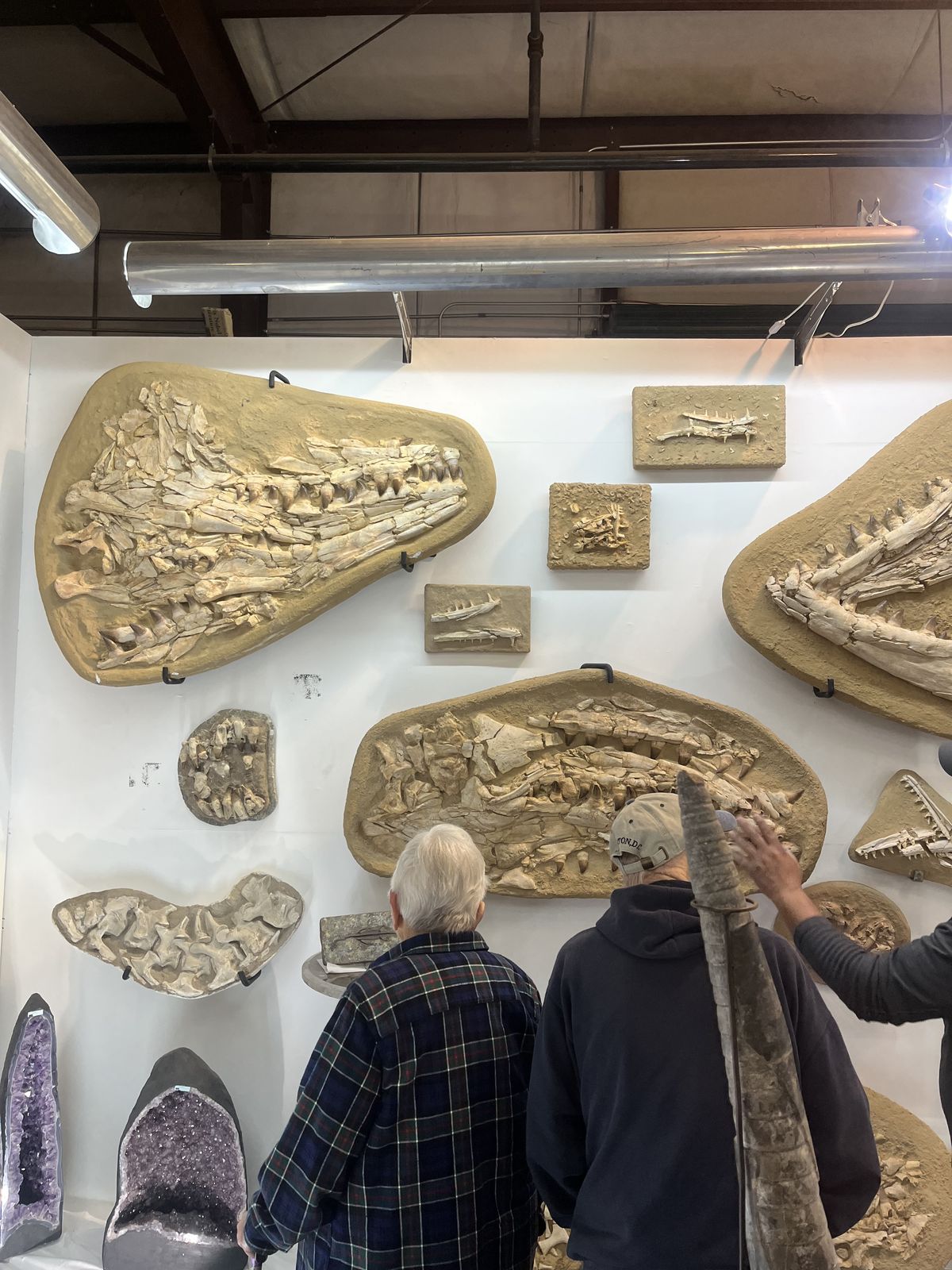
This dynamic museum or gallery photo captures an impressive wall-mounted exhibit featuring an array of large fossilized jaws and skull sections from ancient marine reptiles and possibly crocodilians or similar predators. The massive specimens—embedded in beige or tan matrix slabs—are arranged in a dramatic grid-like pattern across a white wall, illuminated by overhead lights in an industrial-style space with exposed beams, metal ducting, and high ceilings. Prominent pieces include enormous, toothy jaws with rows of conical or serrated teeth, some spanning several feet, evoking the fearsome bite force of creatures like mosasaurs, pliosaurs, or giant prehistoric crocodiles. Smaller panels show partial skeletons, ribs, or limb elements, while visitors (including an older man in a plaid shirt and another reaching out to touch a large tusk or bone) add a wonderful sense of scale and interaction. The raw, unfinished setting—complete with visible pipes and casual visitor engagement—gives the display a hands-on, exploratory feel, as if stepping into a working paleontology warehouse or specialized fossil gallery.
Such exhibits highlight trace and body fossils of apex predators from the Mesozoic era, particularly the Cretaceous Western Interior Seaway or similar ancient marine environments, where mosasaurs and other giant reptiles dominated as top carnivores.
(Another striking view of wall-mounted fossil jaws in a museum setting, showing large mosasaur-like skull sections with sharp, interlocking teeth preserved in rock matrix—perfect for appreciating the scale of these ancient marine hunters.)
(Close-up detail of one of the massive jaw fossils on display, featuring rows of conical teeth embedded in beige stone, illustrating the crushing power of prehistoric sea monsters.)
What These Fossils Represent
The large, boat-shaped or triangular jaw mounts with prominent tooth rows are classic examples of mosasaur fossils (family Mosasauridae)—extinct marine squamates (related to modern monitor lizards and snakes) that ruled Late Cretaceous oceans 80–66 million years ago. Mosasaurs like Tylosaurus, Mosasaurus, or Clidastes grew up to 50+ feet long, with powerful jaws lined by sharp, recurved teeth ideal for seizing fish, ammonites, turtles, and even other marine reptiles. The ribbed or segmented appearance in some matrix blocks comes from natural preservation of jaw elements or associated ribs/vertebrae.
- Tooth Morphology: Conical, pointed teeth for gripping slippery prey; some species had crushing molars for hard-shelled animals.
- Size & Power: These jaws could exert tremendous bite force—estimates suggest mosasaurs rivaled or exceeded modern crocodiles in predatory capability.
- Preservation Style: Fossils are often prepared in large field jackets (the beige matrix), mounted flat on walls for space efficiency and dramatic visual impact.
Similar displays sometimes include pliosaur jaws (short-necked marine reptiles) or giant crocodilians like Deinosuchus, but the elongated, multi-toothed forms here strongly point to mosasaurs.
Why These Displays Are So Compelling
- Scale & Drama: Seeing jaws larger than a person evokes the terror of ancient seas—visitors instinctively imagine the gaping maw of a 40-foot predator lunging from the depths.
- Educational Value: Wall mounts allow close inspection of tooth wear, jaw articulation, and bone texture, revealing feeding mechanics and evolution.
- Accessibility: The open, warehouse-like setting (common in commercial fossil galleries, pop-up exhibits, or smaller regional museums) makes paleontology feel approachable and exciting, especially with hands-on elements (as seen with the visitor touching a specimen).
In the San Francisco Bay Area, such specialized displays appear in places like private fossil shops, traveling paleo exhibits, or sections of larger institutions (e.g., California Academy of Sciences has marine reptile fossils, though this raw style suggests a more boutique or commercial venue focused on impressive mounts).
For more on these marine giants, watch this video: Mosasaurs: Apex Predators of the Cretaceous Seas | PBS or Similar (search for educational clips on mosasaurs from natural history channels or museum tours).
These jaw walls are always crowd-pleasers—pure prehistoric wow factor! If this is from a specific spot you’ve visited in the Bay Area (maybe a fossil shop or special exhibit), or if you’d like details on similar displays elsewhere, let me know—these photos keep the prehistoric excitement alive!