Woolly Mammoth Skeleton: A Majestic Ice Age Icon in Museum Display

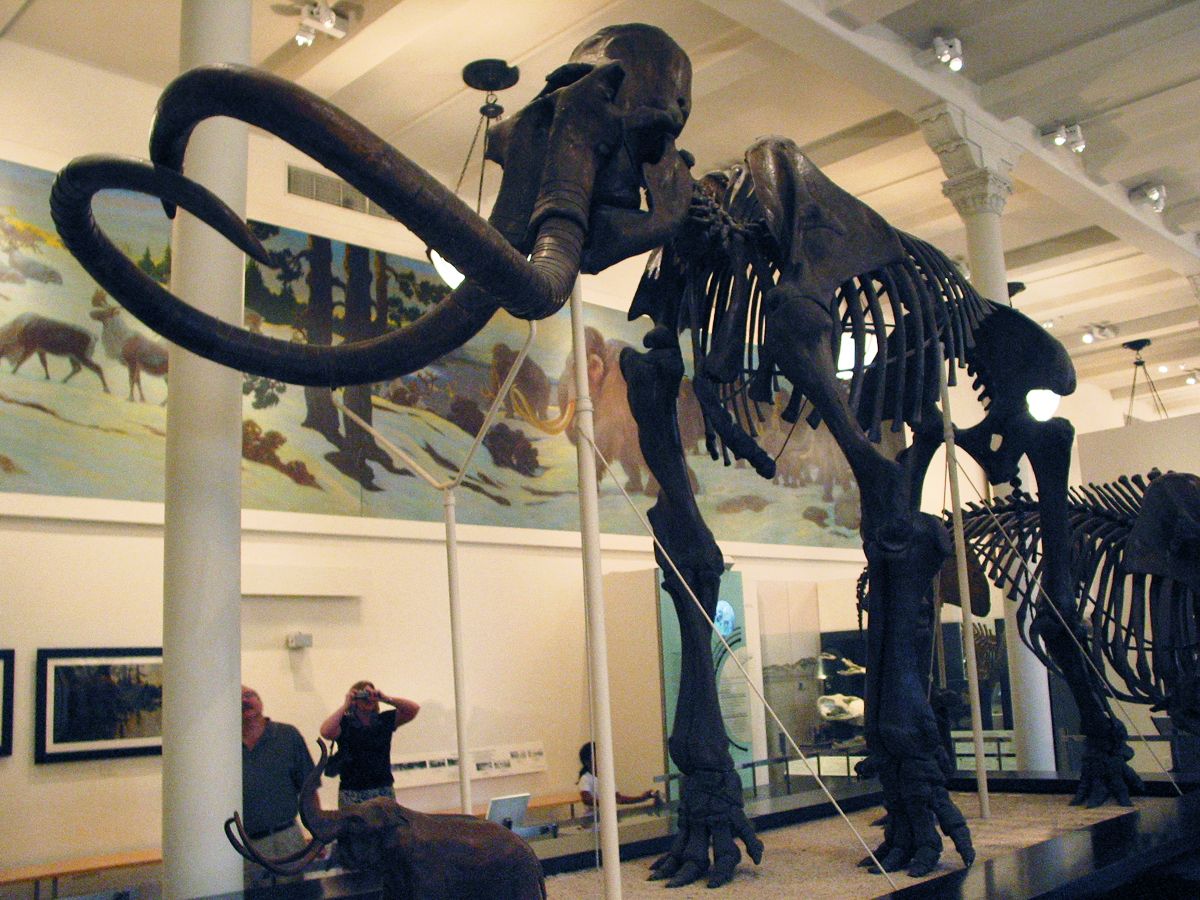
This evocative museum photograph captures the grandeur of a woolly mammoth (Mammuthus primigenius) skeleton mounted in a grand hall, towering over visitors in a classic natural history exhibit. The massive fossil stands in a realistic pose with its enormously curved tusks sweeping upward and outward, trunk-like skull raised, and robust limbs planted firmly on a raised platform. Dramatic overhead lighting accentuates the dark, fossilized bones against a vibrant mural backdrop depicting a prehistoric landscape—snow-dusted forests, rolling hills, and roaming megafauna like deer and other mammoths under a golden sky. The scene includes architectural details such as high columns, ornate ceilings, and surrounding cases with additional fossils, while visitors (including a man photographing and others observing) add a sense of scale and human wonder to the timeless display.
This kind of immersive setup—combining real fossils, artistic murals, and interpretive elements—is a hallmark of major natural history museums, designed to transport viewers back to the Pleistocene epoch (roughly 2.6 million to 11,700 years ago) when woolly mammoths dominated cold steppe-tundra environments across Eurasia and North America.
(Another impressive view of a woolly mammoth skeleton in a museum gallery, tusks prominently curved, with a detailed mural of Ice Age fauna in the background—highlighting the animal’s imposing height and proportions.)
(Close-up of the mammoth’s skull and tusks in the exhibit, showing the textured bone preservation and the dramatic sweep of the ivory-like tusks against the painted landscape.)

The Woolly Mammoth: Anatomy and Adaptations
Woolly mammoths were highly specialized for glacial climates, with key features visible in this mount:
- Size: Adults stood 2.7–3.4 meters (9–11 feet) at the shoulder, weighing 4–6 tons—comparable to modern African elephants but stockier for cold resistance.
- Tusks: Up to 4 meters (13 feet) long in males, spiraling outward and used for foraging (clearing snow/ice), defense, and possibly social display or combat.
- Skull and Trunk Attachment: The high-domed skull with a large nasal opening supported a powerful trunk for grasping vegetation.
- Limbs and Feet: Short, pillar-like legs with broad, padded feet for traversing snow and soft ground; the skeleton’s stance emphasizes stability.
- Body Structure: Thick rib cage and vertebrae for supporting heavy fat layers and dense hair (up to 1 meter long in life) that trapped insulating air.
These adaptations enabled survival in harsh, low-temperature environments with seasonal food scarcity. Fossils often preserve not just bones but hair, skin, and stomach contents, revealing a diet of grasses, sedges, and shrubs.
(Full museum view of a woolly mammoth skeleton on a sandy base, tusks arching high, with visitors nearby for scale—illustrating the exhibit’s immersive, life-like presentation.)
Habitat, Lifestyle, and Extinction
Woolly mammoths roamed vast “mammoth steppe” ecosystems spanning Europe, Asia, and North America during multiple Ice Age cycles. They lived in herds, migrating seasonally to exploit fresh grazing. Evidence from frozen carcasses (like those in Siberia) shows thick woolly coats, small ears/tail to minimize heat loss, and a hump of fat for energy storage—similar to modern camels but for cold.
Extinction occurred around 4,000–10,000 years ago (some isolated populations survived longer on islands). Causes likely included rapid climate warming at the end of the Pleistocene, habitat loss as tundra turned to forest, and human hunting pressure. This display often ties into broader Ice Age narratives, contrasting with surviving relatives like Asian elephants.
Why This Exhibit Captivates
Exhibits like this one (common in institutions such as the American Museum of Natural History, Field Museum, or similar halls) blend science and spectacle: the mural evokes the lost world, while the real fossil grounds it in evidence. Visitors experience awe at megafauna scale—tusks alone dwarf people—prompting reflection on extinction, climate change, and humanity’s role in ancient ecosystems.
Such mounts inspire ongoing research, including de-extinction debates (e.g., using elephant DNA to “revive” mammoth traits). For deeper exploration, visit major collections or watch documentaries on frozen mammoth finds.
To see similar displays in action, check out this video: Woolly Mammoth Exhibit Tour | AMNH or Similar (search for American Museum of Natural History or Field Museum mammoth halls for walkthrough footage).
These grand Ice Age skeletons never fail to evoke wonder—reminders of a world ruled by giants now lost to time. If this is from a specific museum you’ve visited (perhaps in New York or another historic hall), or if you have more exhibit photos, share them—these glimpses into deep history are endlessly fascinating!