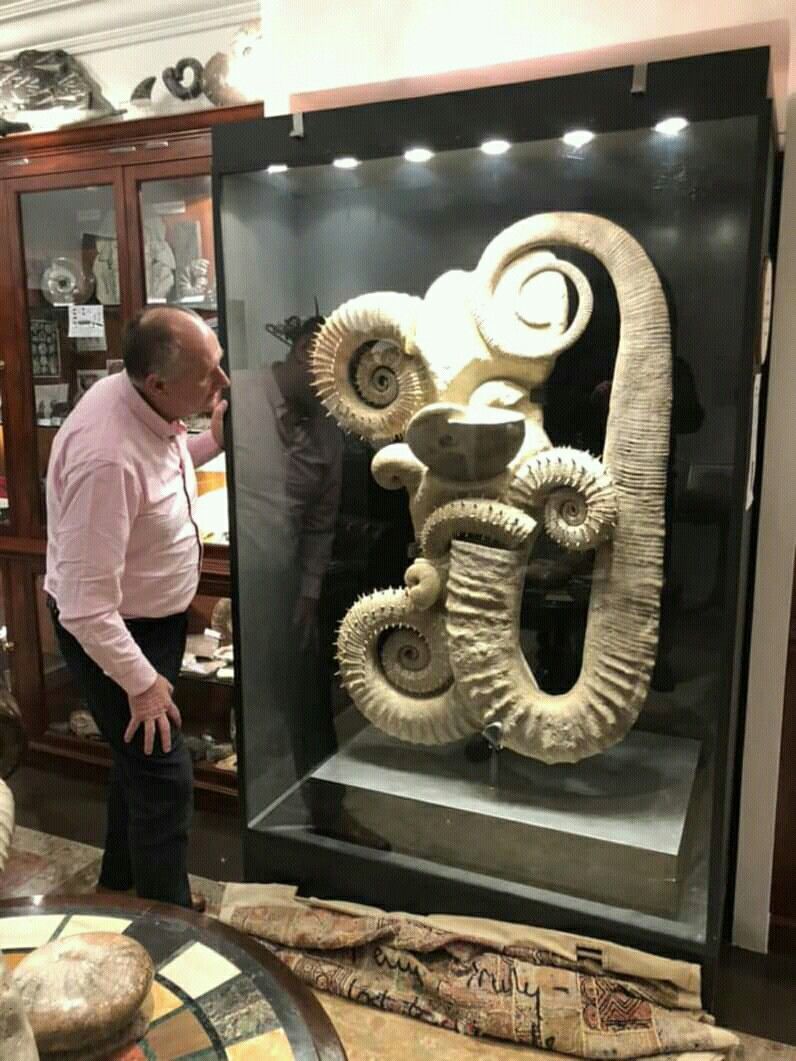
A Captivating Encounter: Life-Size Artistic Reconstruction of an Ancient Ammonite in a Luxe Display Case

This evocative photograph captures a moment of genuine wonder inside what appears to be an upscale fossil and mineral gallery or private collection showroom. A distinguished gentleman in a pink shirt stands contemplatively, one hand resting thoughtfully on the glass, as he gazes at an extraordinary large-scale artistic reconstruction of an ammonite cephalopod. The piece is dramatically illuminated within a tall, black-framed glass display cabinet, creating a museum-like focal point amid surrounding cabinets filled with ammonites, fossils, and natural history artifacts.
The centerpiece is a highly detailed, sculptural interpretation of a prehistoric ammonite (likely inspired by genera such as Asteroceras, Promicoceras, or a large heteromorph like Nipponites or Didymoceras, but stylized for dramatic effect). The creature is depicted in a dynamic, almost surreal pose: a massive, tightly coiled planispiral shell transitions into an elongated, curving body tube adorned with prominent ribs and tubercles (spikes), evoking the textured, chambered structure of real ammonite fossils. Multiple large, ridged spiral arms extend outward in elegant loops, while smaller coiled elements and bulbous features suggest the soft-bodied animal’s head region, siphuncle, or even artistic flourishes representing tentacles or buoyant chambers. The entire form is rendered in pale, creamy-beige tones with subtle shadowing that mimics fossilized calcite preservation, giving it an authentic yet otherworldly appearance. Spotlights from above highlight every curve and ridge, casting soft reflections on the glass and emphasizing the sculpture’s intricate craftsmanship.
The display case itself is elegantly modern—sleek black frame with thick tempered glass panels—set atop a marble or tiled floor with patterned rugs and antique wooden cabinets in the background. The scene conveys the thrill of discovery in a sophisticated natural history setting, perhaps a high-end fossil shop in Europe (given stylistic similarities to Italian or French galleries) or a private collector’s viewing room.
Here are several comparable examples of large ammonite reconstructions, artistic displays, and life-size cephalopod models to illustrate the style and scale of such pieces:
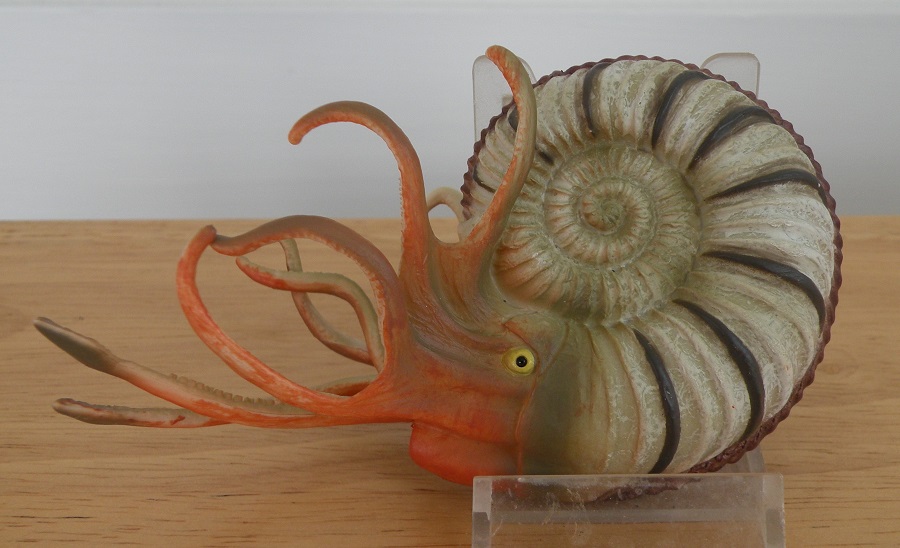
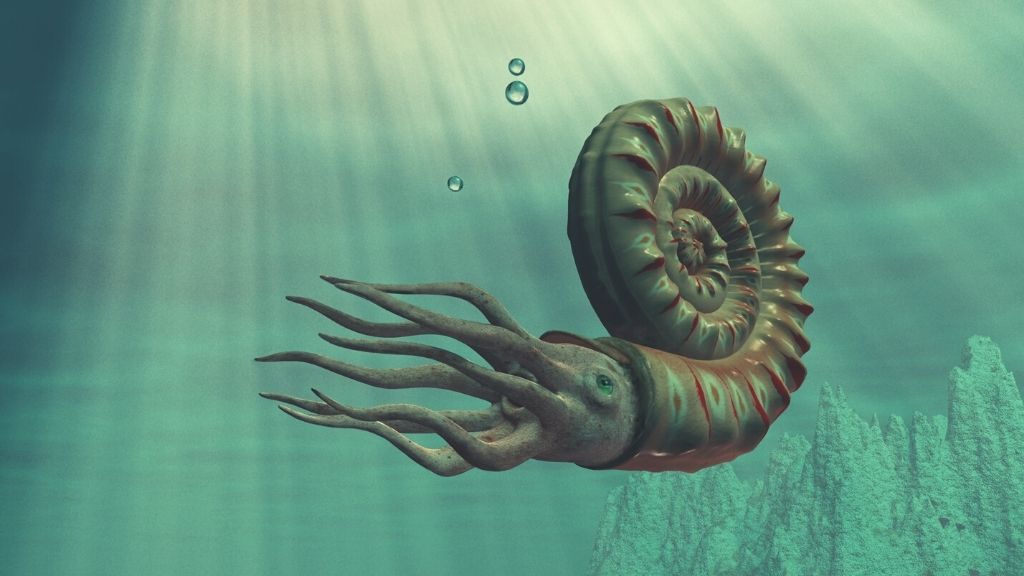
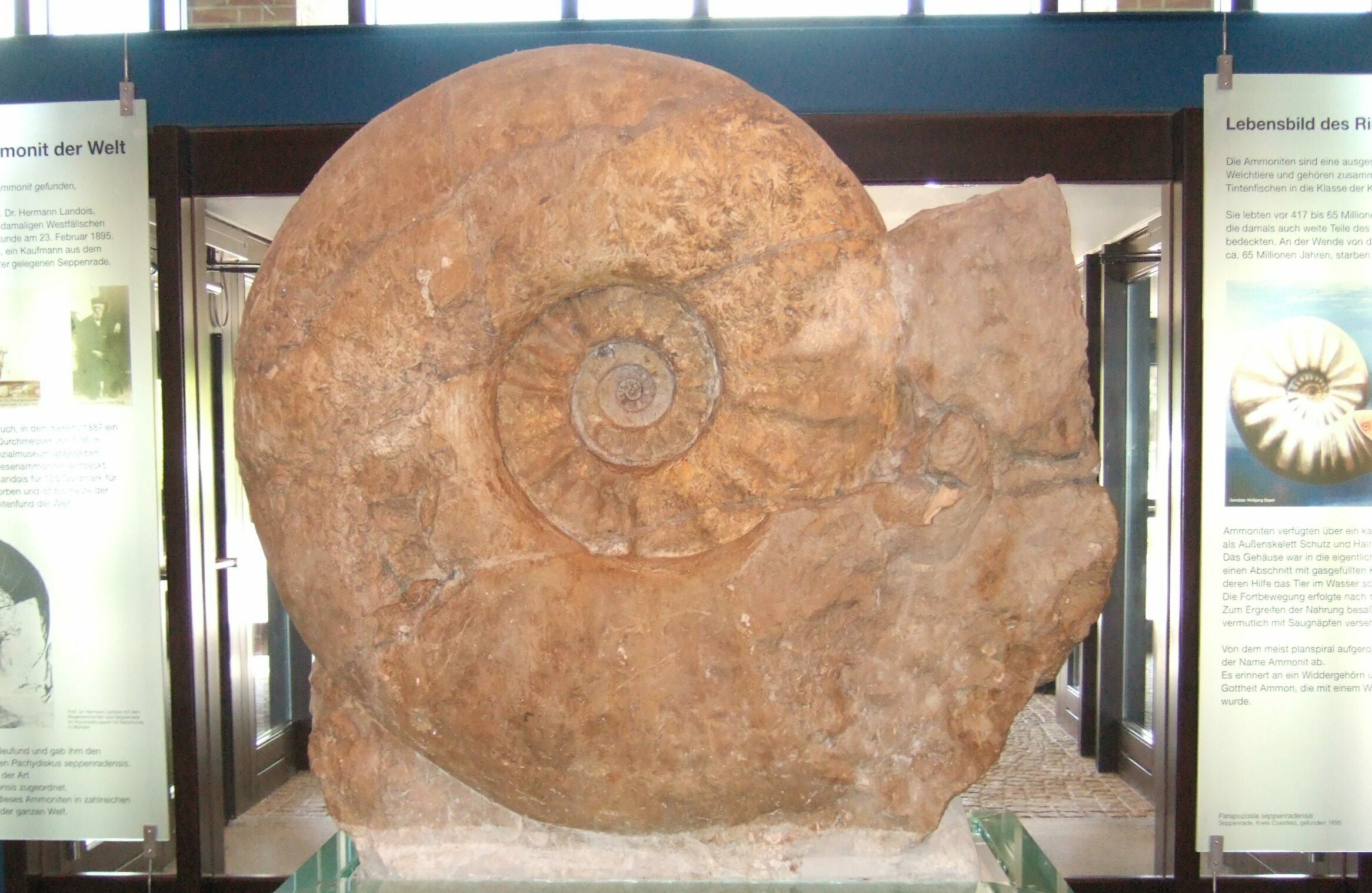

Scientific and Artistic Context: Ammonites as Windows to the Mesozoic Seas
Ammonites were shelled cephalopod mollusks (close relatives of modern nautiluses, squid, and octopuses) that dominated marine ecosystems from the Devonian to the end-Cretaceous (~419–66 million years ago). Their iconic spiral shells—formed of aragonite chambers separated by septa—served as buoyancy devices, allowing these predators and scavengers to drift or jet-propel through ancient oceans.
This sculpture takes artistic license by extending the shell into a tentacle-like body, emphasizing the living animal rather than just the fossil shell. Real ammonites likely had 8–10 arms (similar to nautiluses but more squid-like in some reconstructions), beaks, eyes, and ink sacs. Heteromorph ammonites (uncoiled or bizarrely shaped) inspire such dramatic forms, showing evolutionary experimentation before the mass extinction event that ended the Cretaceous.
Such large-scale reconstructions bridge paleontology and art:
- Museums (e.g., AMNH, Field Museum) often commission life-size models or 3D-printed replicas based on CT-scanned fossils.
- Private galleries feature hand-sculpted or resin-cast pieces for collectors, blending scientific accuracy with aesthetic appeal.
- Materials typically include fiberglass, resin, or composite with faux-stone finishes to mimic fossil texture.
Tutorial: How to Appreciate and Evaluate Artistic Ammonite Reconstructions
- Assess Anatomical Fidelity — Compare to real fossils: look for suture lines (septal patterns), ribbing, and whorl proportions. Artistic additions (extended “tentacles”) enhance dynamism but should not contradict known morphology.
- Evaluate Craftsmanship — Check for seamless joins, realistic texture (tubercles, growth lines), and lighting response—good pieces reveal depth under directional light.
- Consider Scale and Impact — Life-size or larger (this piece appears ~1.5–2 meters tall) creates immersive presence; ideal for galleries or dramatic home display.
- Contextual Provenance — High-end pieces often come from specialized studios in Europe or the U.S., inspired by famous localities (Madagascar, Morocco, Lyme Regis).
- Display Best Practices — Use LED spotlights (as here) to accentuate spirals. Position at eye level for interaction; protect from direct sun to prevent fading.
This photograph perfectly captures the magic of paleoart: transforming extinct creatures into tangible, awe-inspiring forms that spark curiosity about Earth’s ancient oceans. Whether you’re a fossil enthusiast, artist, or collector, pieces like this remind us how far we’ve come in visualizing the Mesozoic world.
Ideal for inspiring your next museum visit, gallery browse, or even commissioning a custom reconstruction. Have you encountered impressive ammonite displays or art pieces in person? Share your favorites in the comments below!