Mosasaur Skull Replicas and Fossils at Fossil Shows: Exploring the Apex Predators of the Cretaceous Seas – A Detailed Paleontological Tutorial

Description:
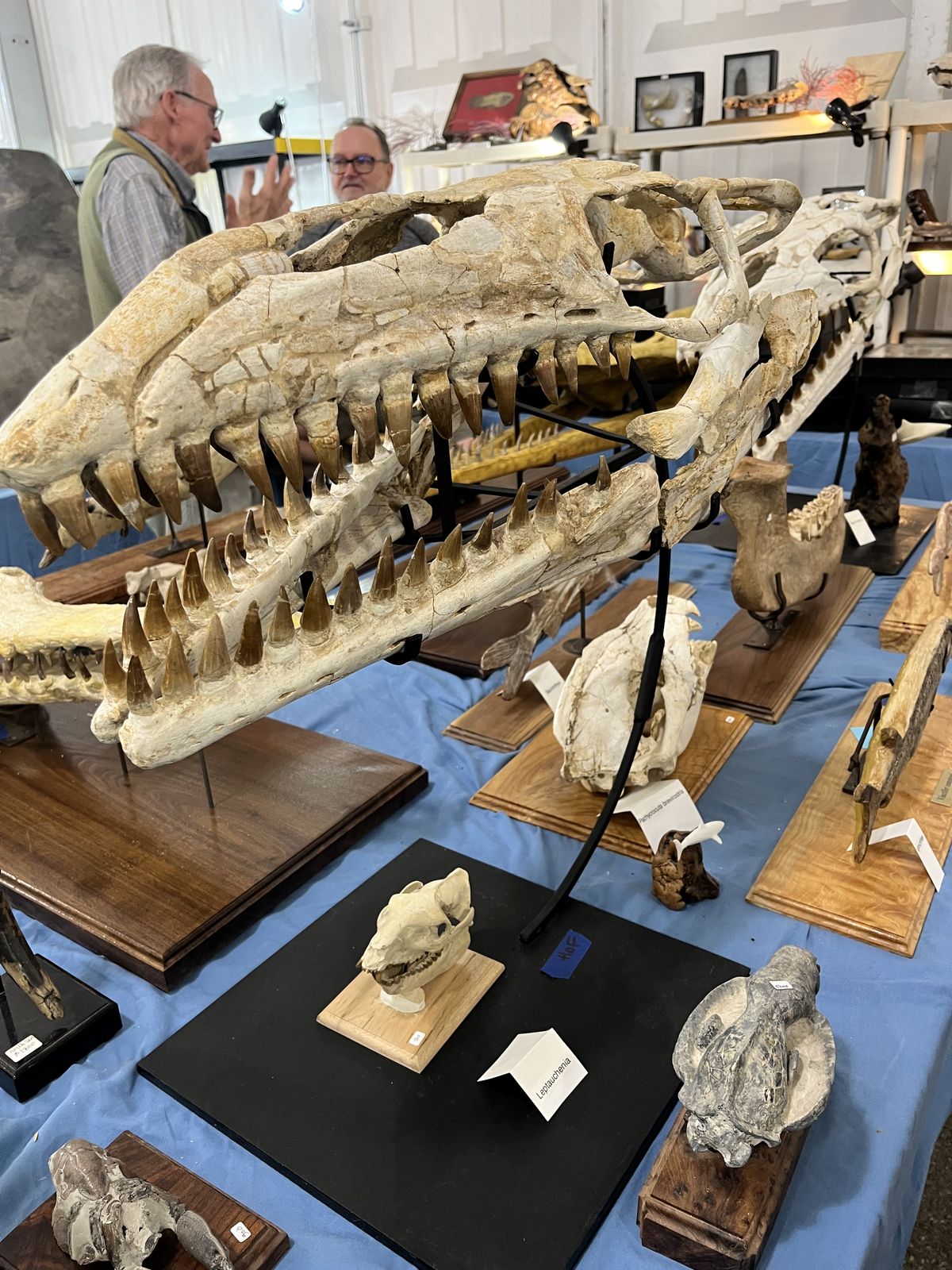
The captivating image depicts a vendor’s table at a fossil and mineral show, laden with high-quality replicas and authentic fossils of marine reptiles from the Late Cretaceous period (approximately 100 to 66 million years ago). Dominating the display is a large, elongated mosasaur skull—likely a museum-grade cast of a genus such as Prognathodon or Mosasaurus—mounted on a stand, showcasing its powerful jaws lined with numerous sharp, conical teeth. Surrounding it are smaller specimens, including a labeled Lystrosaurus skull (a Permian-Triassic dicynodont therapsid), vertebrae, jaws, and other fossils, with two enthusiastic attendees examining the items in the background. This tutorial-style guide breaks down the exhibit step-by-step, providing professional insights into identification, anatomy, paleobiology, and ethical considerations for collectors and enthusiasts. Whether you’re attending shows like the Tucson Gem Show or building a personal collection, this overview equips you with the knowledge to appreciate these relics of ancient oceans.
Step 1: Understanding the Display Context – Fossil Shows and Commercial Paleontology
Fossil and mineral shows, such as the renowned Tucson Gem, Mineral & Fossil Showcase or Denver Coliseum events, are hubs where dealers present specimens ranging from affordable teeth to multimillion-dollar skeletons. The table in the image, covered in blue cloth with wooden bases and informative labels, exemplifies a professional vendor setup. Items are often a mix of authentic fossils (primarily from prolific sites like Morocco’s phosphate beds) and resin casts/replicas for accessibility and preservation. The large mosasaur skull here is almost certainly a cast—original complete skulls are exceedingly rare and typically housed in museums—allowing hands-on appreciation without ethical concerns over original material removal.
In the background, shelves display additional pieces like ammonites or mineral specimens, highlighting the diverse offerings. The two visitors—one gesturing animatedly—capture the educational and communal spirit of these events, where experts share knowledge directly with the public.
For a glimpse of similar vendor tables at major shows:


Step 2: Identifying the Central Specimen – Mosasaur Skull Anatomy
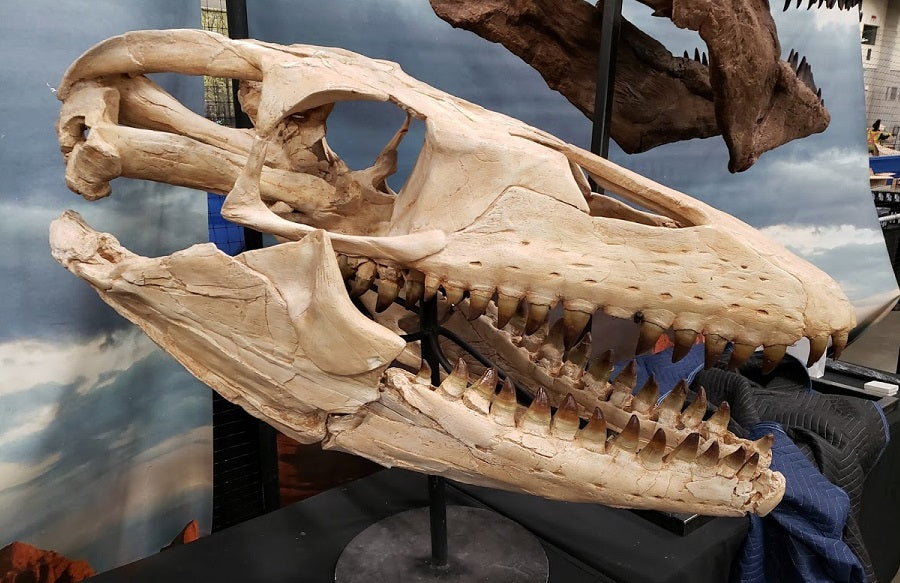
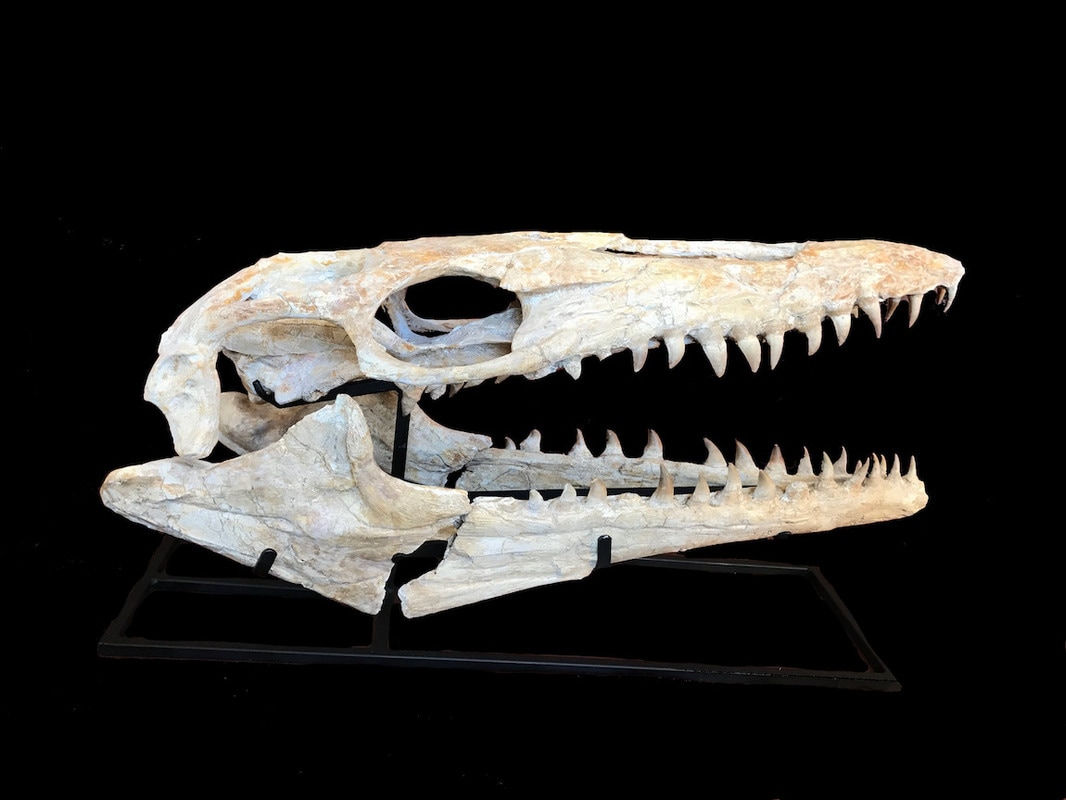
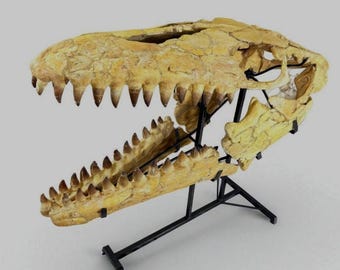
The star of the table is the large mosasaur skull, measuring over 1 meter in length, with a robust, tapering snout and rows of pointed, conical teeth ideal for grasping slippery prey. Mosasaurs were not dinosaurs but giant marine lizards (family Mosasauridae), closely related to modern monitor lizards and snakes. Key diagnostic features visible here include:
- Robust jaws with double-hinged articulation (like snakes), allowing wide gapes for swallowing large prey.
- Conical, faceted teeth with carinae (sharp edges), suited for piercing and holding fish, ammonites, turtles, and even other marine reptiles—unlike the blade-like teeth of Tylosaurus (more ram-feeder) or crushing globidensine teeth.
- Pterygoid teeth on the palate (secondary row, visible in open jaws), a varanoid trait for securing struggling victims.
This morphology matches genera like Prognathodon (massive, crushing-adapted forms) or Mosasaurus hoffmannii (apex predators up to 15–18 meters long). Moroccan specimens, common at shows, often come from the Ouled Abdoun Basin.
Close-up of a comparable Prognathodon skull replica:
Step 3: Surrounding Fossils – Diversity on the Table
The display includes a variety of specimens for different interests and budgets:
- A small labeled skull reads “Lystrosaurus” – a pig-sized herbivorous dicynodont from the Early Triassic (~252–248 million years ago), famous for surviving the Permian-Triassic mass extinction and comprising up to 95% of land vertebrates in some assemblages.
- Isolated jaws, vertebrae, and teeth likely from mosasaurs or related plesiosaurs.
- Nodules and partial bones, possibly containing embedded fossils.
This mix educates on evolutionary transitions: mosasaurs as terminal Cretaceous sea monsters, contrasted with Lystrosaurus as a post-extinction survivor on land.
Step 4: Paleobiology of Mosasaurs – Life in the Cretaceous Oceans
Mosasaurs evolved from terrestrial lizards around 100 million years ago, rapidly diversifying into apex predators. They possessed paddle-like limbs, powerful tails with flukes (for propulsion), and countershaded coloration (dark above, light below) for camouflage. Bite force estimates exceed modern crocodiles, with some species specializing in hard-shelled prey (e.g., turtles via durophagy).
Fossil evidence, including stomach contents, shows they hunted sharks, birds, and plesiosaurs. Viviparous (live birth) adaptations allowed offshore lifestyles. Their extinction at the K-Pg boundary (66 million years ago) coincided with the asteroid impact and ecosystem collapse.
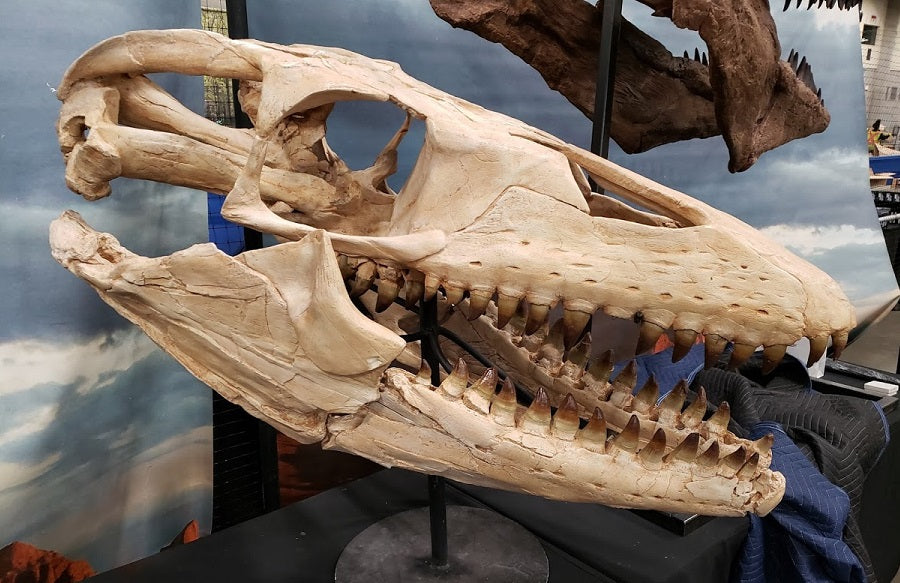
Tutorial tip: Distinguish genera by teeth—conical and recurved for generalists like Mosasaurus; prismatic and robust for Prognathodon.
Example of a robust-jawed Prognathodon cast:

Step 5: Ethics, Authenticity, and Collecting – Best Practices
At shows, verify provenance: Moroccan mosasaur fossils are legally exported but often composite (teeth reinserted). Replicas, like the main skull here, are ethical alternatives—accurate, durable, and affordable.
- Check for restoration (common and disclosed by reputable dealers).
- Avoid fakes: Real teeth have natural roots; composites may show glue lines.
- Support sustainable collecting: Buy from dealers following laws (e.g., no illegal Chinese or Mongolian exports).
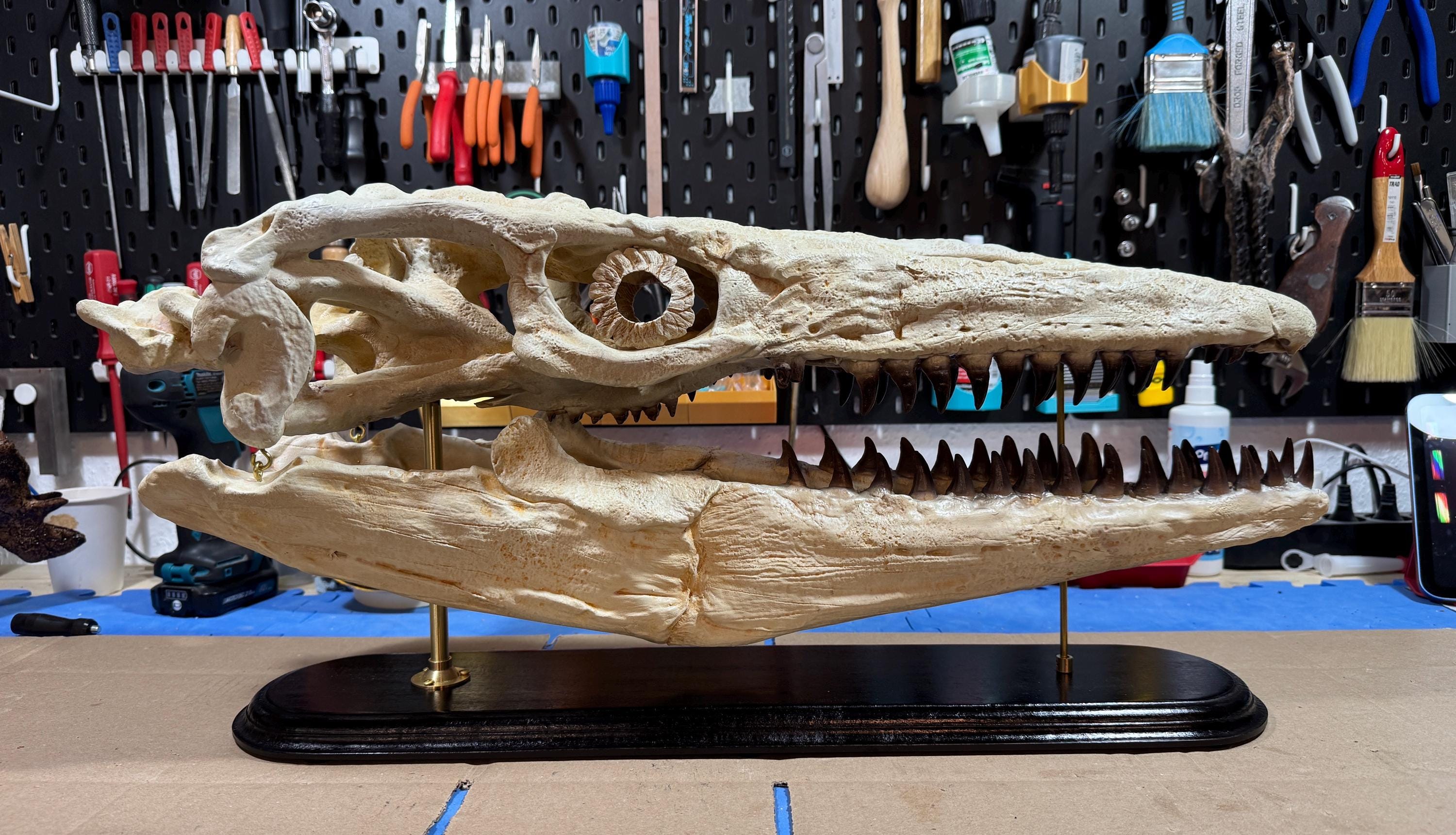
For home display, start with replicas from sources like those producing the items in the image.
Another high-quality mosasaur skull replica on display:
In essence, this image encapsulates the thrill of paleontology accessible to all—bridging millions of years through tangible specimens. Events like these foster curiosity, education, and responsible stewardship of Earth’s prehistoric heritage.