Archelon Ischyros: The Largest Turtle That Ever Lived
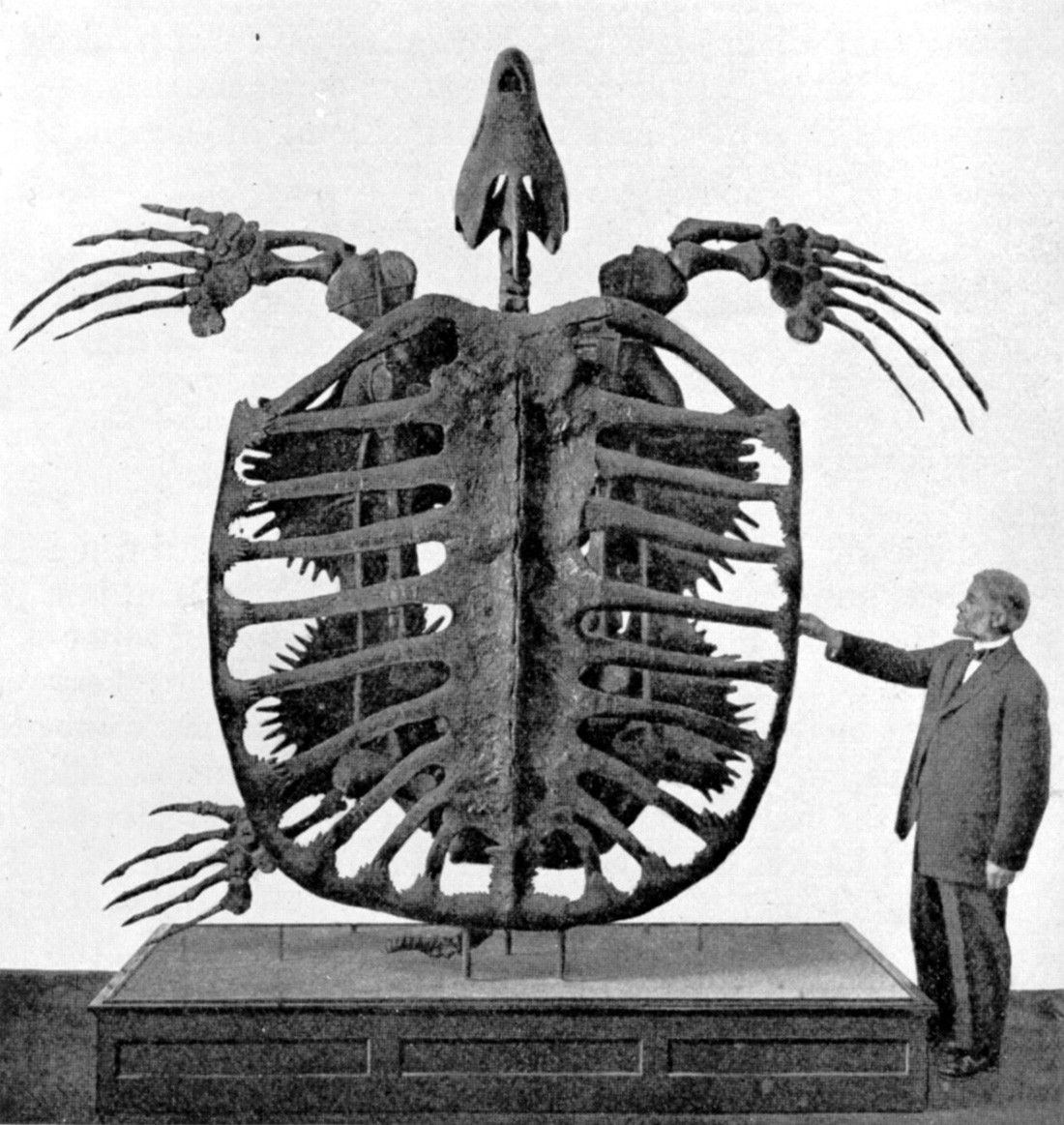
That vintage black-and-white photo captures one of paleontology’s most impressive “for scale” moments: a gentleman (likely paleontologist George Reber Wieland or a contemporary) standing beside the massive mounted skeleton of Archelon ischyros, the biggest turtle species ever documented. The enormous fossil dominates the room, its sprawling flippers and wide carapace making the human look tiny by comparison—perfectly illustrating just how colossal this Late Cretaceous sea giant was.
Discovered in the Pierre Shale of South Dakota (with the holotype found in 1895 and named in 1896 by Wieland), Archelon ischyros (“ruler turtle”) swam the Western Interior Seaway of North America around 80–66 million years ago. Unlike modern hard-shelled turtles, it had a leathery carapace reinforced by bony elements, similar to today’s leatherback sea turtle but on a vastly larger scale.

(The iconic historical photo of the Archelon skeleton on display, with a man in period attire touching the massive carapace for dramatic scale—exactly matching the image you shared.)
Size and Scale
The largest known specimen (nicknamed “Brigitta,” discovered in 1992 and housed at the Natural History Museum Vienna) measures:
- ~4.6 meters (15 feet) from beak to tail tip
- ~4–5 meters (13–16.5 feet) across the outstretched front flippers
- Estimated live weight: 2.2–3.2 metric tons (roughly 4,900–7,000 lbs), comparable to a large rhinoceros or small elephant
Earlier specimens, like the Yale Peabody Museum mount from around 1902 shown in your photo, were slightly smaller but still enormous—over 11–13 feet long. These dimensions dwarf the largest living turtle, the leatherback sea turtle (up to ~2 meters / 6.5 feet long and ~650–900 kg / 1,400–2,000 lbs).
(Modern museum mount of Archelon ischyros suspended in mid-swim pose, showcasing the full span of its flippers and the robust skeletal frame—people nearby would look minuscule next to this prehistoric behemoth.)

(Another view of a detailed Archelon skeleton display, highlighting the sprawling limbs and domed carapace structure in a museum setting.)
What Made Archelon So Massive?
- Marine adaptations: Long, powerful flippers for efficient swimming in open oceans.
- Leathery shell: Lighter and more flexible than bony shells, allowing greater size without excessive weight.
- Diet and ecology: Likely fed on jellyfish, squid, and soft-bodied prey with its strong, hooked beak—similar to modern leatherbacks.
- Cretaceous conditions: Warm, nutrient-rich seas supported giant marine reptiles like mosasaurs, plesiosaurs, and this supersized turtle.
It belonged to the extinct family Protostegidae, not directly related to living sea turtles despite superficial similarities.
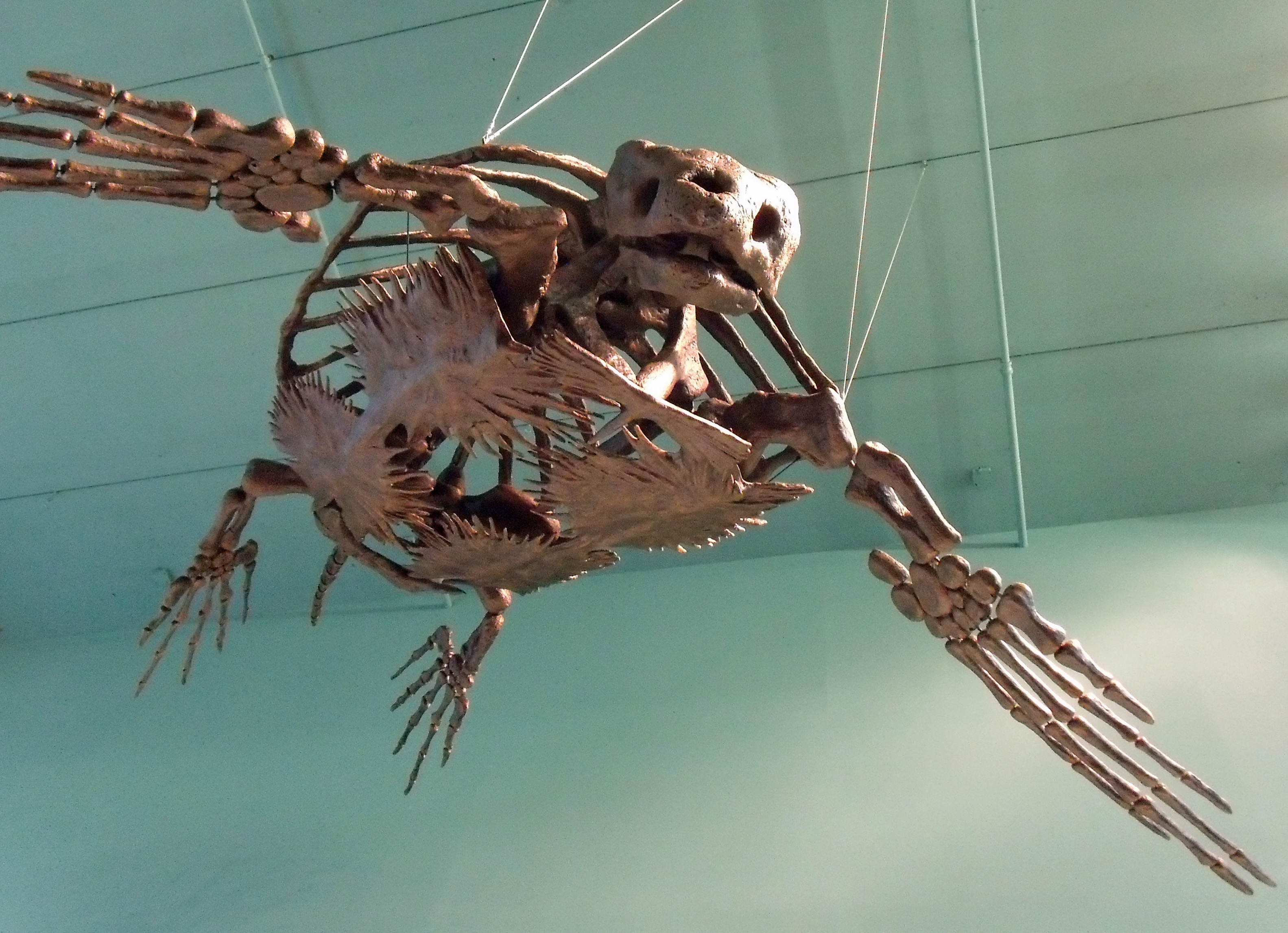
(Suspended Archelon skeleton in a dynamic swimming pose, giving a clear sense of its streamlined body and enormous reach—imagine this gliding through ancient seas.)
(Artistic reconstruction of living Archelon ischyros swimming underwater, depicting its leathery shell, powerful flippers, and beaked head in a realistic prehistoric ocean scene.)
Why These Photos Still Amaze
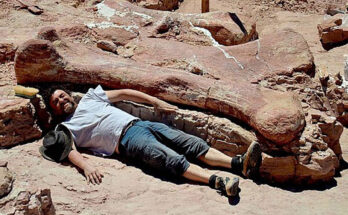
Just like the dino-bone “person for scale” shots we discussed earlier, this image turns abstract measurements into visceral awe. Seeing a grown man barely reach across the carapace drives home how Archelon was truly a leviathan of the seas—bigger than many cars and heavier than most land animals of its time.
For more on this giant, check out this video: Archelon: The Largest Turtle Ever To Have Lived (covers its discovery, anatomy, and why it grew so huge).
These old photos are timeless reminders of how mind-blowingly large some extinct creatures were. Got any other favorite prehistoric “scale” shots?