Mastering Landscape Elements: Classic Hand-Drawn Symbols for Trees, Woods, and Rural Buildings – Essential Tutorial for Illustrators and Architects

Elevate your landscape drawings with this timeless reference sheet of stylized hand-drawn symbols for natural and man-made elements. Originating from traditional architectural and illustration techniques, these simplified sketches allow artists to quickly populate scenes with believable trees, woodlands, farms, and structures—perfect for concept art, storyboarding, environmental design, architectural rendering, comics, and plein air sketching.
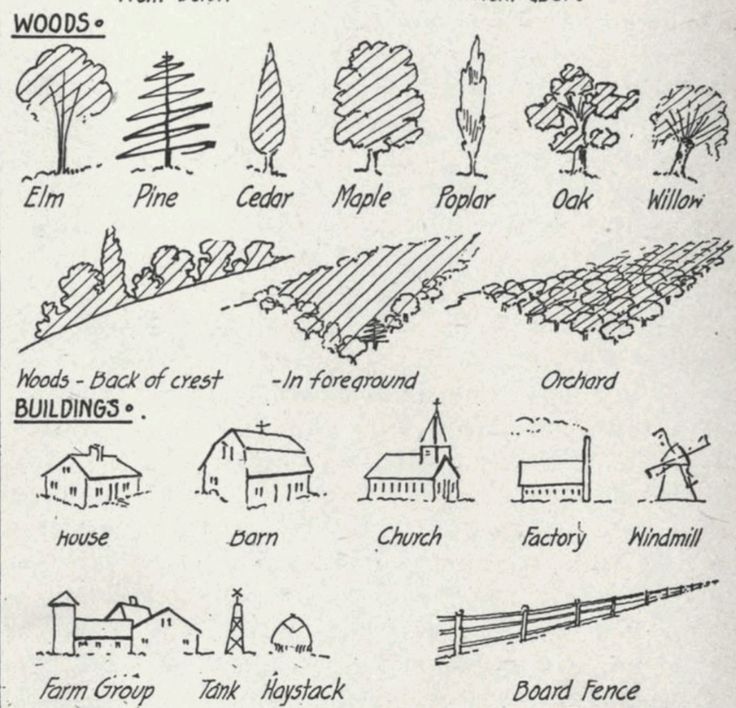
This tutorial breaks down a classic reference plate featuring seven distinct tree types, groupings for woods and orchards, and iconic rural buildings. Each symbol uses minimal lines and hatching to suggest form, texture, and depth, making them ideal for black-and-white ink work or quick pencil thumbnails. Whether you’re a beginner learning to suggest foliage without over-detailing or a professional refining your visual vocabulary, these motifs will add authenticity and efficiency to your landscapes.


Section 1: Individual Tree Symbols – Capturing Species Characteristics
Master the unique silhouette and foliage pattern of each tree with just a few strokes:
- Elm — Rounded, umbrella-like canopy with soft, drooping branches. Use light cross-hatching for dense foliage.
- Pine — Classic conical shape with layered horizontal branches. Draw tiered triangles for instant recognition.
- Cedar — Tall, narrow, and pointed like a spear. Emphasize vertical lines for trunk and sparse side branches.
- Maple — Broad, rounded crown with lobed leaves suggested by wavy outlines and diagonal hatching.
- Poplar — Slender columnar form, tall and straight. Light vertical strokes for bark texture.
- Oak — Irregular, sprawling branches with a heavy, gnarled appearance. Add scribbled masses for thick foliage.
- Willow — Graceful weeping form with long, trailing branches. Flowing curved lines create movement.
Pro Tip: Start with the overall shape (circle, cone, or column), then add characteristic branches. Vary line weight—thicker for trunks, lighter for distant foliage.
Section 2: Woodland and Groupings – Creating Depth in Landscapes
Combine individual trees for massed effects:
- Woods – Back of Crest → Dense, dark band of overlapping scribbles behind a hill ridge. Use heavy horizontal hatching to suggest distant forest.
- In Foreground → Looser clusters with visible trunks and branches. Add varied heights for natural randomness.
- Orchard → Regular rows of rounded trees (e.g., repeated maple or elm shapes). Diagonal hatching implies aligned planting.
Depth Technique: Darker, tighter hatching for foreground; lighter and simpler for background. Overlap shapes to create layers.
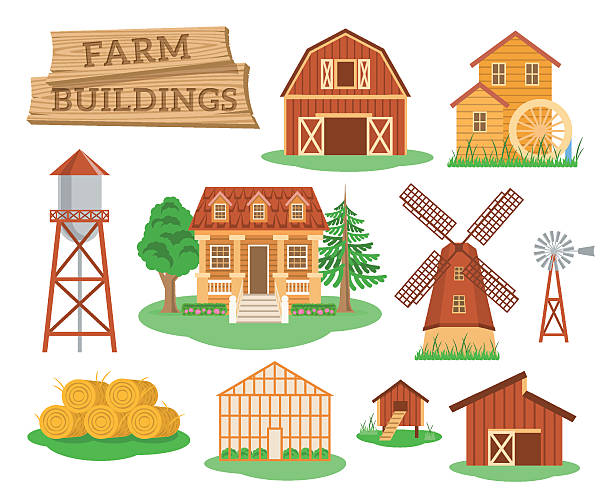
Section 3: Rural Buildings and Structures – Iconic Farm Elements
These simplified forms are staples in agricultural scenes:
- House — Traditional two-story with pitched roof, chimney, and porch.
- Barn — Large gabled structure with wide doors—iconic red barn silhouette in outline.
- Church — Steeple with cross, arched windows, and symmetrical facade.
- Factory — Industrial chimney with smoke, rectangular block form.
- Windmill — Tall tower with rotating sails—classic Dutch or farm water-pumping style.
- Farm Group — Cluster of house, barn, and outbuildings for a complete homestead.
- Tank — Cylindrical water tower on legs.
- Haystack — Conical or rounded mounds with cross-hatching for texture.
- Board Fence — Repeating vertical posts with horizontal rails, shown in perspective.
Pro Tip: Use straight rules for buildings to contrast organic tree lines. Add light shading on one side for volume.
How to Use These Symbols in Your Artwork
- Thumbnail Compositions — Block in major elements quickly.
- Perspective Integration — Scale trees smaller in distance; converge fences to vanishing points.
- Texture Variation — Hatching direction follows form (vertical for trunks, diagonal for foliage).
- Stylization Levels — Use minimal lines for distant elements, more detail up close.
Common Mistakes to Avoid
- Overly uniform trees → Vary sizes and lean angles for natural feel.
- Flat landscapes → Layer foreground, midground, and background elements.
- Busy details everywhere → Reserve fine hatching for focal areas.
Practice Exercises
| Level | Exercise |
|---|---|
| Beginner | Copy each tree and building 5 times, focusing on silhouette accuracy. |
| Intermediate | Draw a full rural scene using at least 5 tree types and 3 buildings. |
| Advanced | Create a panoramic landscape in perspective with foreground orchard, midground farm, and background woods. |
Why These Classic Symbols Endure
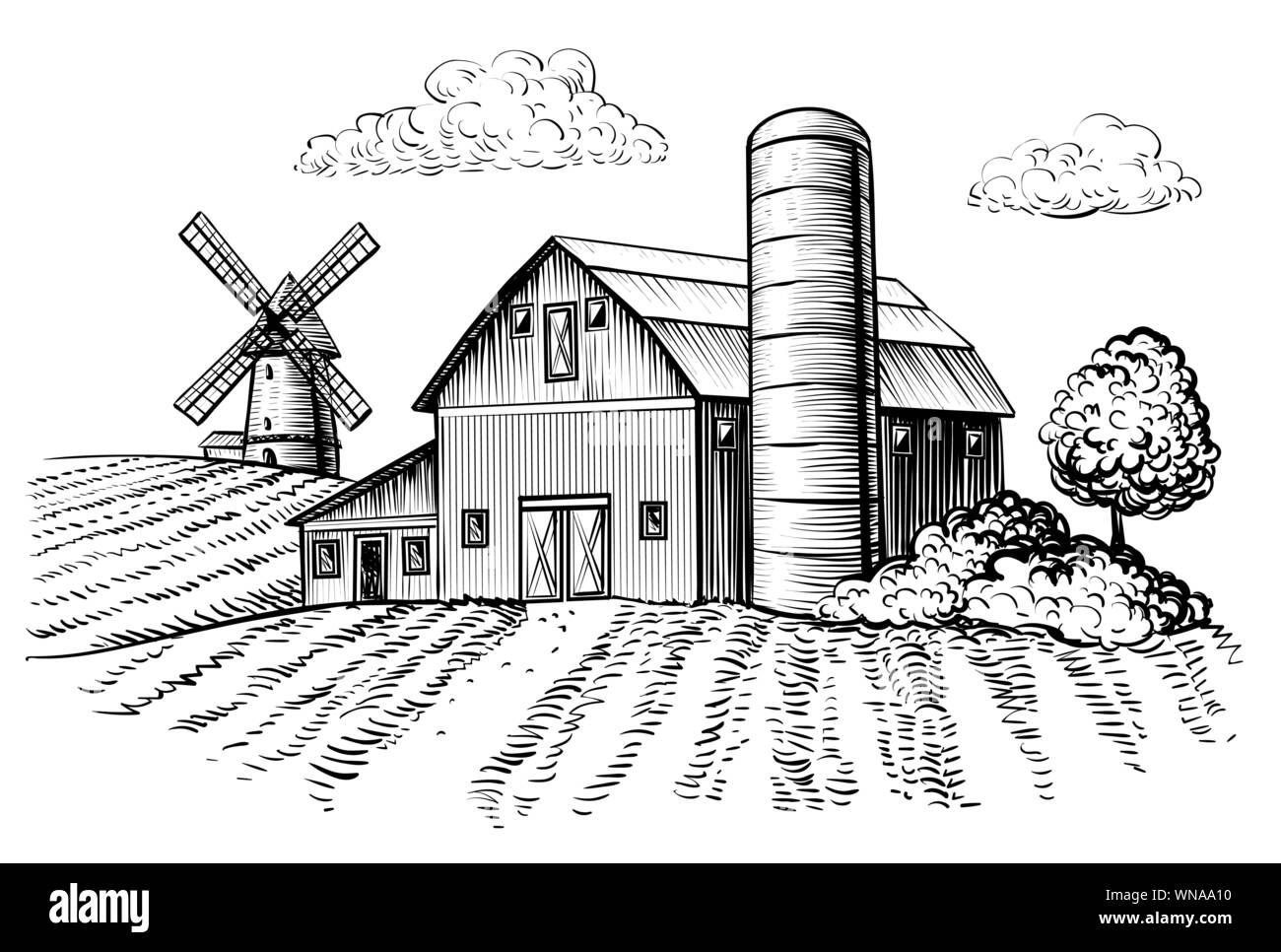
These motifs, drawn from mid-20th-century illustration manuals, remain powerful because they communicate instantly. A single pine scribble reads as “evergreen forest”; a barn with windmill screams “rural Americana.” Master them to build convincing environments efficiently.
Next Tutorials in Series:
- Drawing Mountains and Rock Formations
- Water and Sky Techniques for Landscapes
Share your sketches using #ClassicLandscapeSymbols – we’d love to feature your work!
© DrawingAcademy.com – Traditional Illustration Resources