How to Draw the Mitsubishi A6M Zero Fighter (Rei-sen): Essential Tips for Accurate Proportions and Details

Description:

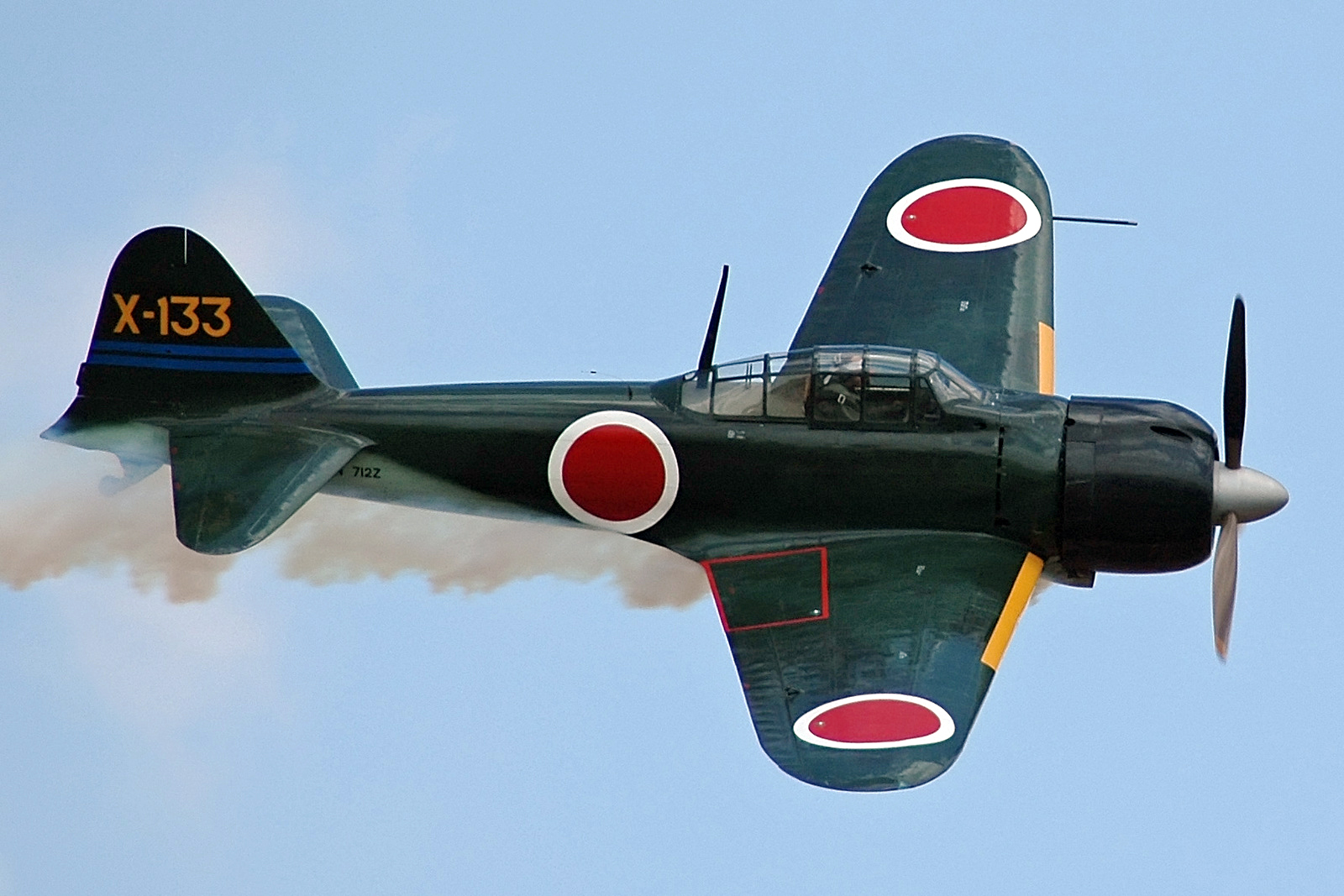
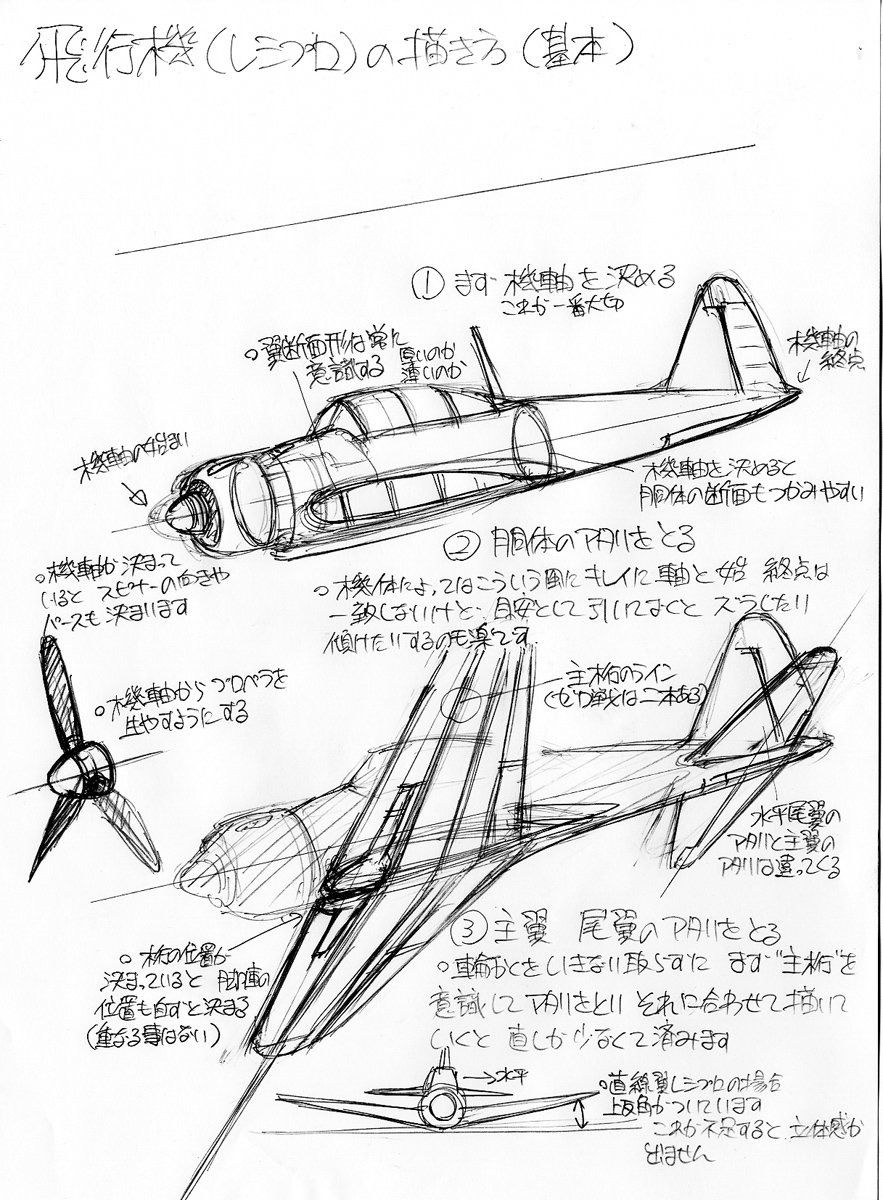
The Mitsubishi A6M Zero, known to the Japanese as the Rei-sen (Zero Fighter), remains one of the most iconic aircraft of World War II, renowned for its agility, long range, and distinctive design. Drawing this legendary carrier-based fighter accurately requires attention to its unique proportions: a long slender fuselage, rounded nose, elliptical wings with rounded tips, and a bubble canopy. This professional tutorial, translated and expanded from the original Japanese reference sketch titled “零戦(レイセン)の描き方 (基本)” (Basic Way to Draw the Zero Fighter – Rei-sen), breaks down key drawing tips into three main areas: propeller and engine cowling, wings and fuselage alignment, and tail assembly. These hand-drawn examples with annotations provide practical advice to avoid common mistakes, making it ideal for illustrators, manga artists, aviation enthusiasts, and historical illustrators working in pencil, ink, or digital media.

Analyzing the Reference Image
The reference features rough pencil sketches of the A6M Zero (likely Model 21 or 32 variant) in side and three-quarter views, with detailed callouts in Japanese (translated here for clarity):
- Section ①: Propeller and Motion Sketches show the three-bladed propeller in blurred motion. Key tips:
- Draw propeller blades with strong curve and taper.
- Add motion blur lines around the spinner for speed.
- The engine cowling is rounded and smooth; emphasize the radial engine’s subtle bulge.
- Common mistake: Flat blades—curve them aggressively for realism.
- Section ②: Wing and Fuselage Alignment Multiple views highlight the wings’ elliptical shape and dihedral (upward angle). Tips:
- Wings attach midway on the fuselage; leading edge curves gently forward.
- Draw the canopy as a smooth bubble, positioned just behind the cowling.
- Wingtips are famously rounded—avoid sharp points.
- From side view: Align wing root with cockpit base; trailing edge tapers rearward.
- Underside: Show retracted landing gear doors flush with the wing.
- Section ③: Tail and Rear Fuselage Focus on the vertical stabilizer, rudder, and horizontal stabilizers. Tips:
- Tail is tall and rounded at the top; rudder has a distinctive curve.
- Horizontal stabilizers are elliptical with rounded tips, mounted mid-tail.
- Rear fuselage tapers sharply to the tail.
- Add subtle panel lines and exhaust stains for authenticity.
- Perspective note: In three-quarter view, converge lines toward the tail for depth.
The sketches emphasize fluidity and proportion over rigid accuracy, reflecting manga-style aviation art common in Japanese tutorials.

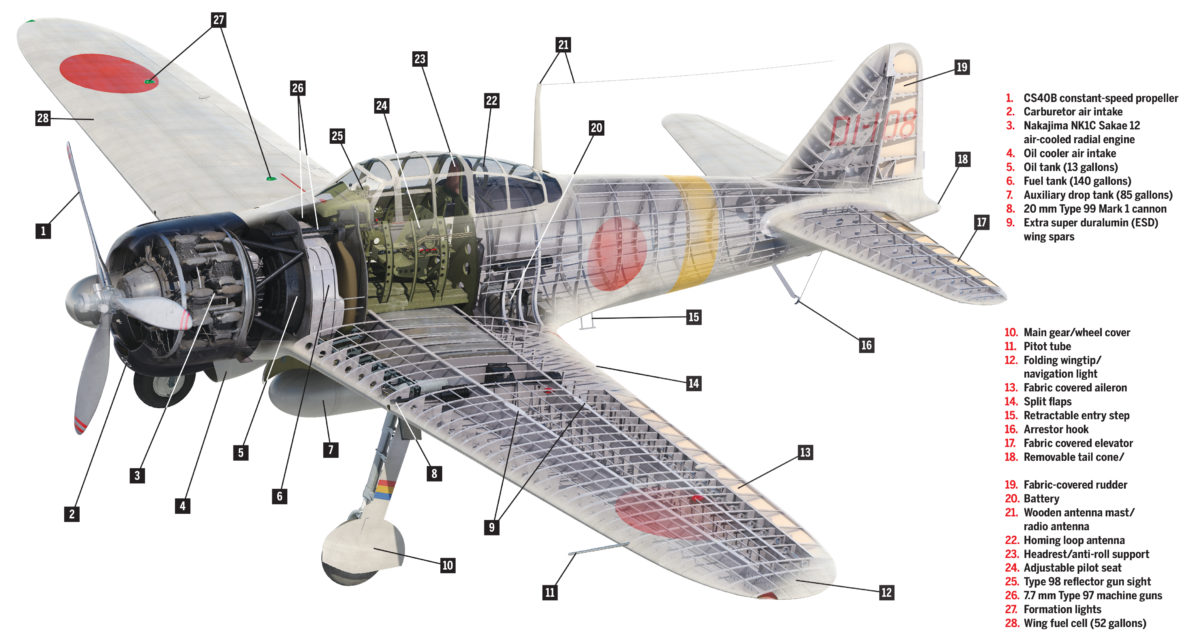
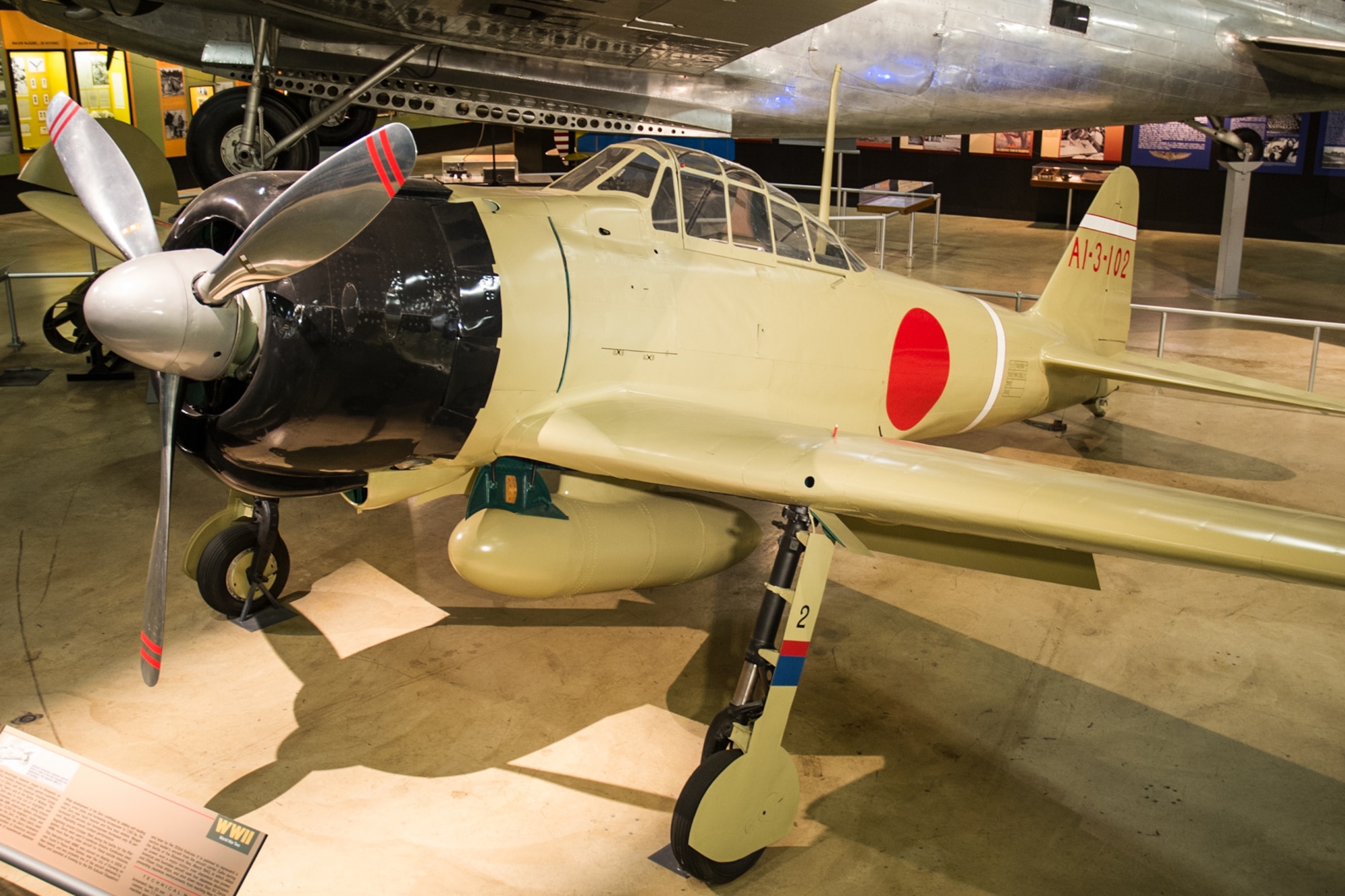
Key Characteristics of the A6M Zero for Accurate Drawing
- Overall Silhouette: Long, slender fuselage (about 9 meters); wingspan ~12 meters with low aspect ratio for maneuverability.
- Nose: Large rounded cowling housing the Sakae radial engine; three-blade variable-pitch propeller.
- Wings: Elliptical planform (similar to Spitfire), rounded tips (no folding on early models), slight dihedral.
- Canopy: Teardrop-shaped bubble for excellent visibility.
- Tail: Distinctive rounded fin and rudder; horizontal stabilizers with elevators.
- Markings: Often Hinomaru (red circles) on wings/fuselage; tail codes for units.
Step-by-Step Tutorial: Drawing the A6M Zero in Side View
Use reference photos of restored Zeros (e.g., A6M2 Model 21 or A6M5 Model 52) for accuracy. Work lightly in pencil first.
- Establish Basic Proportions:
- Draw a horizontal guideline for the fuselage length.
- Mark key points: Nose, cockpit center, wing root, tail base.
- Ratio tip: Fuselage is roughly 4x the wing chord length; propeller spinner ~1/10 fuselage.
- Sketch the Fuselage and Canopy (From ②):
- Draw a long tapered tube, bulging slightly at the engine.
- Add the bubble canopy—curve it smoothly rearward.
- Pro Tip: Cockpit sits high; align canopy base with wing root.
- Add the Propeller and Cowling (From ①):
- Circle for spinner; three curved blades radiating asymmetrically.
- For flight: Blur blades with speed lines.
- Cowling: Smooth circle with subtle intake scoops.
- Draw the Wings (From ②):
- Elliptical shape from root to rounded tip.
- Slight upward dihedral from side view.
- Add ailerons and flaps as subtle lines.
- Common Error: Square tips—always round them!
- Construct the Tail (From ③):
- Tall rounded vertical fin; curved rudder.
- Horizontal stabilizers mid-fuselage height, elliptical with rounded ends.
- Connect with smooth lines; add elevator hinges.
- Refine Details and Perspective:
- Landing gear (retracted: flush doors; extended: long struts).
- Exhaust pipes along cowling sides.
- Panel lines: Light and sparse—Zero was flush-riveted.
- Shading: Darker underside, highlights on canopy.
- Inking and Finishing:
- Vary line weights: Thick for outlines, thin for details.
- Digital: Use tapered brushes for organic curves.
- Add motion: Speed lines, exhaust smoke for dynamic feel.
Professional Tips and Common Mistakes
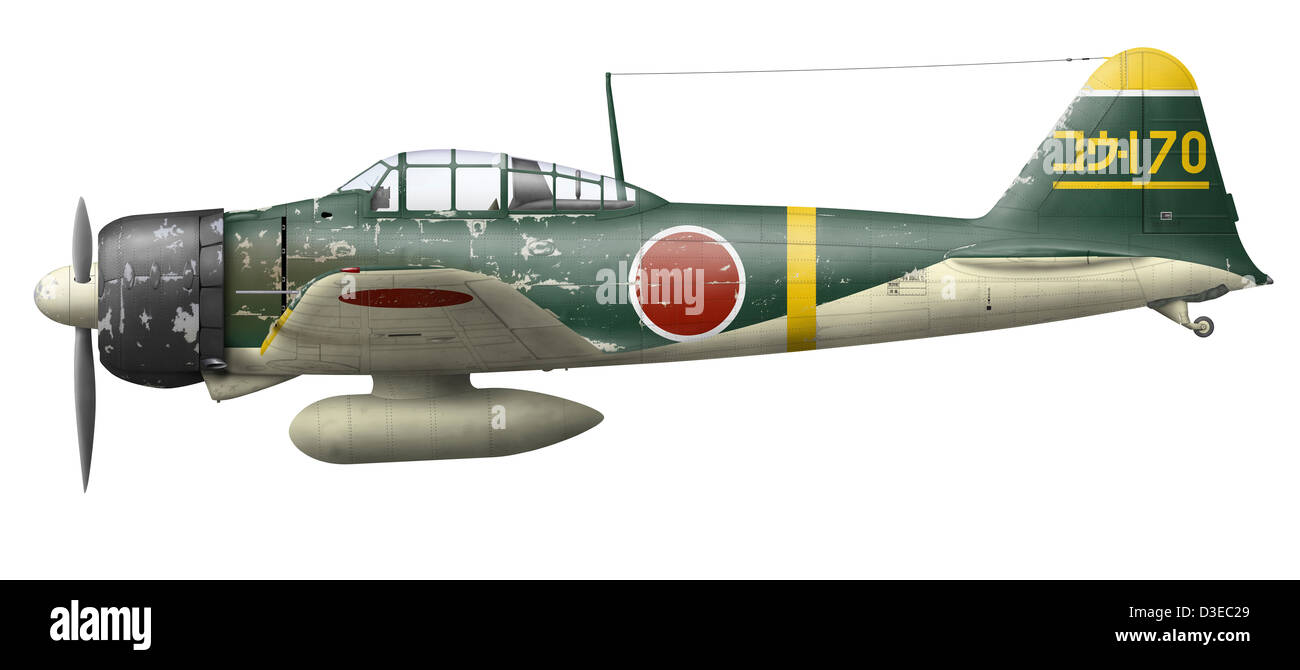
- Study real references: Restored flying Zeros show the graceful curves.
- Avoid over-angular designs—Zero’s beauty is in its organic, rounded forms.
- For manga/comics: Exaggerate curves for speed; add dramatic angles.
- Variations: Early models (A6M2) have folding wingtips; later (A6M5) clipped wings and individual exhaust stacks.
- Practice: Start with side view, progress to three-quarter for depth.
This tutorial captures the essence of the original Japanese sketch guide, helping you render the Zero with historical accuracy and artistic flair. Perfect for aviation art, model box illustrations, or historical comics. Download the reference for practice, try these steps, and share your drawings below! For more, watch step-by-step videos or study books like “Famous Airplanes of the World: Zero Fighter.”