How to Draw Dramatic Impact in Comic Fight Scenes: Avoiding Boring Slaps and Creating Explosive Action

Description:
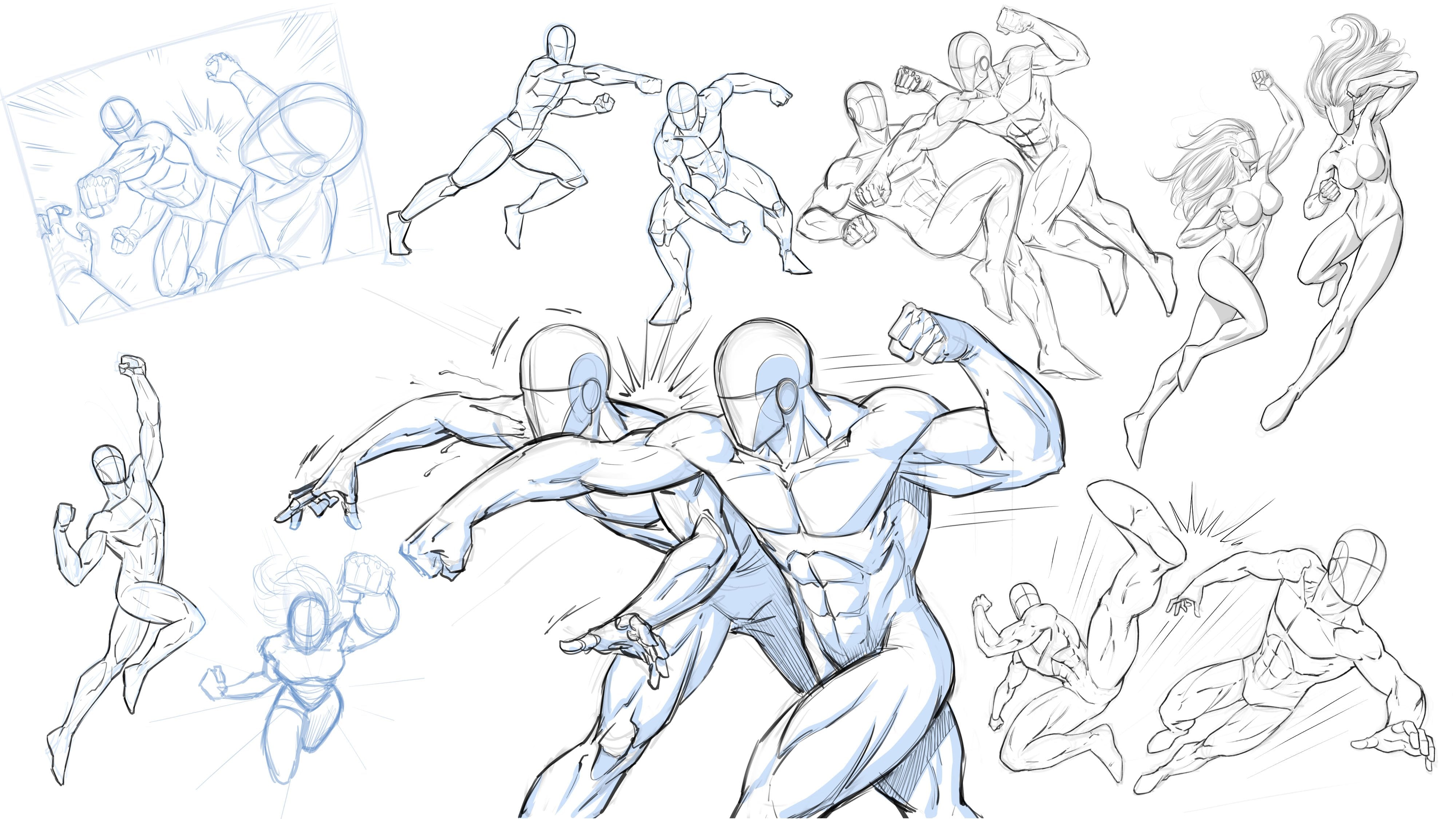
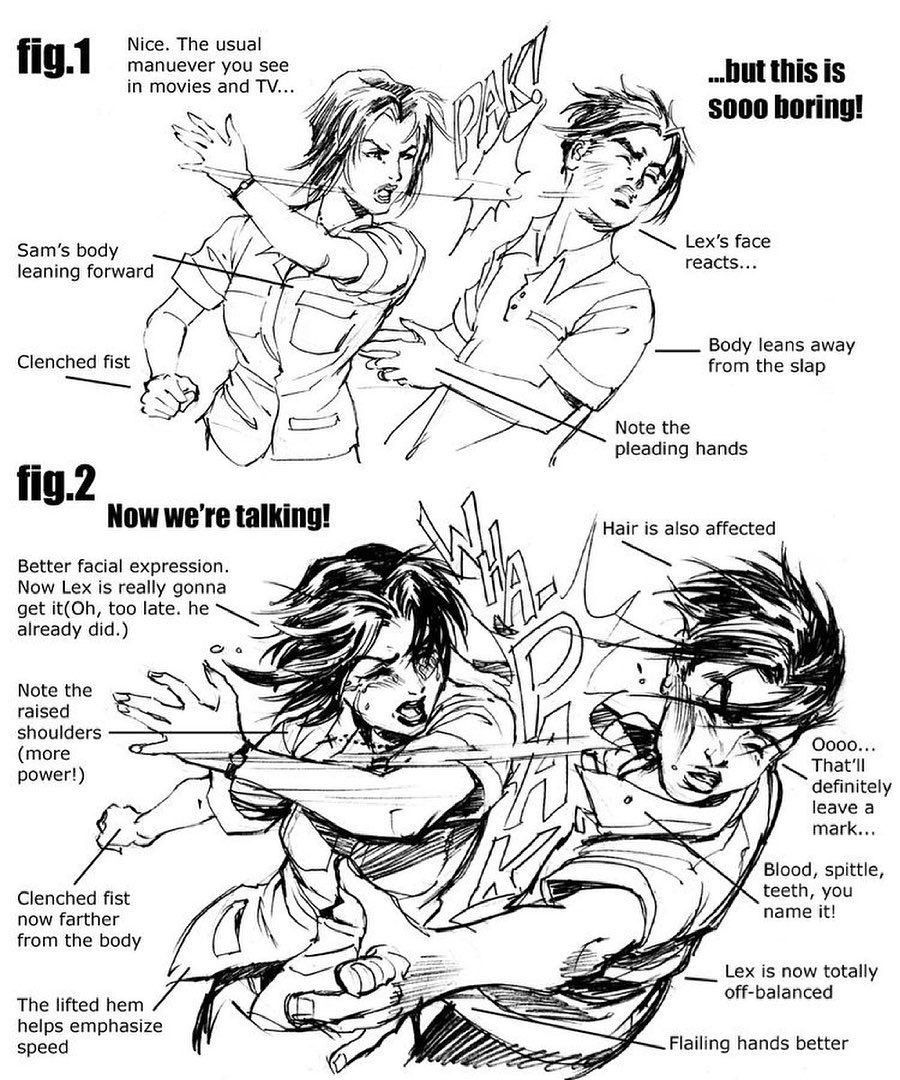
In comic books, manga, and sequential art, fight scenes are opportunities to convey raw emotion, power, and drama—but a poorly executed slap or punch can fall flat, looking stiff and unconvincing. This in-depth tutorial explores how to elevate simple actions like a slap into visually explosive moments, using exaggeration, body language, and dynamic effects. Based on the classic instructional sketches in the provided reference image (Fig. 1 and Fig. 2), we’ll compare a “boring” generic slap against a high-impact version, breaking down key principles from professional comic artists. Whether you’re drawing superheroes, dramatic confrontations, or intense manga panels, these techniques will help you make impacts feel painful, satisfying, and memorable.
Analyzing the Reference Image: Common Mistakes vs. Pro Techniques
The reference image presents a clear before-and-after comparison of a female character (Sam) slapping a male character (Lex):
- Fig. 1: The “Boring” Version This depicts the stereotypical movie/TV slap: Sam’s body leans forward rigidly, clenched fist close to Lex’s face, with minimal reaction. Lex’s body leans slightly away, hands pleading, and his facial expression mild. Annotations highlight issues: forward lean reduces power, no strong facial reaction, and overall lack of energy. The text calls it “sooo boring!”—a common pitfall where the action feels static and low-stakes.
- Fig. 2: The Dynamic “Now We’re Talking!” Version Heavily inked for emphasis, this shows extreme exaggeration: Sam’s clenched fist extends farther from her body, shoulders raised for torque, hem lifted to imply speed. Lex is completely off-balance—head snapped back, hair wildly affected, flailing hands, exaggerated pain expression (“Oooo… That’ll definitely leave a mark…”). Additional effects include blood/spittle/teeth implied, speed lines, and impact bursts. Annotations praise raised shoulders (more power), extended arm (speed), off-balance victim (realism), and hair movement (secondary action).
This contrast teaches a core comic principle: Exaggeration sells impact. Real-life slaps are quick and subtle, but in visuals, amplify physics-defying reactions for emotional punch.


Key Principles for Drawing Convincing Impacts
Apply these to punches, slaps, kicks, or any contact:
- Follow-Through and Extension: Attacker’s arm/leg should overshoot the contact point for speed illusion.
- Torque and Body Weight: Use hips/shoulders to generate power—raised shoulders, twisted torso.
- Victim Reaction: Exaggerate head snap, off-balance stance, flailing limbs.
- Secondary Motion: Hair, clothing, saliva/blood flying add realism and energy.
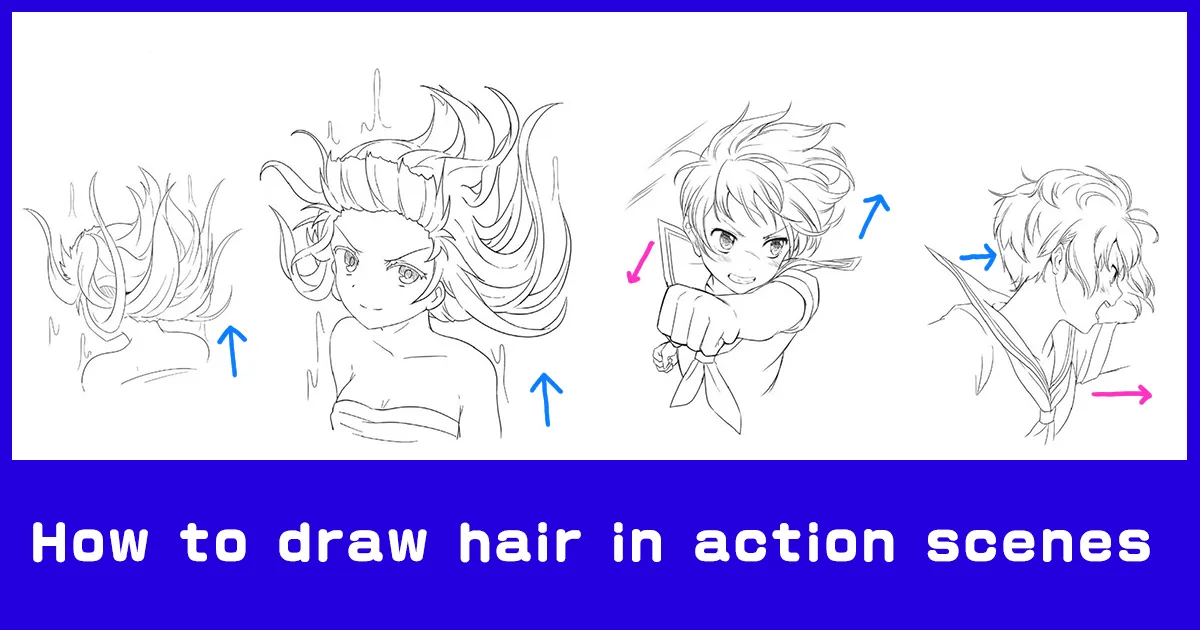
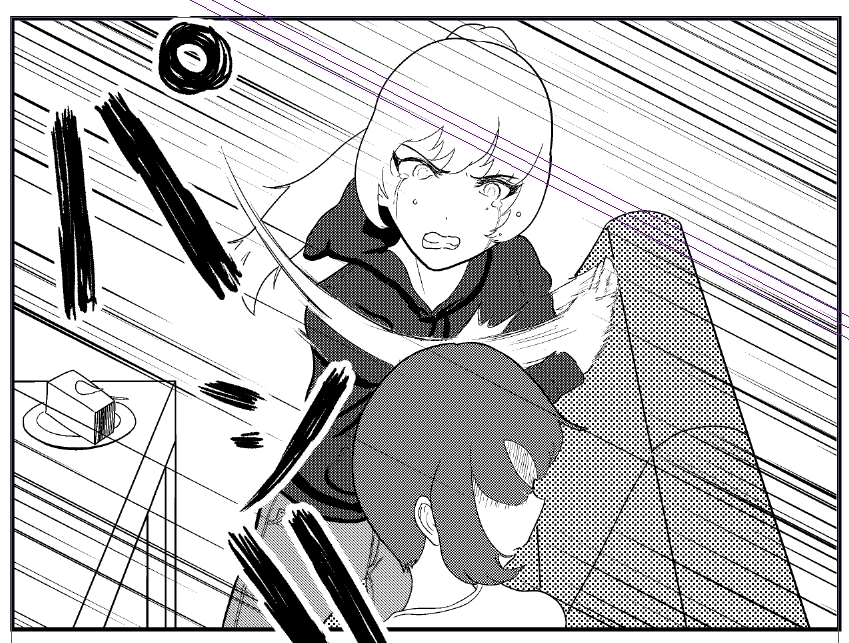
- Speed Lines and Effects: Radial lines, impact stars, motion blur.

- Facial Expressions: Attacker fierce; victim shocked/pained.
Step-by-Step Tutorial: Drawing a High-Impact Slap
Work in pencil first, then ink boldly. Use references from action photos or mirrors.
- Thumbnail the Pose:
- Sketch quick gestures: Decide angle (close-up for intimacy, wide for context).
- Avoid Fig. 1 pitfalls—start with exaggerated lines of action curving dramatically.
- Block In Attacker (Sam):
- Draw line of action arching backward then forward for wind-up.
- Raise shoulders high; twist torso.
- Extend arm fully—clenched fist past victim’s face.
- Lift clothing hem or add motion lines for speed.
- Pro Tip: Reference boxing stances for power transfer.
- Pose the Victim (Lex):
- Head tilted extremely back; neck stretched.
- Body off-balance—weight shifted, knees buckling.
- Arms flailing outward (not pleading close).
- Exaggerate face: Wide eyes, open mouth, sweat drops.
- Add Secondary Actions and Effects:
- Hair exploding outward in clumps.
- Implied debris: Blood arcs, teeth, spittle.
- Speed lines radiating from impact point.
- Impact burst: Star or “PAK!” sound effect.
- Refine and Ink:
- Vary line weights: Thick for foreground/impact, thin for background.
- Shade for depth—shadows under flying hair, on distorted face.
- Digital Tip: Use Clip Studio Paint or Photoshop speed line brushes.
- Common Errors to Avoid:
- Rigid poses (like Fig. 1).
- Symmetrical reactions.
- Ignoring gravity/physics exaggeration.
Examples and Inspiration
These techniques appear in works by artists like Jack Kirby (explosive impacts), Tetsuya Nomura (dynamic hair), or modern manga like One Punch Man.


Applications and Practice Tips
Use this for emotional beats (betrayal slaps), comedic overreactions, or epic battles. Practice by redrawing movie scenes exaggeratedly. Resources: “How to Draw Comics the Marvel Way” by Stan Lee/John Buscema, or online tutorials on impact effects.
Transform your fight scenes from boring to breathtaking with these principles from the reference image. Download it for tracing practice, and share your versions below! For more action drawing guides, check Proko or Skillshare classes.