Mosasaurus: The Mighty Marine Reptile of the Cretaceous

Introduction to Mosasaurus
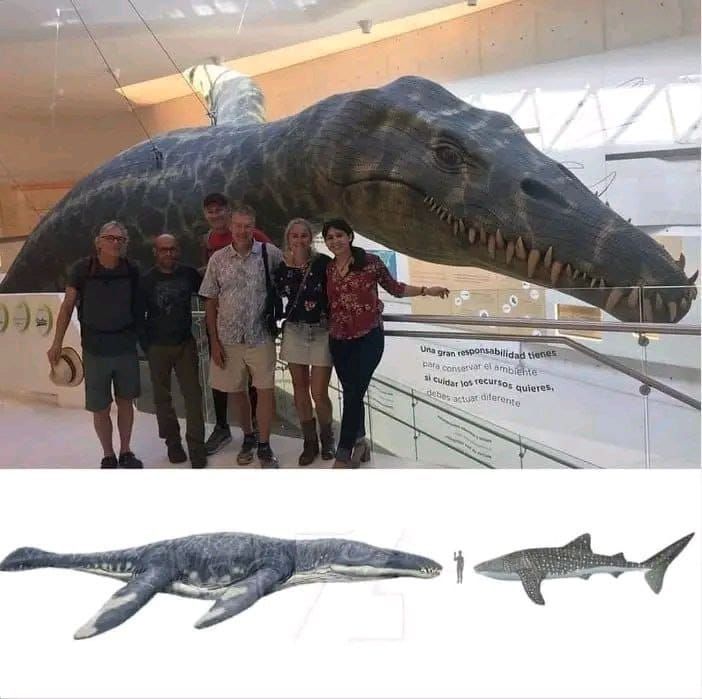
The image showcases an impressive display of Mosasaurus, a giant marine reptile that ruled the oceans during the Late Cretaceous period, approximately 70–66 million years ago. The upper portion features a life-sized model or skeleton in a museum setting, with visitors standing beneath its massive skull to emphasize its scale. The lower image provides a comparative illustration, depicting Mosasaurus alongside a human and a whale shark, highlighting its enormous size. Accompanied by a sign in Spanish noting its environmental significance, this exhibit serves as an educational centerpiece. This detailed guide, crafted as a professional paleontological tutorial, explores the anatomy, taxonomy, and ecological role of Mosasaurus, using the image as a foundation for engaging enthusiasts and researchers in the study of this prehistoric predator.
The dramatic presentation, with the model’s gaping jaws and streamlined body, underscores Mosasaurus’s dominance as an apex marine predator.
Taxonomy and Evolutionary Context
Mosasaurus is classified within the following taxonomic framework:
- Kingdom: Animalia
- Phylum: Chordata
- Class: Reptilia
- Order: †Squamata
- Family: †Mosasauridae
- Genus: †Mosasaurus (Conybeare, 1822)
- Species: Multiple, with M. hoffmannii as the type species
Evolving from terrestrial lizards, mosasaurs adapted to a fully aquatic lifestyle during the Late Cretaceous. Mosasaurus fossils are found globally, with significant specimens from the Maastricht Formation in the Netherlands and the Pierre Shale in North America. As squamates (related to snakes and monitor lizards), they represent a remarkable example of secondary marine adaptation, thriving alongside dinosaurs until the end-Cretaceous extinction.
Physical Description and Anatomy
The images reveal several defining characteristics of Mosasaurus:
- Skull and Jaws: The massive skull, featuring a broad, robust structure with numerous conical teeth, is designed for seizing and crushing prey. The double-hinged jaw, visible in the model, allowed it to swallow large prey whole, similar to modern snakes.
- Body Structure: The elongated body, reaching lengths of 10–18 meters (33–59 feet) based on the illustration’s scale, is supported by a flexible vertebral column and paddle-like limbs. The tail, likely ending in a fluke (inferred from related species), powered its swimming.
- Dentition: Sharp, recurved teeth with smooth edges suggest a diet of fish, ammonites, and other marine reptiles, including smaller mosasaurs or plesiosaurs.
- Size Comparison: The lower image shows Mosasaurus dwarfing a human (approximately 1.7–2 meters) and rivaling a whale shark (up to 12–18 meters), confirming its status as one of the largest marine reptiles.
- Skin and Coloration: The model’s textured, mottled skin pattern likely reflects artistic interpretation, though fossil evidence suggests a streamlined, hydrodynamic form.
The museum setting and visitor interaction highlight its educational impact, with the sign emphasizing conservation themes.
Habitat, Diet, and Paleobiology
Mosasaurus inhabited warm, shallow seas, such as the Western Interior Seaway of North America and the Tethys Ocean. As an apex predator, it preyed on a variety of marine life, including fish, squid, and other reptiles, using its powerful jaws and agility. Bite marks on fossilized prey and coprolites containing fish bones support its carnivorous diet.
Its paddle-like limbs and streamlined body indicate it was an active swimmer, possibly ambushing prey from below. The double-hinged jaw and flexible skull allowed it to tackle large or struggling prey, while its keen senses—likely enhanced by large eye sockets—aided in hunting.
Discovery and Preservation
Mosasaurus was first described in 1808 by Georges Cuvier from a skull found in Maastricht, Netherlands, marking a milestone in paleontology. The specimen in the image is likely a cast or reconstructed model, common in museums to preserve original fossils. The articulated skeleton and detailed restoration suggest careful preparation, possibly using 3D scanning and molding techniques to recreate its form.
Scientific and Educational Significance
Mosasaurus provides critical insights into the evolution of marine reptiles and the Late Cretaceous marine ecosystem. Studies of its skull biomechanics reveal a bite force capable of crushing bone, while its widespread fossil record informs global paleogeography. The museum exhibit, with its conservation message, serves as an educational tool, encouraging public interest in prehistoric marine life and modern environmental stewardship.
Conclusion: A Legacy of the Ancient Seas
The Mosasaurus display captures the grandeur of a dominant marine predator, offering a tangible link to the Cretaceous oceans. Its size and adaptations continue to fascinate, making it a highlight for museum visitors and researchers alike. For enthusiasts, exploring institutions with Mosasaurus exhibits or participating in marine fossil documentation can deepen understanding. This guide serves as a foundation for studying Mosasaurus, inspiring further exploration into its role in prehistoric ecosystems.
Pro Tip for Aspiring Paleontologists: When examining mosasaur fossils, measure the jaw hinge flexibility and tooth curvature to infer feeding strategies and prey preferences.