Ceratopsian Skull Display: A Showcase of Prehistoric Headgear
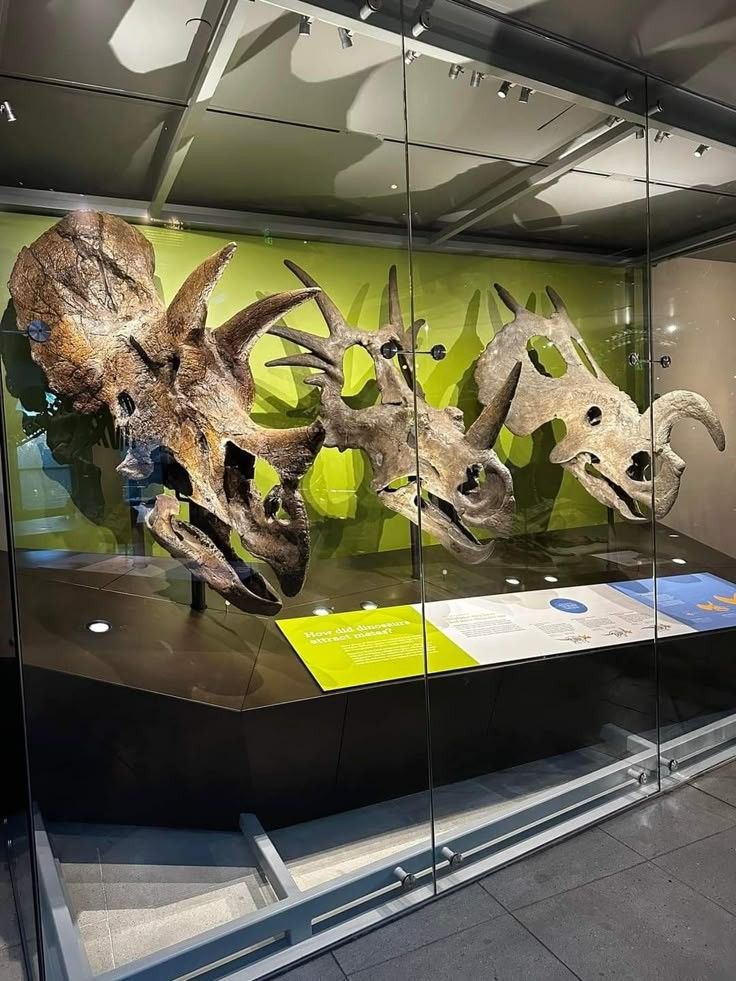
This stunning museum photo captures a dramatic exhibit featuring three massive ceratopsian skulls suspended behind glass panels under bright spotlights. The central skull is a classic Triceratops with its iconic three horns and broad solid frill, flanked by two relatives showing even more elaborate ornamentation—likely including Styracosaurus (with its radiating frill spikes) and possibly Pentaceratops or a similar form with extended, curved horns and a towering frill. The display is set against a vibrant green background, with informative signage below reading something like “How did dinosaurs attract mates?” (or a close variant), complete with panels explaining ceratopsian biology.
The skulls hang at eye level for maximum impact, their rough, fossilized textures contrasting beautifully with the modern museum lighting and glass cases. It’s a perfect example of how museums use comparative displays to highlight evolutionary diversity within a single dinosaur group.
(Close-up view of a similar ceratopsian skull wall exhibit, showing multiple horned dinosaur skulls mounted side-by-side under dramatic lighting to emphasize variations in frills and horns.)
(Museum case with three ceratopsian skulls suspended, green backdrop visible, highlighting the elaborate frills and spikes that make these dinosaurs so recognizable.)

The Ceratopsians on Display
These belong to the Ceratopsia group (“horned faces”), Late Cretaceous herbivores famous for their elaborate head ornaments. Key features:
- Triceratops (center): Three facial horns (two long brow horns, one shorter nasal) and a large, solid bony frill for protection and display.
- Left/Right flanking skulls: Likely Styracosaurus (long spikes radiating from the frill like a crown) and Pentaceratops (five prominent horns, including elongated ones on the cheeks and a huge upward-sweeping frill).
Such side-by-side comparisons show how ceratopsians diversified their “headgear” over millions of years, with frills and horns varying dramatically between species.
(Suspended ceratopsian skulls in a glass case, including a spiky-frilled Styracosaurus-like specimen next to a classic Triceratops, illustrating family diversity.)
How Did Dinosaurs Attract Mates? The Display’s Big Question
The prominent sign asks “How did dinosaurs attract mates?”—a nod to one of paleontology’s most fascinating debates. Modern consensus leans toward socio-sexual selection:
- Horns and frills likely served primarily as visual displays for species recognition, attracting mates, and signaling health/fitness (similar to peacock tails or deer antlers).
- They may have supported intraspecific combat (males locking horns or pushing during mating season) rather than predator defense.
- Studies (e.g., on ceratopsian variation and growth) suggest these structures evolved through mate choice—females preferring flashier males passed on those traits.
- Less support for purely defensive roles, as frills were often lightweight with large openings to reduce weight.
This exhibit beautifully illustrates the idea: the wild variety in horn/frill shapes across closely related species points to display and attraction rather than uniform anti-predator function.
(Detailed view of a Triceratops skull in a museum case, horns and frill prominently lit, with interpretive text nearby discussing display behaviors.)
Why This Exhibit Rocks
Comparative skull displays like this one (common in places like the Field Museum, American Museum of Natural History, or Natural History Museum of Utah) make abstract ideas tangible. Seeing the progression from simpler to more extravagant ceratopsian designs helps visitors grasp sexual selection in deep time—evolution driven by romance as much as survival.
If this is from a specific museum (e.g., Field Museum’s Evolving Planet hall or a similar ceratopsian-focused area), it’s a highlight for anyone into dinosaurs. These setups turn fossils into stories about behavior, courtship, and prehistoric life.
For more on ceratopsian displays and mating theories, check out this video: How Did Dinosaurs Woo Their Mates? – Field Museum (search for Field Museum or similar educational clips explaining horn/frill functions).
Love these museum shots—they bring the science to life! Got another exhibit pic or favorite dino display to share?