Discovering a Carboniferous Seed Fern Fossil: A Detailed Hand-Held Specimen of Ancient Plant Life

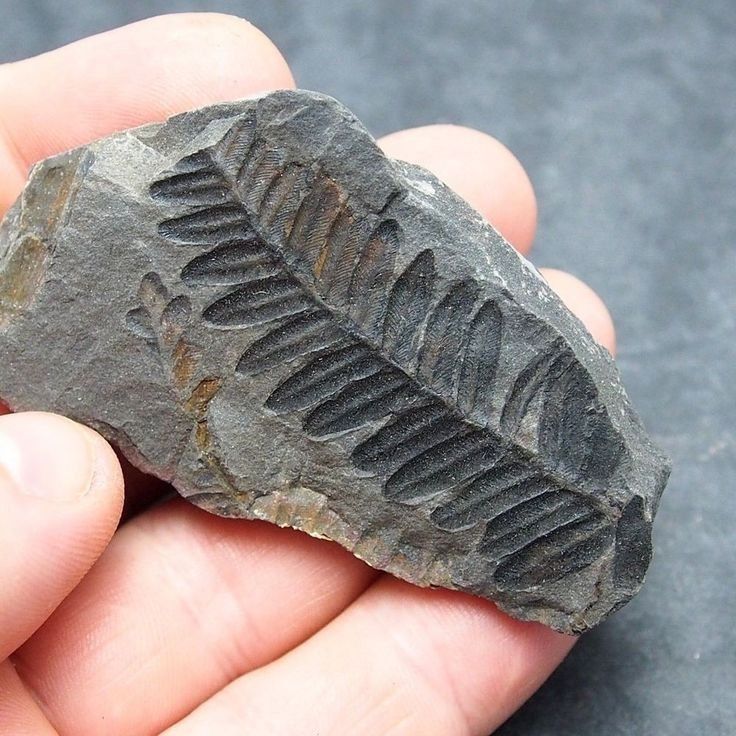
This striking close-up photograph captures a beautifully preserved fossil impression of a prehistoric fern leaf (likely belonging to an extinct seed fern genus such as Neuropteris, Alethopteris, or Pecopteris) held gently in the palm of a hand. The specimen, embedded in a dark gray to black shale matrix, exemplifies the exquisite detail that makes Carboniferous plant fossils so captivating for collectors, educators, and paleobotany enthusiasts alike.
Visual Breakdown of the Specimen
The fossil features a single, elongated pinnate frond (fern-like leaf structure) prominently displayed across the rock’s surface. Each leaflet (pinna) is clearly delineated with a symmetrical, lanceolate shape that tapers to a point. The venation is exceptionally well-preserved: a strong central midvein runs the length of each pinna, from which numerous parallel secondary veins (laterals) branch outward in a distinctive pattern—often described as “neuropterid” when the veins are dense and slightly curved, or more robust and straight in alethopterid forms. The impression appears as a dark carbonaceous film contrasting sharply against the surrounding gray shale, with subtle brownish-orange iron oxide staining along the edges—a common feature resulting from natural mineralization processes over millions of years.
The rock itself is irregularly shaped, roughly palm-sized (approximately 8–12 cm across), with a rough, natural texture typical of hand-split shale nodules. The matrix shows faint layering and minor cracks, evidence of the sedimentary environment in which the plant was buried. When held, the specimen’s weight and cool feel immediately convey its ancient origins, making it an ideal tactile introduction to deep time.
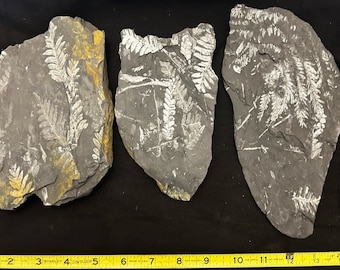
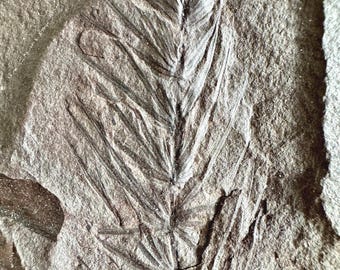
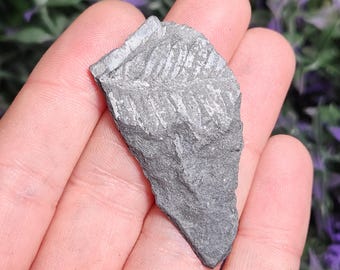
Here are some comparable high-quality examples of similar Carboniferous fern fossils to illustrate the beauty and variation in these classic specimens:
Geological and Paleontological Context
This type of fossil originates from the Carboniferous Period (approximately 359–299 million years ago), often called the “Age of Coal Forests.” During this time, vast swampy lowland forests covered equatorial regions of the supercontinent Pangaea. Towering lycopod trees, giant horsetails (Calamites), and abundant seed ferns (pteridosperms) dominated the landscape, forming the thick peat deposits that later became the world’s major coal seams.
Seed ferns like those in the genera Neuropteris (with rounded, oval leaflets and dense venation) and Alethopteris (with more elongate, robust pinnae) were not true ferns—they reproduced via seeds rather than spores, representing an important evolutionary step toward modern seed plants. The dark shale matrix is characteristic of black, organic-rich deposits from anoxic swamp bottoms, where rapid burial preserved delicate plant structures as compression fossils (impressions with thin carbon films).
World-famous localities yielding near-identical hand specimens include:
- St. Clair, Pennsylvania (Llewellyn Formation) — renowned for white pyrophyllite coatings and exquisite detail
- Mazon Creek, Illinois (Carbondale Formation) — famous for ironstone concretions
- Various European and North American coal measures
Tutorial: How to Appreciate and Identify Similar Plant Fossils
- Examine the Venation Pattern — Count secondary veins per centimeter and note if they fork or curve. Neuropteris tends to have more curved, crowded veins; Pecopteris shows smaller, more rounded pinnae with forked veins.
- Check Preservation Type — Look for carbonaceous residue (black film) vs. mineral replacement. Iron staining often enhances contrast.
- Consider Matrix — Black/gray shale or siderite nodules point to Carboniferous age; lighter colors may indicate different periods.
- Handle with Care — Use soft brushes for cleaning; avoid water on fragile carbon films. Store in acid-free trays to prevent pyrite decay.
- Research Locality — Provenance greatly increases scientific and collectible value—many specimens come from old spoil heaps near historic coal mines.
This beautiful hand specimen serves as a tangible portal to an ancient world, reminding us of the lush, green forests that once fueled the Industrial Revolution through coal. Whether you’re building a personal collection, teaching paleobotany, or simply marveling at Earth’s deep history, fossils like this one inspire awe and curiosity about our planet’s botanical past.
Perfect for display on a desk, shelf, or in a shadow box with subtle LED lighting to highlight the intricate venation. Have you found or collected similar plant fossils? Share your experiences in the comments
