Exploring a Stunning Pair of Trilobite Fossils: A Detailed Guide to This Exceptional Cambrian Specimen on Matrix

Title: Exploring a Stunning Pair of Trilobite Fossils: A Detailed Guide to This Exceptional Cambrian Specimen on Matrix
Description:
Discover the timeless beauty of ancient marine life with this exquisite fossil specimen featuring two beautifully preserved trilobites preserved together on a single natural gray limestone matrix slab. This professional-grade piece captures a rare moment from over 500 million years ago, offering both aesthetic appeal and significant paleontological value. Perfect for collectors, educators, and enthusiasts, this tutorial-style guide provides an in-depth analysis of the fossil, including identification tips, anatomical breakdown, geological context, and best practices for appreciation and display.
Step 1: Visual Examination and Key Features
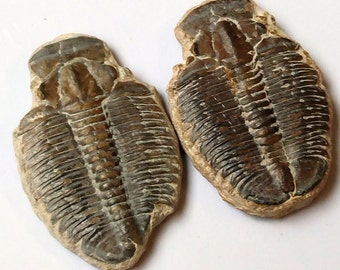
The slab, roughly rectangular and measuring approximately 20–25 cm across, displays a light gray to beige matrix with subtle natural weathering and fine sedimentary texture typical of Cambrian shale deposits. Two complete trilobites are prominently positioned side-by-side in a near-mirror orientation, creating a striking symmetrical composition.
Primary Identification Clues:
- Overall Body Plan — Classic three-lobed (trilobite = “three-lobed”) structure: a central axial lobe flanked by two pleural lobes.
- Cephalon (Head) — Rounded to semi-circular with a prominent, bulbous glabella (central forehead area) and well-defined facial sutures.
- Thorax — Composed of 12–13 clearly segmented thoracic rings, each with distinct pleural spines or furrows.
- Pygidium (Tail) — Small, semi-circular, and smooth compared to the more detailed thorax.
- Surface Detail — Excellent preservation of axial furrows, pleural segments, and subtle genal spines (cheek extensions). The dark brownish mineralization highlights the exoskeleton against the lighter matrix.
This configuration closely matches Elrathia kingii, one of the most abundant and recognizable Cambrian trilobites (Ptychopariida order), commonly found in pairs or clusters on matrix slabs from the Wheeler Shale Formation in Utah, USA. The paired arrangement may represent a natural occurrence on the ancient seafloor, possibly molted exoskeletons or individuals buried together during a rapid sedimentation event.
Quick Comparison Tip: Unlike Devonian Phacops/Eldredgeops (which feature large, bulging schizochroal compound eyes and a more robust, rounded profile), these specimens show smaller, simpler eyes and a flatter, more delicate appearance characteristic of Middle Cambrian ptychopariids.
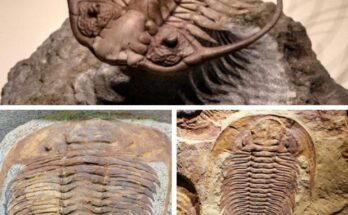
Here are some comparable Elrathia kingii fossil pairs and clusters for visual reference:

Step 2: Geological and Temporal Context
These trilobites originate from the Wheeler Formation (or closely related Marjum Formation) in the House Range of western Utah, deposited during the Middle Cambrian Period (~505–500 million years ago). This era marks the height of the Cambrian Explosion, when complex multicellular life diversified rapidly in shallow marine environments.
The fine-grained shale matrix allowed for exceptional preservation of delicate details, as rapid burial in oxygen-poor sediments prevented scavenging and decay. Such mass mortality or molting assemblages are common in these deposits, providing windows into ancient seafloor communities.
Practical Note for Collectors: Always verify provenance—authentic Wheeler Formation Elrathia specimens typically exhibit this characteristic gray matrix and dark calcite replacement of the original exoskeleton.
Step 3: Anatomical Insights and Paleobiological Significance
Elrathia kingii was a small benthic (bottom-dwelling) arthropod, likely 3–6 cm in length as adults, that crawled along muddy seafloors feeding on organic detritus or microorganisms via filter-feeding or scavenging.
Key biological features visible in this fossil:
- Segmentation — Demonstrates the arthropod body plan with tagmosis (specialized head-thorax-tail regions).
- Molting Evidence — Many fossils represent shed exuviae (molted shells), as the animal grew by periodically discarding its rigid calcite exoskeleton.
- Defense Mechanism — While not enrolled here, related species could roll into a protective ball (volvation), similar to modern pill bugs.
- Evolutionary Importance — As part of the early radiation of trilobites, Elrathia exemplifies the success of this class, which survived for nearly 270 million years before vanishing at the end-Permian extinction.
This paired specimen highlights potential social or environmental behaviors—whether coincidental burial or gregarious habits.
Step 4: Preservation, Authenticity, and Display Recommendations
The fossils appear to be professionally prepared, with matrix carefully trimmed to showcase the trilobites without excessive removal of natural rock. The preservation is outstanding, with minimal restoration visible.
Authenticity Checks:
- Look for natural mineralization patterns and fine cracks in the matrix.
- Genuine specimens show consistent calcite texture; replicas often appear too uniform or plastic-like.
- UV light test: Authentic calcite may fluoresce subtly.
Display & Care Tutorial:
- Place on a stable, padded base to prevent stress fractures.
- Use low-angle LED lighting to emphasize segment details and shadows.
- Maintain 40–50% relative humidity; avoid direct sunlight to prevent fading.
- Consider a glass display case for dust protection.
For educational purposes, pair this piece with a hand lens or microscope to examine pleural furrows and axial nodes up close.
Step 5: Why This Fossil Matters — Broader Implications
This elegant duo encapsulates the wonder of the Cambrian world: tiny but resilient creatures that dominated ancient oceans and left an enduring legacy in the fossil record. Trilobites like Elrathia kingii are not only beautiful display pieces but also key evidence in understanding early animal evolution, plate tectonics (via paleobiogeography), and extinction dynamics.
Whether you’re building a collection, teaching paleontology, or simply marveling at deep time, this paired trilobite fossil offers endless fascination. For similar specimens or further identification help, feel free to share your own photos—we’re happy to assist!
Happy fossil hunting! 🦕