Unveiling the Blue Catfish Skeleton: A Comprehensive Tutorial on Anatomy, Ecology, and Museum Significance

Introduction to the Blue Catfish
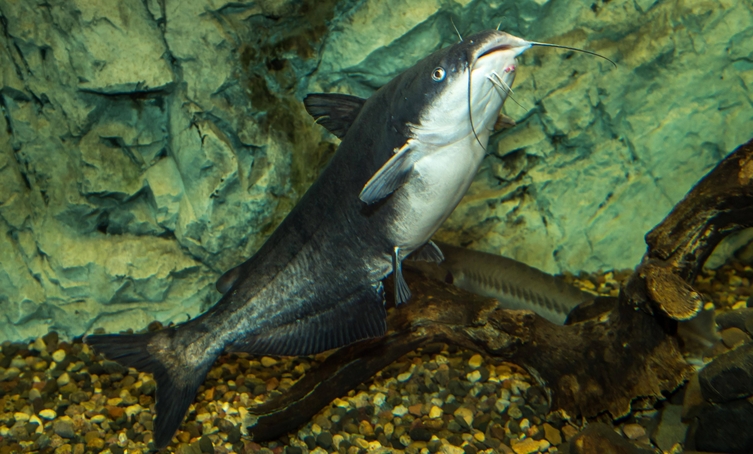
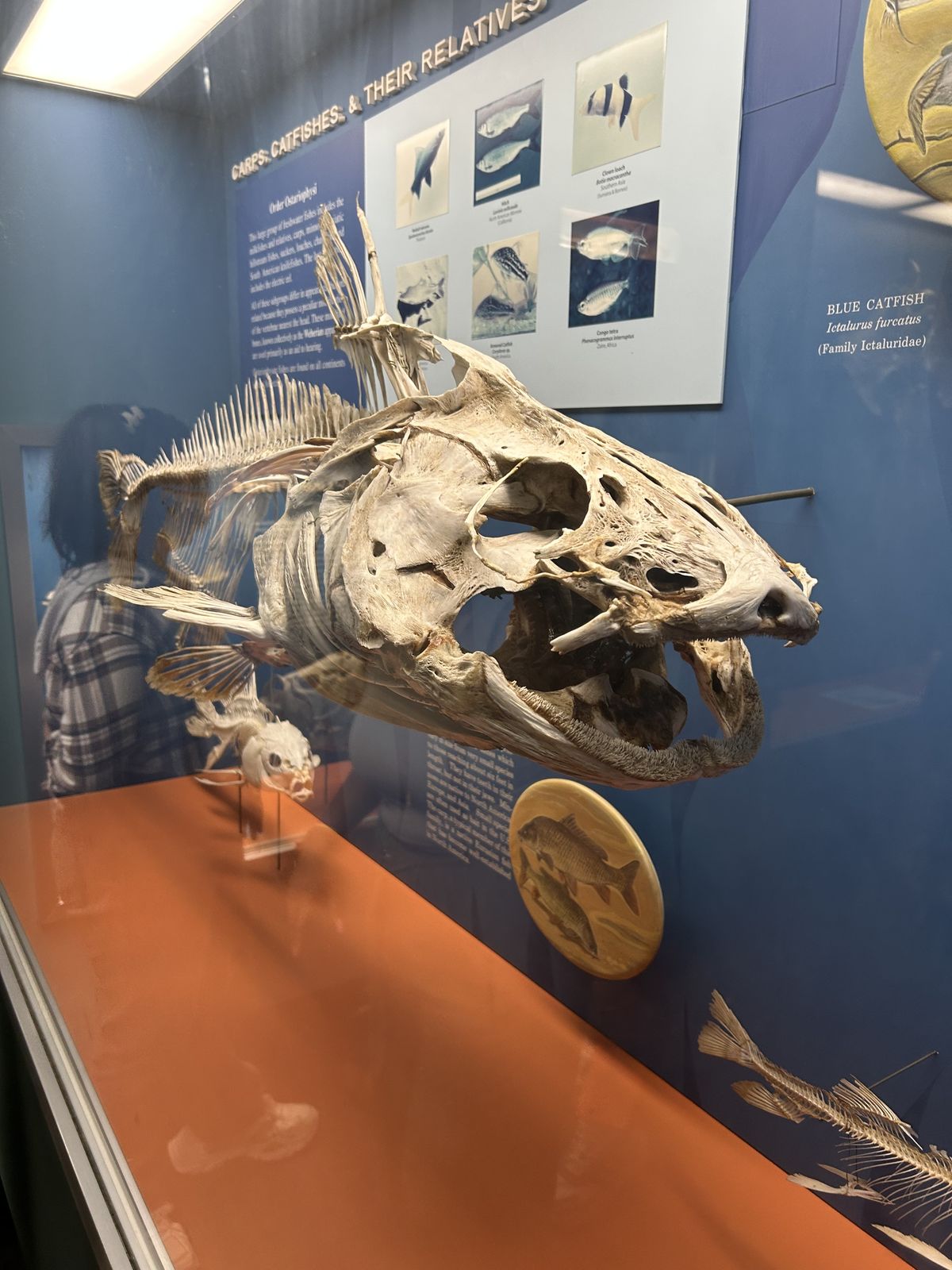
The image showcases a striking museum exhibit featuring the mounted skeleton of a blue catfish (Ictalurus furcatus), a prominent North American freshwater species from the family Ictaluridae. Suspended in a glass display case with a blue backdrop, the skeleton highlights the fish’s robust skull, sharp teeth, and elongated spine, accompanied by informational panels on “CARPS, CATFISHES, & THEIR RELATIVES” and smaller comparative specimens. This setup, likely from a natural history museum, educates visitors on the order Siluriformes and related groups. In this detailed, tutorial-style guide, we’ll explore the blue catfish methodically: from visual identification and skeletal anatomy to ecological roles, behavioral traits, historical context, and display significance. Designed for students, anglers, biologists, or museum enthusiasts, this post acts as a professional resource for understanding this apex predator, whether preparing for fieldwork, research, or a virtual exhibit tour.
Start your analysis with the exhibit’s layout: The primary skeleton is posed in a swimming posture, emphasizing its predatory features, while smaller skeletons below provide scale comparisons. Labels identify it as the “BLUE CATFISH Ictalurus furcatus (Family Ictaluridae),” and background illustrations depict live relatives like the channel catfish or bullhead. Native to the Mississippi River basin, this species has been introduced widely, often becoming invasive in non-native habitats like the Chesapeake Bay. The display underscores its role in aquatic ecosystems, where it serves as both predator and prey.
Step 1: Identifying and Dissecting the Skeletal Structure – Key Anatomical Features
Begin like an anatomy tutorial by focusing on the skull, the most prominent element in the image. The blue catfish skeleton reveals a broad, flattened head with a wide gape, equipped with numerous sharp, conical teeth for grasping prey. Note the barbels (whisker-like structures) implied by attachment points around the mouth – these sensory organs help detect food in murky waters. The cranium is robust, protecting a large brain cavity suited for nocturnal hunting, while the operculum (gill cover) bones show adaptations for efficient respiration in low-oxygen environments.
Move to the vertebral column: Comprising over 50 vertebrae, it provides flexibility for navigating river currents, visible in the image as a sinuous backbone extending to a deeply forked caudal fin. The pectoral and pelvic fins, supported by strong spines, include sharp rays that can lock for defense – a trait common in catfishes to deter predators. The dorsal fin, with its prominent spine, aids in stability during bursts of speed.
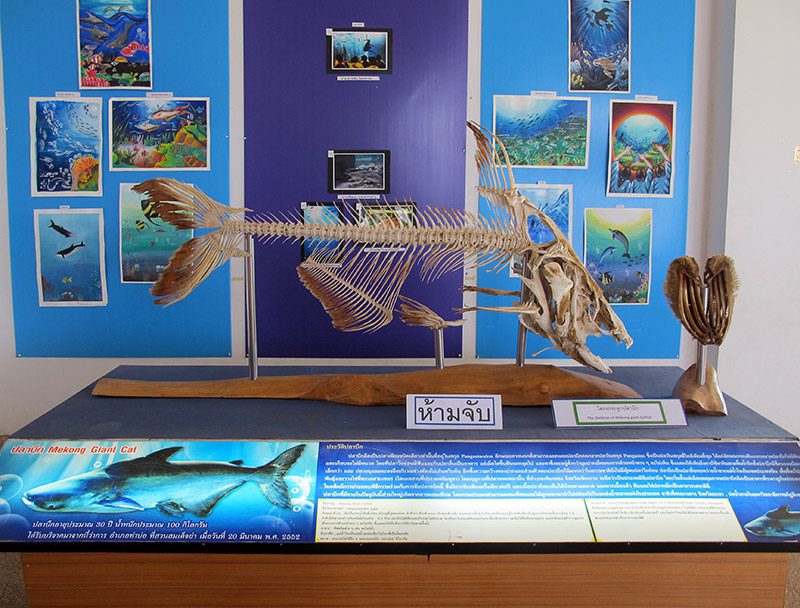
In museum preparation, skeletons like this are typically cleaned via dermestid beetles or maceration, then articulated with wires for display. Compare sizes: Adults can reach 165 cm (65 inches) and 68 kg (150 lbs), making this specimen a mid-sized example. For hands-on analysis, note how the skeleton’s lightweight yet durable bones reflect an evolutionary balance between buoyancy and strength in freshwater habitats.
Step 2: Exploring Habitat and Distribution – Environmental Adaptations
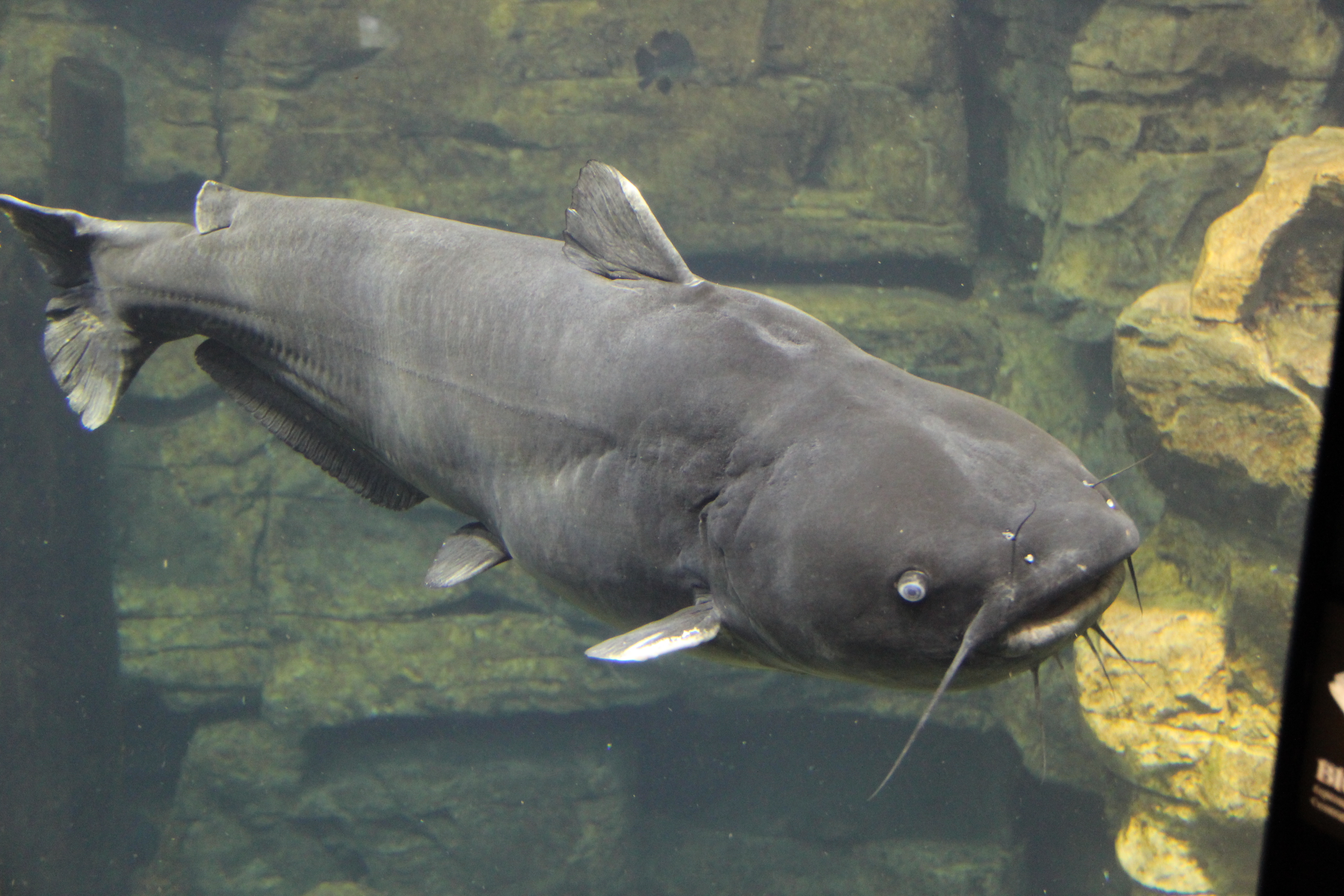
Shift to ecology as in a habitat tutorial: Blue catfish thrive in large rivers, reservoirs, and estuaries, preferring deep channels with strong currents in the Mississippi, Missouri, and Ohio River systems. They tolerate brackish waters, aiding their spread as an invasive species in areas like Texas coastal rivers or the Chesapeake Bay, where they outcompete natives.
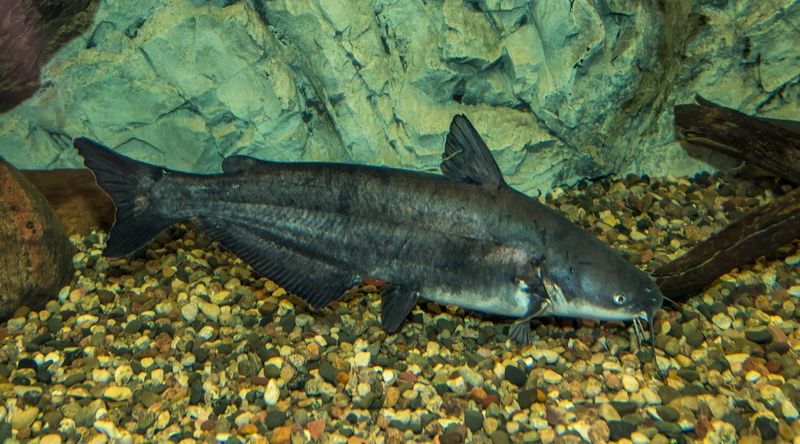
Adaptations include a scaleless body (evident in the skeleton’s smooth contours) covered in mucus for protection against parasites, and a swim bladder for buoyancy control. They inhabit depths up to 30 meters, migrating upstream for spawning in spring when water temperatures reach 21-24°C (70-75°F). In exhibits, this is often illustrated with maps or dioramas showing their range expansion due to human stocking for sport fishing.
Step 3: Understanding Diet and Behavior – Predatory Lifestyle
Delve into feeding like a behavioral tutorial: As opportunistic omnivores, blue catfish consume a varied diet shifting with age – juveniles eat invertebrates like insects and crayfish, while adults (over 30 cm) primarily target fish, including shad, herring, and even other catfishes. Cannibalism occurs in dense populations. They forage nocturnally or in low light, using taste buds covering their body (up to 100,000) to locate prey in turbid waters.
Behaviorally, they are solitary except during spawning, when males guard nests in crevices or undercut banks. Feeding peaks in early morning or evening, with larger individuals (>50 kg) capable of consuming prey up to half their size. In invasive ranges, this voracity impacts biodiversity, preying on endangered species.
Step 4: Historical Context and Conservation – From Discovery to Modern Challenges
Trace the species’ history: First described in 1840 by Achille Valenciennes, Ictalurus furcatus has been a staple in Native American fisheries and later commercial angling. Record catches include a 143 lb specimen from Virginia in 2011, highlighting their growth potential (up to 50+ years old).
Conservation notes: While abundant natively, introductions have led to ecological concerns; management includes removal programs in invasives areas. Museums use skeletons to educate on bioinvasions, with displays like those at the Museum of Osteology or Smithsonian featuring articulated examples.
Step 5: Museum Displays and Educational Value – Bringing Skeletons to Life
Exhibits like the one photographed, possibly from institutions such as the Florida Museum of Natural History or Smithsonian’s Bone Hall, use skeletons to reveal internal structures via techniques like CT scanning. Augmented reality apps enhance them, adding virtual flesh to bones for interactive learning.
For visitors, tips include examining comparative panels to understand evolutionary relations to carps and minnows. These displays promote STEM education, illustrating adaptations and human impacts on ecosystems.
In conclusion, the blue catfish skeleton embodies resilience and adaptability in freshwater worlds. Use this guide to enrich your appreciation during museum visits or ecological studies.