Brachylophosaurus canadensis: Insights into a Late Cretaceous Hadrosaur

Introduction to Brachylophosaurus canadensis
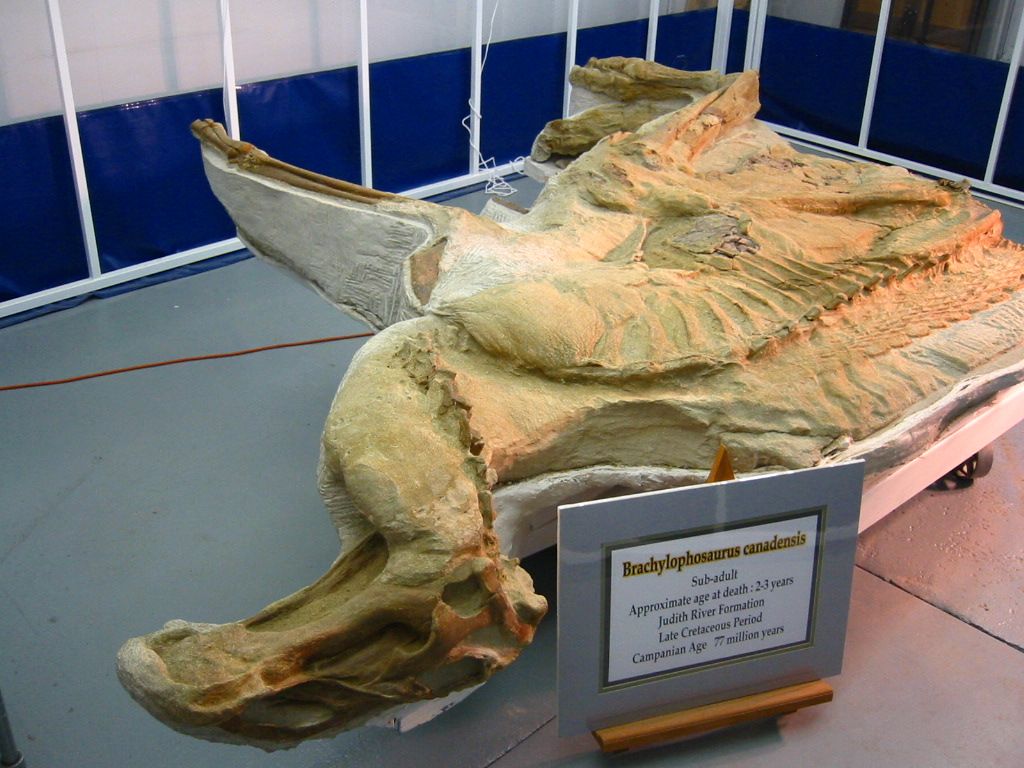
The image features a well-preserved fossil skeleton of Brachylophosaurus canadensis, a duck-billed dinosaur from the Late Cretaceous period, approximately 77 million years ago. Displayed in a museum or research setting, the skeleton showcases the robust skull, broad beak, and extensive vertebral column of this hadrosaurid. The accompanying label provides key details, including its species, approximate age at death (23 years), and origin from the Judith River Formation during the Campanian Age. This detailed guide, structured as a professional paleontological tutorial, explores the anatomy, taxonomy, and ecological significance of Brachylophosaurus, using the image as a foundation for educating enthusiasts and researchers about this herbivorous dinosaur.
The fossil’s articulated state and the visible bone texture highlight its scientific value, offering a glimpse into the life of a mature individual from the Late Cretaceous.
Taxonomy and Evolutionary Context
Brachylophosaurus canadensis is classified within the following taxonomic framework:
- Kingdom: Animalia
- Phylum: Chordata
- Class: Reptilia
- Clade: Dinosauria
- Order: †Ornithischia
- Suborder: †Ornithopoda
- Family: †Hadrosauridae
- Subfamily: †Brachylophosaurini
- Genus: †Brachylophosaurus (Sternberg, 1953)
- Species: †B. canadensis (Sternberg, 1953)
First described by Charles Mortram Sternberg from fossils found in Alberta, Canada, Brachylophosaurus is a member of the hadrosaurid family, known for their duck-like bills and complex dental batteries. This species lived during the Campanian stage of the Late Cretaceous, coexisting with other dinosaurs like Daspletosaurus and Troodon in a lush, floodplain environment.
Physical Description and Anatomy
The fossil in the image reveals several defining characteristics:
- Skull and Beak: The broad, flat beak, typical of hadrosaurs, was used for cropping vegetation. The skull, though partially obscured, likely featured a low, solid crest, a distinguishing trait of Brachylophosaurus compared to other hadrosaurs like Parasaurolophus.
- Vertebral Column: The extensive series of vertebrae, visible along the back, indicates a body length of approximately 7–9 meters (23–30 feet), with a robust tail for balance.
- Limbs: The forelimbs appear shorter than the hindlimbs, suggesting a bipedal or facultative quadrupedal posture, common among hadrosaurs.
- Age at Death: The label notes an approximate age of 23 years, inferred from bone histology, indicating a mature adult with fully developed skeletal features.
- Preservation: The skeleton’s articulated state and natural coloration suggest careful excavation and preparation, preserving details of the ribcage and pelvic girdle.
The display setting, with a protective enclosure, indicates its value as a museum exhibit or research specimen.
Habitat, Diet, and Paleobiology
Brachylophosaurus inhabited the coastal plains and river valleys of what is now western North America, part of the Judith River Formation. This environment featured abundant vegetation, including ferns, cycads, and early flowering plants, which formed its herbivorous diet. Its dental batteries—hundreds of tightly packed teeth—allowed it to grind tough plant material efficiently.
As a hadrosaur, Brachylophosaurus likely lived in herds, using its keen senses and possible vocalizations (via the crest) for communication. Its age at death suggests it survived to maturity, possibly facing predation from tyrannosaurs or environmental challenges like flooding.
Discovery and Preservation
Fossils of Brachylophosaurus canadensis were first uncovered in the 1930s in the Judith River Formation, with significant specimens including the famous “Leonardo” mummy, which preserved skin impressions. The skeleton in the image, likely a cast or original fossil, was preserved in fine-grained sediments, indicating rapid burial in a fluvial or deltaic environment. Preparation involved stabilizing fragile bones and mounting them for display.
Scientific and Educational Significance
Brachylophosaurus provides critical insights into hadrosaur diversity and the Late Cretaceous ecosystem. Studies of its crest morphology suggest it may have served for species recognition or sound production, while its well-preserved skeletons offer data on growth rates and pathology. The exhibit’s educational value lies in its accessibility, inspiring public interest in dinosaur paleobiology and the Campanian fauna.
Conclusion: A Window into Hadrosaur Life
The Brachylophosaurus canadensis fossil represents a mature hadrosaur from the Late Cretaceous, offering a detailed record of its anatomy and lifestyle. Its display in a museum setting connects visitors to the ancient landscapes of North America, encouraging further exploration. For enthusiasts, visiting sites like the Royal Tyrrell Museum or participating in fossil research can deepen understanding. This guide serves as a foundation for studying Brachylophosaurus, inviting further investigation into its role in prehistoric ecosystems.
Pro Tip for Aspiring Paleontologists: When analyzing hadrosaur fossils, examine crest structure and dental battery wear to infer social behavior and dietary habits.