Prehistoric Gallery Showcase: Skeletons, Megafauna, and Artistic Fusion in the Bay Area
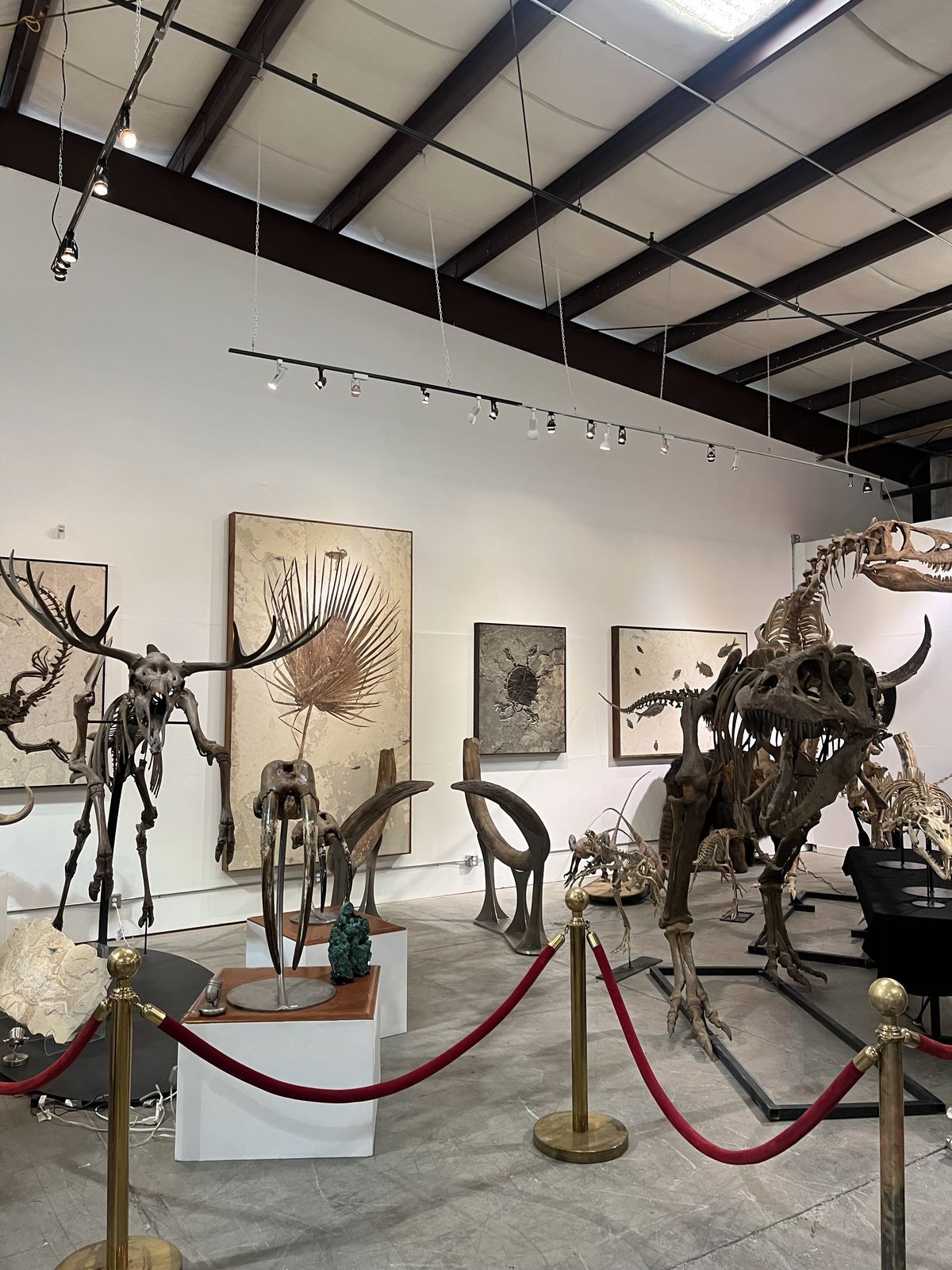
This expansive interior photograph reveals a stunning, warehouse-style paleontology and natural history gallery—likely a private or boutique fossil exhibition space in the San Francisco Bay Area—filled with an eclectic mix of mounted fossil skeletons, massive megafauna remains, and large-scale artistic panels. High industrial ceilings with exposed black beams, track lighting on rails, and hanging spotlights create dramatic illumination across the open floor plan. Red velvet ropes with gold stanchions cordon off key displays, giving the space a gallery-like elegance while preserving an accessible, almost raw “working collection” vibe. The room blends scientific specimens with contemporary art: large framed paintings or prints (featuring botanical motifs like palm leaves, abstract organic patterns, and earthy tones) hang on neutral walls, complementing the prehistoric bones in a thoughtful fusion of ancient and modern aesthetics.

Dominant pieces include:
- A towering Irish elk (Megaloceros giganteus) skeleton on the left—its enormous, palmate antlers spreading wide in a classic rearing pose, showcasing the Pleistocene giant’s iconic headgear (antler span up to 12 feet in life).
- A massive carnivorous dinosaur skeleton (possibly a Tyrannosaurus rex or similar theropod) center-right, with a gaping skull, powerful limbs, and articulated tail—mounted dynamically as if mid-stride.
- Smaller mounts scattered throughout: partial skeletons, isolated skulls, tusks, and possibly marine reptile elements on pedestals or low platforms.
- Artistic elements: Oversized canvases with gold-leafed or textured botanical and abstract designs, creating a serene, almost meditative contrast to the rugged fossils.
Visitors (or perhaps the photographer’s companions) stand amid the displays, emphasizing the human scale against these prehistoric titans. The overall atmosphere feels intimate yet grand—perfect for a specialized fossil gallery, private collection showcase, or pop-up paleo-art exhibition rather than a traditional large museum hall.
(Another view of a similar gallery space featuring mounted megafauna skeletons like Irish elk and dinosaur mounts under track lighting, with large artistic panels on the walls for a blended paleo-art experience.)
(Close-up detail of the Irish elk skeleton in the exhibit, highlighting the massive palmate antlers and robust skull mounted on a pedestal—illustrating the awe-inspiring size of Pleistocene megafauna.)
Highlights of the Display
- Irish Elk (Megaloceros giganteus): One of the most striking pieces, this Ice Age deer relative (not a true elk) lived ~400,000–7,700 years ago across Eurasia. Its antlers—used for display and combat—represent extreme sexual selection in evolution. The mount captures the animal’s imposing stature (up to 7 feet at the shoulder).
- Theropod Dinosaur Skeleton: The large, bipedal form with serrated teeth and powerful build suggests a tyrannosaurid or close relative—evoking the apex predators of the Late Cretaceous.
- Artistic Integration: The large-scale paintings (palm fronds, circular motifs, earthy palettes) create a thematic bridge between prehistoric life and natural forms, suggesting the gallery emphasizes aesthetic appreciation alongside science.
- Other Specimens: Scattered elements include what appear to be mammoth tusks, smaller herbivore skeletons, and possibly marine fossils—reflecting a broad collection spanning Mesozoic to Pleistocene eras.
This setup exemplifies how modern fossil exhibits blend education, wonder, and art—making deep time feel accessible and visually captivating.
Likely Location & Context
Given the San Francisco location, warehouse aesthetic (exposed beams, industrial lighting), red ropes, and mix of fossils with large contemporary art, this closely resembles a private fossil gallery, high-end paleo dealer showcase, or specialized pop-up event in the Bay Area. Places like Paxton Gate (known for oddities including fossils) or boutique paleo shops sometimes host such displays, though the scale and mounted skeletons point to a dedicated paleo-art or collector’s venue. Major institutions like the California Academy of Sciences or UC Museum of Paleontology have more formal halls, but this raw, gallery-like feel suggests a commercial or private exhibition space—perhaps a temporary install or ongoing collection open to visitors.
For similar experiences, explore Bay Area spots like the California Academy of Sciences (Golden Gate Park) for mounted casts and fossils, or check local fossil shops and events for rotating displays.
Watch this for inspiration on such exhibits: Paleo Art and Fossil Galleries | Educational Clips (search for tours of private collections or paleo-art shows).
These kinds of spaces make paleontology feel alive and artistic—pure Bay Area creativity meets deep time! If this is from a specific gallery you’ve visited (maybe a Mission District spot or event), or if you have more photos from inside, share them—these glimpses are incredible. What’s your favorite piece in this room?