Discovering Stupendemys Geographicus: A Step-by-Step Guide to the Giant Spiked Turtle Fossil, Anatomy, and Paleontological Insights

Introduction to Stupendemys Geographicus
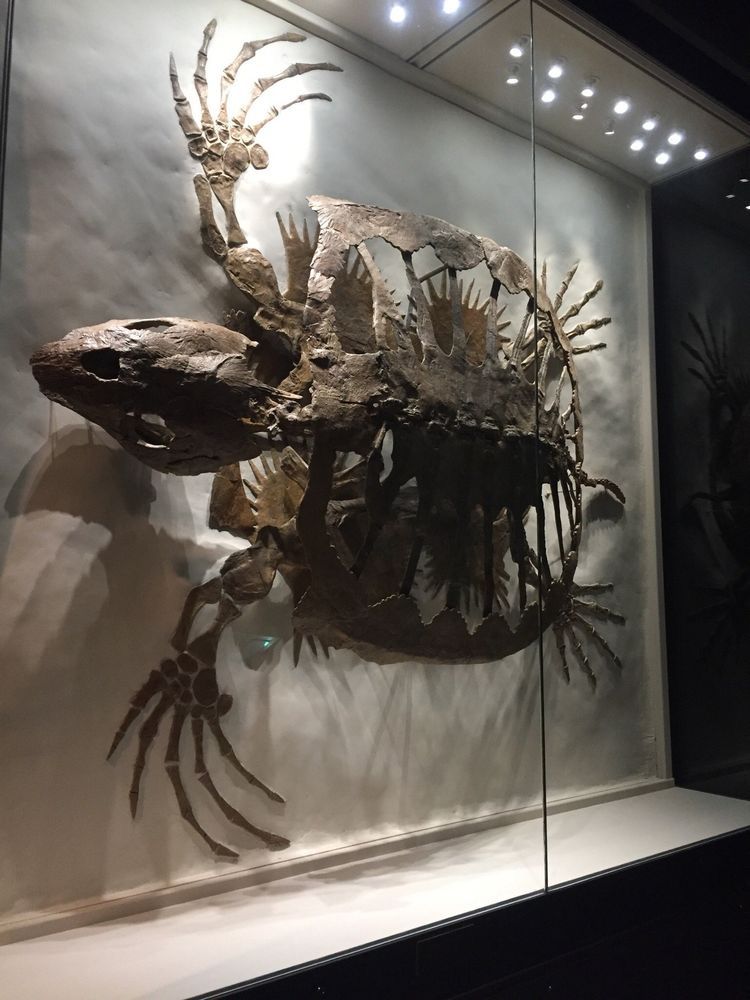
The image presents a remarkable museum exhibit of a fossilized skeleton belonging to Stupendemys geographicus, an extinct giant freshwater turtle from the Miocene epoch, approximately 13 to 5 million years ago. Encased in a glass display with overhead lighting highlighting its intricate bone structure, this specimen showcases the turtle’s massive shell adorned with prominent forward-projecting horns, robust clawed limbs, and a broad skull. Often referred to as the “stupendous turtle,” Stupendemys represents one of the largest turtles ever known, rivaling modern sea turtles in scale but adapted for riverine environments. In this professional, tutorial-style post, we’ll dissect the fossil systematically: beginning with visual identification, progressing through anatomical breakdown, historical discovery, ecological context, behavioral inferences, and its role in modern museums. This guide is tailored for paleontology students, researchers, or enthusiasts, offering a structured approach to analyzing such exhibits, whether in-person or through virtual resources.
Initiate your examination by noting the display’s orientation: The skeleton is mounted ventrally (belly-up) or in a flattened profile, emphasizing the carapace (upper shell) with its distinctive horns protruding laterally and anteriorly, designed to protect the neck. Measuring up to 3.3 meters (11 feet) in shell length and weighing an estimated 1,145 kilograms (2,500 pounds), this prehistoric reptile dwarfed most contemporary turtles. The claws on the flipper-like limbs suggest capabilities for digging or grasping in aquatic settings, while the overall preservation indicates burial in fine sediments that prevented decay.
Step 1: Visual Identification and Overall Morphology – Recognizing Key Features
Approach identification as in a field tutorial: Compare the fossil to known taxa by focusing on diagnostic traits. The shell, or carapace, is oval and robust, composed of fused dermal bones with reduced ossification compared to modern turtles, allowing for lighter weight in water. Prominently, the anterior margins feature large, horn-like spikes—up to 30 cm (1 foot) long—curving forward on either side of the neck, a sexually dimorphic trait likely present only in males for combat or display. In the image, these horns are clearly visible, arching outward from the shell’s edge.
Examine the limbs: The pectoral and pelvic girdles support broad, paddle-shaped flippers with elongated phalanges and sharp claws, adapted for swimming in strong currents rather than open ocean propulsion. The skull, positioned at the front, is triangular with a pointed rostrum, housing a powerful jaw for crushing prey. Note the plastron (lower shell) is partially visible, showing a simpler structure without the heavy armor of terrestrial turtles. For museum analysis, use lighting to spot wear marks on horns, which may indicate intraspecific fights.
Step 2: Anatomical Breakdown – Dissecting the Skeleton Layer by Layer
Proceed like an osteology tutorial: Divide the skeleton into regions for detailed study. Start with the carapace, formed by over 60 bony plates fused to the vertebrae and ribs, providing buoyancy and protection. The horns, ossified extensions from the peripheral bones, bear scars suggesting use in male-male aggression, similar to antlers in deer. Females lacked these, as inferred from dimorphic fossils.
The vertebral column integrates with the shell, limiting flexibility but enhancing stability in water. Limbs exhibit hypertrophied claws—up to 10 cm long—for foraging or nesting. The mandible (lower jaw) is V-shaped with a central flat bone for mollusk-crushing, indicating an omnivorous diet including fish, snails, and vegetation. In preparation, fossils like this are excavated using chisels and brushes, then stabilized with consolidants before mounting. Compare to modern side-necked turtles (Pleurodira), to which Stupendemys belongs, noting the neck retraction mechanism sideways rather than straight back.
Step 3: Historical Discovery and Fossil Record – Tracing Origins
Contextualize historically: Stupendemys geographicus was first described in 1976 from fragments found in Venezuela’s Urumaco Formation. Major breakthroughs occurred in the 1990s and 2010s, with complete shells unearthed in Colombia and Venezuela, including a 2.4-meter specimen in 2014 and a jawbone confirming its predatory capabilities. Fossils span the Miocene, preserved in fluvial deposits from ancient mega-wetlands.
Excavation sites include the Tatacoa Desert and Acre region in Brazil, where teams use grid mapping to document contexts. Notable specimens reside in institutions like the American Museum of Natural History (AMNH) and the Centro de Investigaciones Paleontológicas in Venezuela, often displayed as wall-mounted skeletons to showcase size.
Step 4: Ecological and Behavioral Insights – Reconstructing Life Habits
Rebuild the paleoecology: Stupendemys thrived in vast freshwater systems resembling modern Amazonian lakes and rivers, in what is now northern South America. As an apex predator, it likely ambushed prey using its size and jaws, consuming mollusks, fish, and small reptiles, while the horns deterred giant crocodilians like Purussaurus. Behaviorally, males may have engaged in head-butting contests, inferred from horn damage.
Nesting involved digging in sandy banks, with migration patterns tied to seasonal floods. Extinction around 5 million years ago coincided with Andean uplift, fragmenting habitats and increasing competition. Compare to living relatives like the arrau turtle (Podocnemis expansa) for insights into social behaviors.
Step 5: Modern Significance and Museum Exhibits – Educational Applications
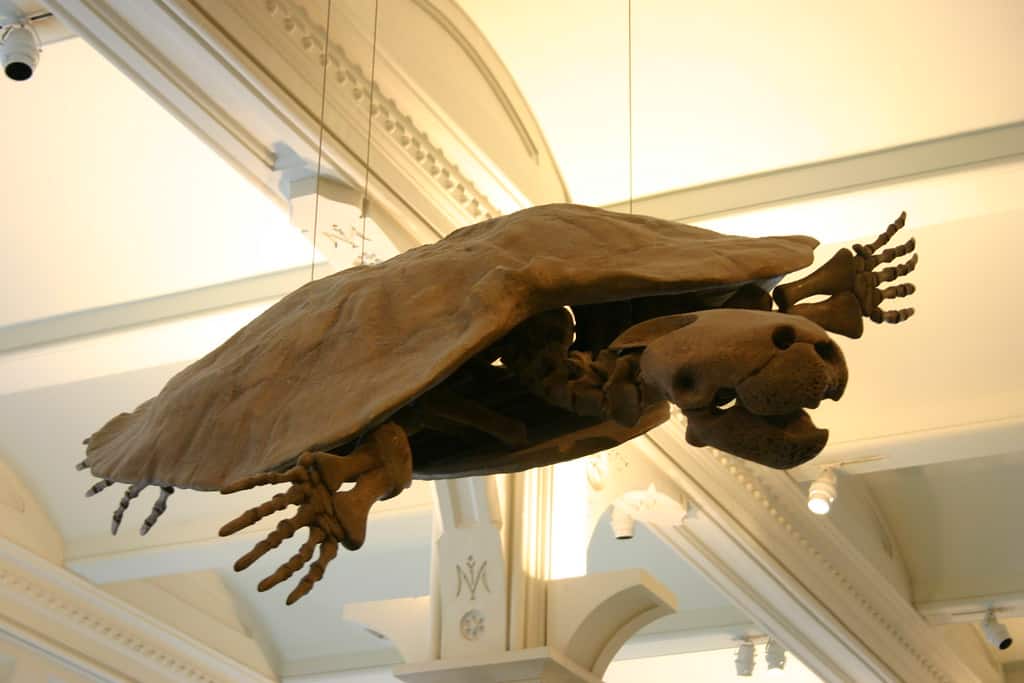
Today, Stupendemys fossils like the one imaged are featured in museums such as the AMNH or Smithsonian, educating on megafauna evolution and climate change impacts. Displays often include reconstructions showing scaly skin and aquatic poses. For visitors, employ 3D scanning for virtual tours or compare sizes to human silhouettes.
Research uses CT imaging to study internal anatomy without damage. This species highlights biodiversity loss, paralleling current threats to large aquatic reptiles.
In summary, the Stupendemys geographicus fossil encapsulates ancient mega-ecosystems, providing invaluable lessons in paleobiology. Leverage this guide for your next exhibit analysis or academic pursuit.