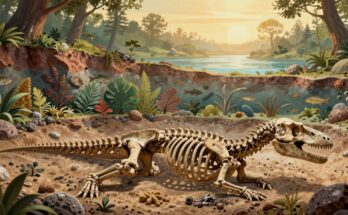
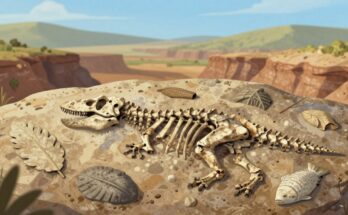
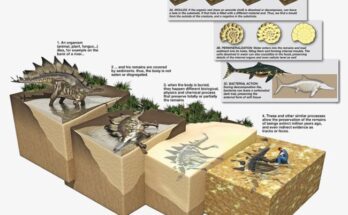
How Fossils Are Formed: From Living Organisms to Stone The process of fossilization is a complex and fascinating one, transforming living organisms into stone over thousands or even millions of years. It begins with the death of an organism, which then gets buried under layers of sediment, protecting it from scavengers and oxygen. fossil formation As more sediment layers accumulate, the pressure increases, and the organism’s remains undergo significant changes. Over time, the original organic material is replaced with minerals, creating a stone replica of the organism. This intricate process is a key area of study in paleontology, helping us understand the history of life on Earth. Key Takeaways The fossilization process involves the transformation of living organisms into stone. Organisms must be quickly buried to protect them from scavengers and oxygen. Mineral replacement is crucial for creating a lasting fossil. Paleontology relies heavily on the study of fossils to understand Earth’s history. Fossil discovery provides valuable insights into the evolution of life. What Are Fossils? Fossils are remnants of ancient life forms that have been preserved over time. These remnants can include bones, leaves, or even tracks left behind by organisms that lived in the distant past. The study of fossils, known as paleontology, is a crucial aspect of understanding Earth’s history. Definition and Basic Concepts Fossils are the preserved remains or traces of animals, plants, and other organisms from the remote past. They are typically found in sedimentary rocks and can provide significant information about the history of life on Earth. The process of fossilization is complex and involves several stages, including burial, mineralization, and replacement. Fossils can range from tiny microorganisms to massive dinosaur bones, offering a glimpse into the diversity of life on our planet. The Importance of Fossils in Understanding Earth’s History Fossils play a vital role in understanding Earth’s history, providing evidence of past life forms and ecosystems. By studying fossils, scientists can reconstruct ancient environments and understand how life has evolved over time. The fossil record is a chronological record of the history of life on Earth, with fossils serving as a key indicator of the planet’s past climates, geological events, and the evolution of different species. This information is crucial for the field of paleontology, helping scientists to better understand the Earth’s history and the processes that have shaped our planet. The Rare Conditions Required for Fossilization For fossils to form, certain rare conditions must be satisfied, making the process of fossilization exceptionally uncommon. The journey from a living organism to a fossil involves several critical steps, each dependent on specific environmental circumstances. Quick Burial: The First Critical Step One of the primary conditions for fossilization is quick burial. When an organism dies, it must be rapidly buried by sediment to protect it from scavengers, oxygen, and other factors that contribute to decay. This swift burial helps preserve the organism’s remains, increasing the chances of fossilization. Quick burial is crucial because it shields the organism from the elements and scavengers that would otherwise consume or destroy the remains. Environments such as river deltas, where sediment is frequently deposited, are conducive to this process. Environmental Factors That Promote Preservation Besides quick burial, various environmental factors play a significant role in promoting preservation. Low oxygen levels, for instance, significantly reduce the rate of decay, while the presence of minerals can aid in the replacement of original organic material, creating a more durable fossil. A notable example of favorable environmental conditions is seen in amber preservation, where resin encases organisms, protecting them from external factors and allowing for exceptional preservation of even the most delicate structures. Environmental Factor Role in Preservation Low Oxygen Levels Reduces decay rate Presence of Minerals …
How Fossils Are Formed: From Living Organisms to Stone Read More