Massive Sperm Whale Skull: Behind-the-Scenes Preparation of a Giant Toothed Whale Specimen

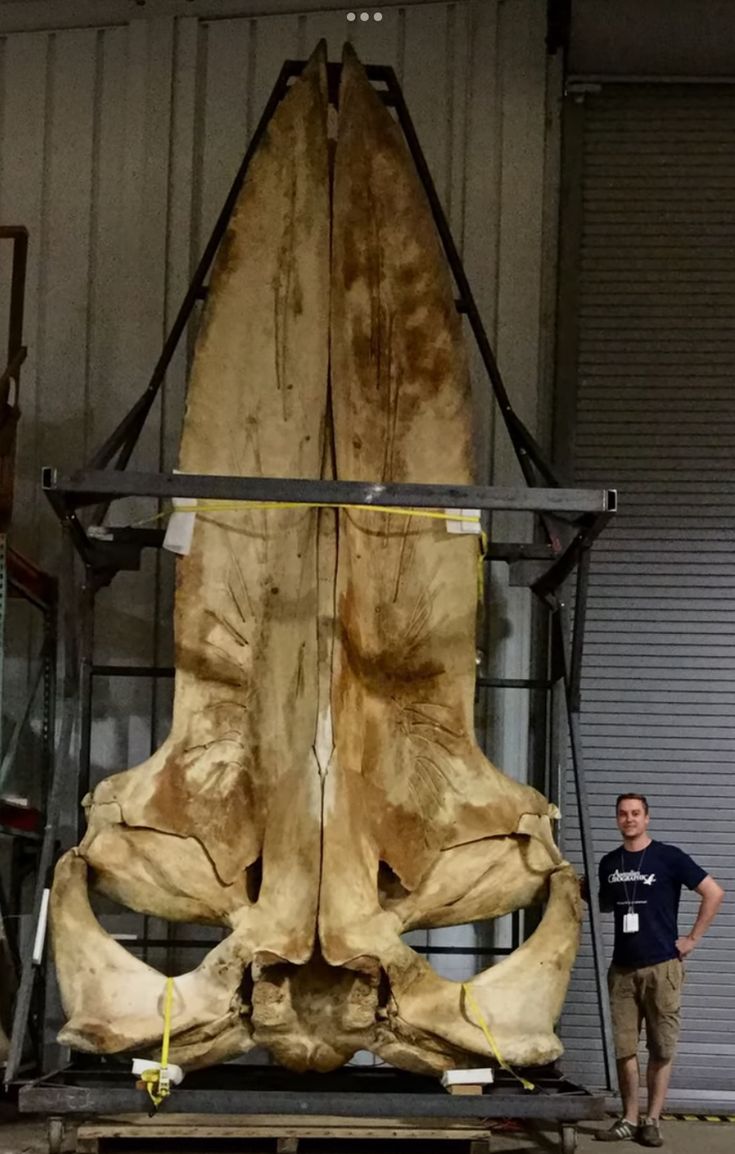
This powerful photograph documents a truly awe-inspiring moment in marine mammal curation: the enormous skull of an adult male sperm whale (Physeter macrocephalus), the largest toothed predator on Earth, secured on a custom steel support frame inside an industrial preparation facility or warehouse. The skull stands nearly upright in a dramatic V-shaped orientation, its two elongated, asymmetrical mandibular rami (lower jaw halves) forming towering, paddle-like blades that converge at the symphysis. The weathered, golden-brown bone surface shows natural staining, subtle cracks, and weathering marks from exposure and initial cleaning—hallmarks of a recently recovered or prepared specimen.
The massive cranium dominates the upper portion: broad, blocky, and rectangular, with deep temporal fossae, prominent sagittal and nuchal crests for powerful jaw muscle attachment, and the characteristic asymmetrical nasal passages hinting at the spermaceti organ’s role in echolocation and buoyancy. The lower jaw sections, each several meters long (sperm whale mandibles often exceed 4–5 meters individually in large males), curve outward dramatically, revealing the sockets for the iconic conical teeth (up to 18–26 per side in life, though none are present here). Yellow caution tape and straps secure the assembly, while heavy-duty metal scaffolding and a sturdy base platform underscore the engineering required to handle such weight—estimated at several hundred kilograms to over a ton for a complete adult skull.
A team member stands proudly to the right, hands on hips, wearing a branded navy T-shirt (“something” partially visible) and khaki shorts, providing crucial scale: the skull towers well over twice his height, with the full structure reaching approximately 4–5 meters tall in this mounted pose and spanning 3–4 meters wide at the base. The surrounding environment—corrugated metal walls, high ceilings, concrete floors, and industrial doors—suggests a specialized osteological preparation lab, museum storage annex, or conservation facility equipped for large cetacean remains.
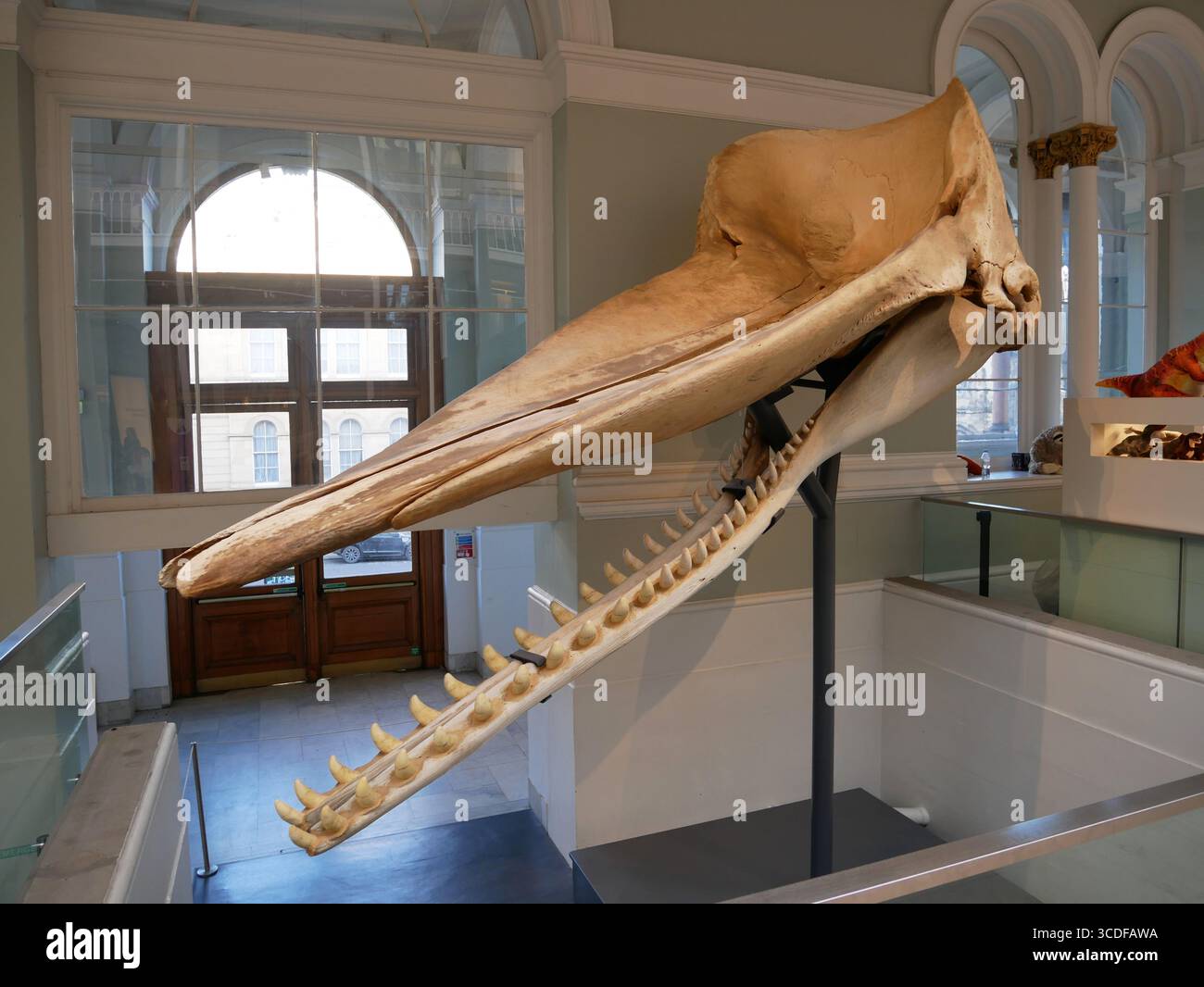
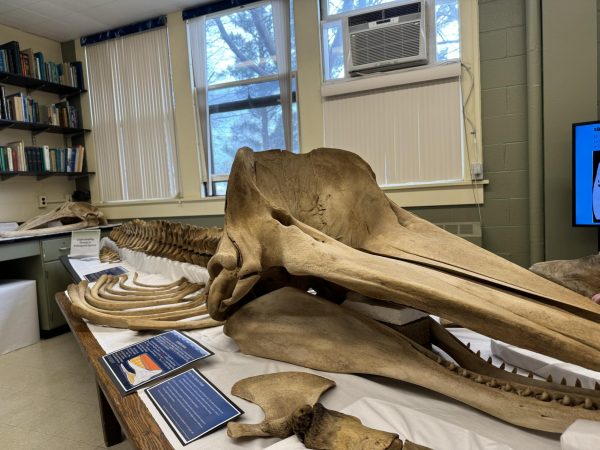
Here are several comparable images of sperm whale skulls in museum displays, preparation stages, and mounted configurations to illustrate the scale, anatomy, and handling of these extraordinary specimens:

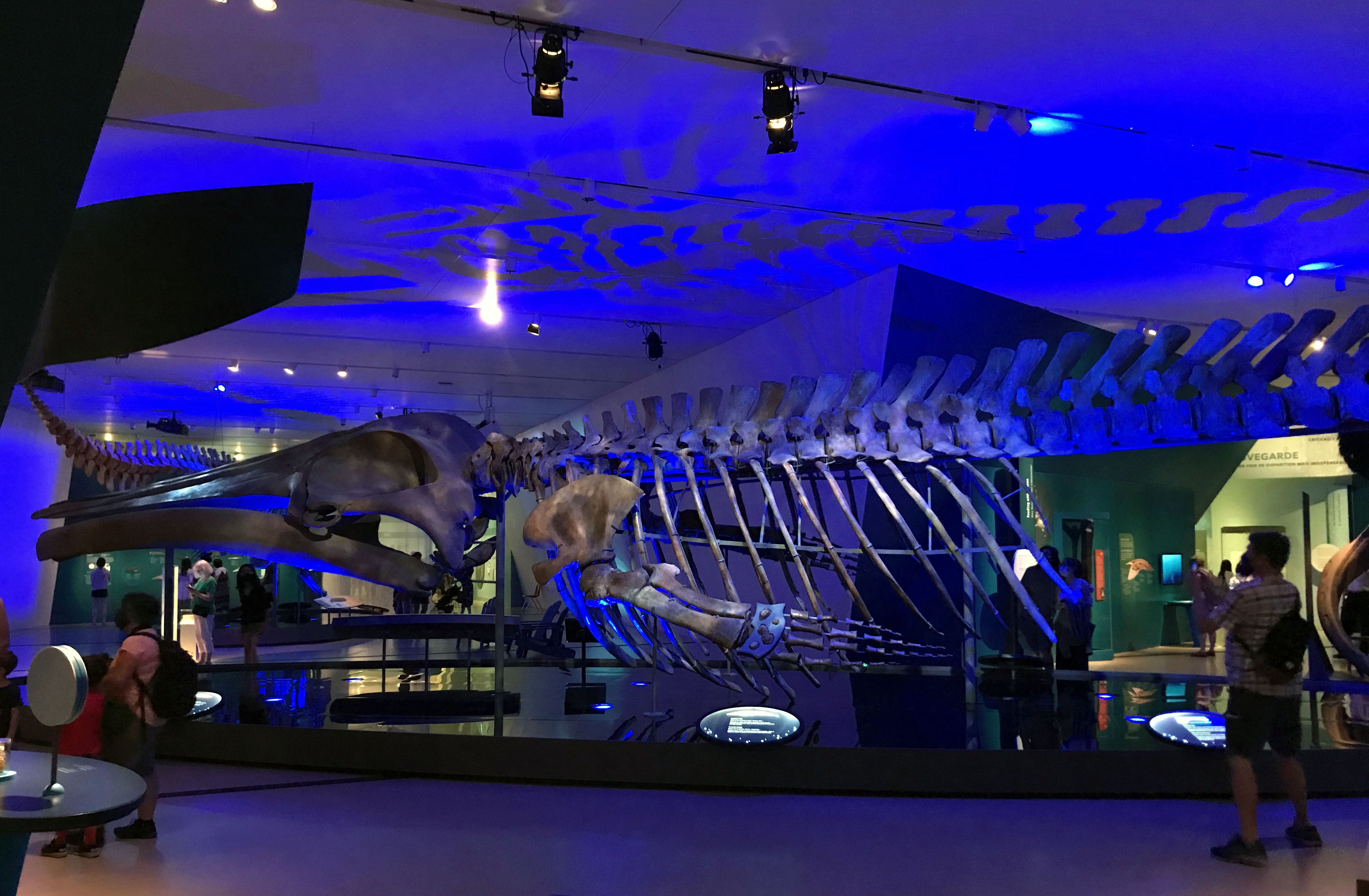
Anatomical and Biological Highlights of the Sperm Whale Skull
The sperm whale skull is one of nature’s most extreme adaptations:
- Head Proportion — The head comprises up to one-third of the animal’s total body length (males average 15–18 meters, with exceptional individuals approaching 20 meters and weights of 45–57 tonnes).
- Mandible Design — The elongated, narrow lower jaws are hinged far back, allowing wide gape for capturing giant squid and deep-sea fish. In life, they house large conical teeth used for gripping rather than chewing.
- Cranium Asymmetry — The left nasal passage is enlarged for the spermaceti organ (a waxy reservoir once thought to aid in buoyancy or echolocation focusing).
- Muscle Anchors — Massive sagittal and occipital crests support hypertrophied temporalis and masseter muscles for powerful biting.
- Size Records — Historic museum mandibles reach 5 meters (British Natural History Museum) or 4.7 meters (Oxford), corresponding to whales 18–20+ meters long.
Tutorial: Understanding Large Cetacean Skull Preparation and Appreciation
- Recovery & Initial Processing — Stranded or beached specimens undergo necropsy, flensing (soft tissue removal), and often maceration or burial in manure/compost to deflesh bones while preserving integrity.
- Cleaning & Stabilization — Bones are degreased, whitened (if desired), and treated for oil leaching (sperm whale bones retain spermaceti residues). Fragile areas receive consolidants like Paraloid B-72.
- Mounting Engineering — Custom steel armatures distribute weight; padded supports prevent cracking. Vertical or angled poses (as here) maximize visual impact and space efficiency.
- Scale & Safety — Always use heavy equipment for transport; specimens this size require teams and facilities like those at major museums (e.g., SA Museum’s Bolivar facility or New Bedford Whaling Museum prep labs).
- Scientific Value — Skulls reveal age (via tooth layers), health (pathologies), diet (tooth wear), and genetics (bone sampling). They inform population studies, strandings, and ocean health.
- Display & Conservation Tips — Control humidity/temperature to prevent cracking; use low-UV lighting; position for public interaction while protecting from dust/touch.
This image captures the raw power and engineering challenge of working with the ocean’s apex toothed predator, bridging fieldwork, preparation science, and public exhibition. It evokes the thrill of encountering deep-ocean giants up close—whether in a museum hall or during behind-the-scenes preparation.
Ideal for paleontology blogs, marine biology sites, or museum collection spotlights. Have you witnessed a large whale skeleton preparation or stood beside a sperm whale skull? Share your stories in the comments below!