Majestic Carcharodontosaurus Fossil Mount: A Tutorial-Style Guide to This Gigantic Cretaceous Superpredator and Its Impressive Size

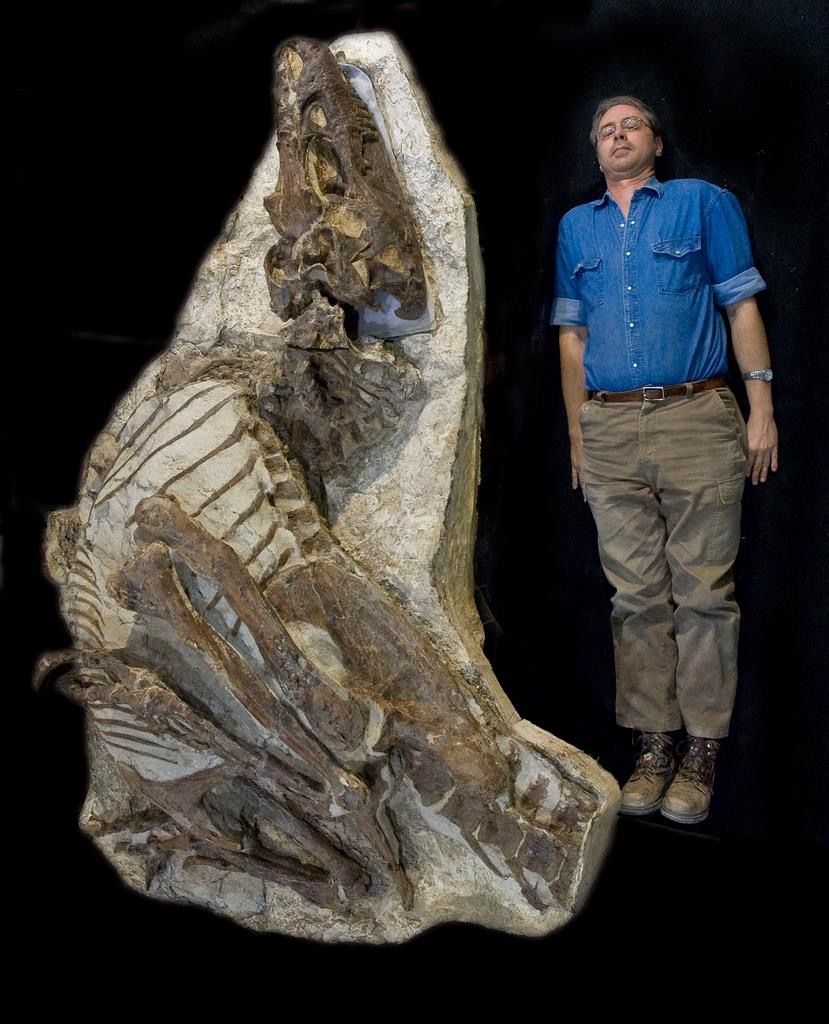
Behold this breathtaking museum-quality display of a massive Carcharodontosaurus (or closely related carcharodontosaurid theropod) fossil skeleton, dramatically mounted in a near-vertical pose with its enormous jaws agape. Captured against a dramatic black background, the specimen towers imposingly, with a life-sized human figure standing beside it for scale—highlighting the sheer magnitude of this apex predator from the mid-Cretaceous period (~100–94 million years ago). This professional, in-depth tutorial explores the anatomy, scientific context, preparation techniques, and significance of such spectacular mounts, ideal for paleontology enthusiasts, educators, collectors, and museum visitors.
Step 1: Visual Assessment and Scale Appreciation
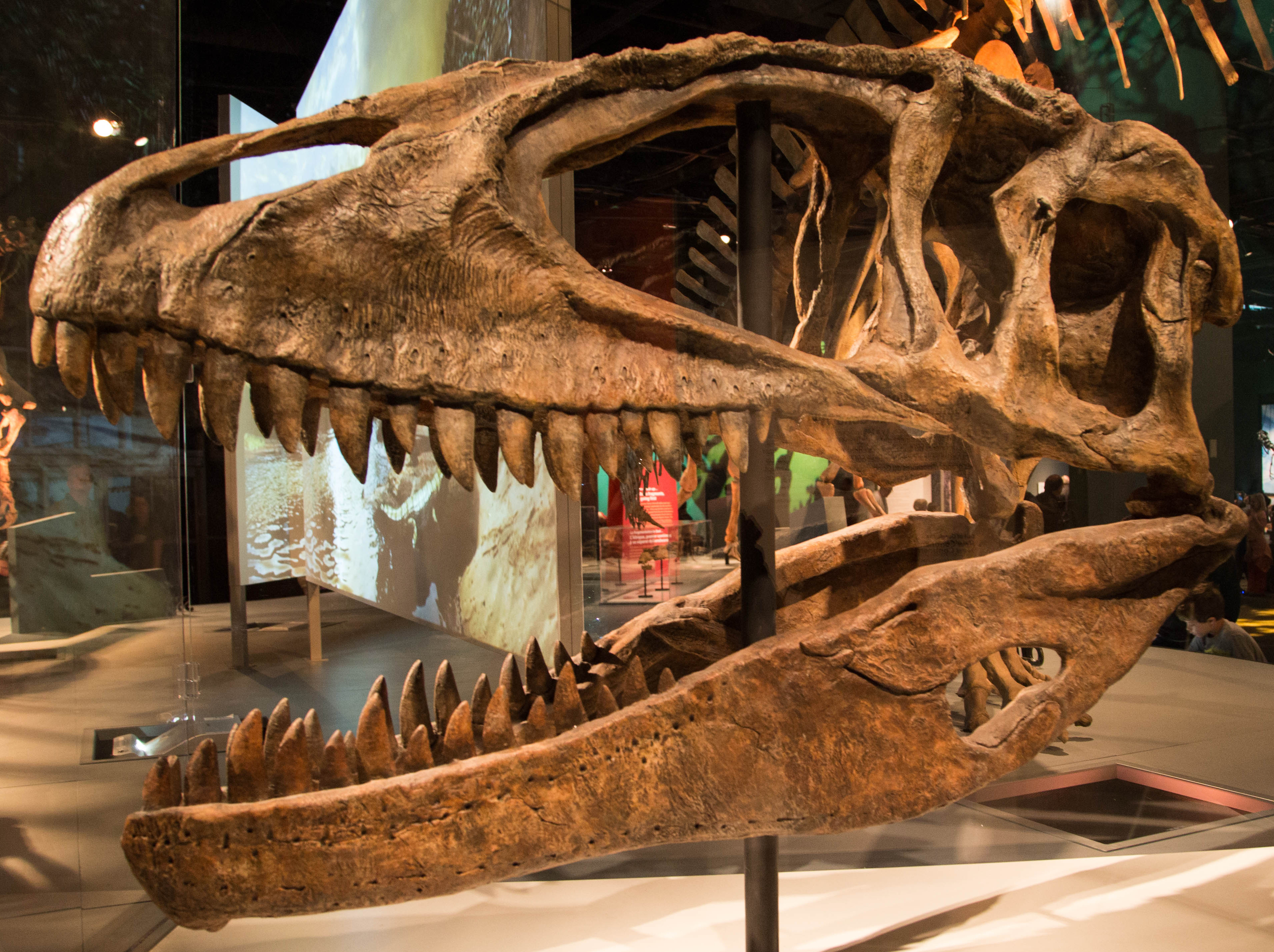
The fossil is presented as a partial to composite skeleton embedded in large blocks of natural sedimentary matrix (likely sandstone or limestone from North African or South American deposits), with the skull dominating the upper portion. Key visual elements include:
- Enormous Skull: The head measures over 1.5–1.6 meters (5–5.3 feet) in length, featuring a long, narrow snout filled with rows of serrated, blade-like teeth up to 20 cm (8 inches) long—perfect for slicing through flesh rather than bone-crushing.
- Jaws Agape: The mouth is dramatically opened wide, showcasing the powerful bite mechanics typical of carcharodontosaurids.
- Body Posture: The skeleton curves upward in a rearing or attacking stance, with visible ribcage, forelimbs, pelvis, and hind limbs partially exposed from the matrix. The matrix blocks preserve authentic bone textures, cracks, and mineralization.
- Human Scale Comparison: A man (approximately 1.75–1.8 m tall) stands directly beside the mount, emphasizing that the dinosaur’s skull alone rivals or exceeds human height, and the full animal likely reached 12–13+ meters (40–43+ feet) long and weighed 6–15 tons—rivaling or surpassing Tyrannosaurus rex in length and bulk.
Quick Identification Tip: Compare to Tyrannosaurus (deeper, more robust skull) or Spinosaurus (sail-backed, crocodile-like snout). This specimen’s elongated, shark-tooth jaws and lighter build point to Carcharodontosaurus saharicus (North Africa) or the closely related Giganotosaurus carolinii (South America)—both members of the Carcharodontosauridae family.
Here are comparable large carcharodontosaurid mounts and reconstructions for reference:

Step 2: Geological and Historical Context
Carcharodontosaurids thrived during the Cenomanian–Turonian stages of the Late Cretaceous in what are now North Africa (Kem Kem Beds, Morocco/Algeria) and South America (Candeleros Formation, Patagonia). These environments featured vast river deltas, floodplains, and lush vegetation, supporting giant sauropod prey like titanosaurs—perfect for these superpredators.
The first Carcharodontosaurus fossils (teeth) were described in 1924–1927 from Algeria/Egypt by French and German paleontologists. Major finds in the 1990s–2000s, including near-complete skeletons of relatives like Giganotosaurus, revolutionized our understanding. This mount likely represents a composite or high-fidelity replica/cast, as fully original large theropod skeletons are rare and often fragmented.
Practical Note: Authentic specimens show natural iron staining and matrix adhesion; always source from ethical, documented collections to support scientific research.
Step 3: Anatomical Breakdown and Paleobiological Insights
This theropod exemplifies the pinnacle of allosauroid evolution—bipedal, agile giants built for speed and power.
- Cranial Features: Long, low skull with sharp, recurved teeth for slashing wounds and causing blood loss (unlike T. rex’s bone-crushing bite). Large nasal openings suggest keen olfaction.
- Postcranial Skeleton: Robust hind limbs for bursts of speed (estimated 20–30 mph), powerful tail for balance, and relatively slender forelimbs with sharp claws.
- Size & Ecology: Estimated 12.5–13.5 m long, 6–15 tons—among the largest land carnivores ever. Likely an ambush predator or pack hunter targeting massive herbivores.
- Evolutionary Significance: Part of the Gondwanan fauna; their decline may relate to environmental shifts or competition with abelisaurids/tyrannosaurids.
Research Insight: Recent studies suggest these dinosaurs had faster metabolisms than earlier theropods, supporting active predation.
Tutorial Exercise: Sketch the skull profile and label key bones (premaxilla, maxilla, dentary, lacrimal). Use 3D models from sources like Sketchfab for rotation and comparison.
Step 4: Preparation, Mounting, and Display Techniques
Such dramatic mounts require expert preparation:
- Excavation & Preparation: Bones freed from matrix using air scribes, pneumatic tools, and consolidants; large blocks left for stability.
- Mounting: Steel armature supports the skeleton; vertical/angled poses enhance drama and convey motion.
- Authenticity & Care: Many displays use casts (resin/fiberglass) for durability. Maintain low humidity (40–50%), indirect lighting, and stable temperature to prevent cracking.
Display Tips:
- Position for dramatic low-angle lighting to highlight teeth and textures.
- Use interpretive signage explaining scale.
- For home replicas: Secure on reinforced base; protect from dust/humidity.
Step 5: Broader Significance and Further Exploration
This imposing fossil embodies the awe of prehistoric giants—reminding us of ecosystems ruled by colossal predators. It fuels debates on theropod diversity, biomechanics, and extinction patterns.
Recommended Resources:
- Books: “The Rise and Fall of the Dinosaurs” by Steve Brusatte.
- Museums: Field Museum (Chicago) for related large theropods; Natural History Museum (London) exhibits.
- Online: Explore skeletal reconstructions on SkeletalDrawing.com or paleontology databases.
This magnificent Carcharodontosaurus mount is more than a display—it’s a portal to the Cretaceous world. If you have questions about similar fossils or your own finds, share in the comments—we’d love to discuss!