The River Giant: Unveiling the Mysteries of Spinosaurus

A Predator Unlike Any Other
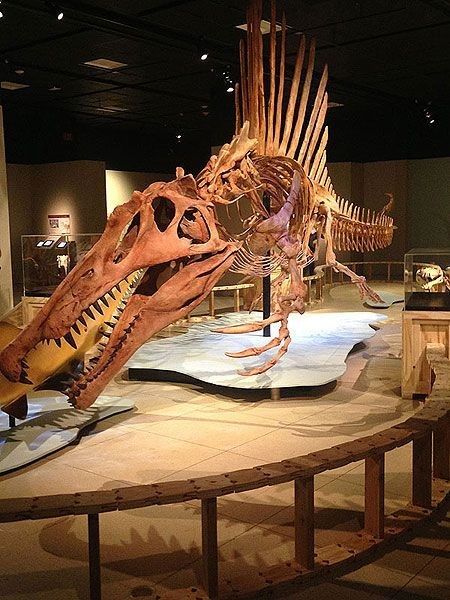
The skeleton in the image highlights the radical anatomy of Spinosaurus aegyptiacus. While most famous carnivorous dinosaurs like T. rex were built for land-based power, Spinosaurus was an evolutionary curveball—a massive theropod adapted for a semi-aquatic lifestyle.
Key Features of the “Sail-Lizard”
-
The Iconic Sail: The most striking feature is the massive “sail” on its back, formed by neural spines that could reach over 1.5 meters in height. Scientists debate its purpose, ranging from temperature regulation and fat storage to a vibrant display for attracting mates or intimidating rivals.
-
Croc-Like Cranium: Note the long, narrow skull. Much like a modern gharial or crocodile, this shape is perfect for snapping up slippery fish in murky river waters. Its conical teeth were designed to grip prey rather than shear bone.
-
Semi-Aquatic Adaptations: Recent fossil discoveries suggest Spinosaurus had dense bones (to help with buoyancy) and a powerful, paddle-like tail, making it the first known swimming dinosaur.
The “Spino” Legacy
Despite being larger than the Tyrannosaurus rex, Spinosaurus remained a mystery for decades because the original fossils were destroyed during World War II. It was only through modern reconstructions—like the museum mount pictured—that we’ve been able to piece together the life of this North African behemoth.