Dino Bone: Person for Scale
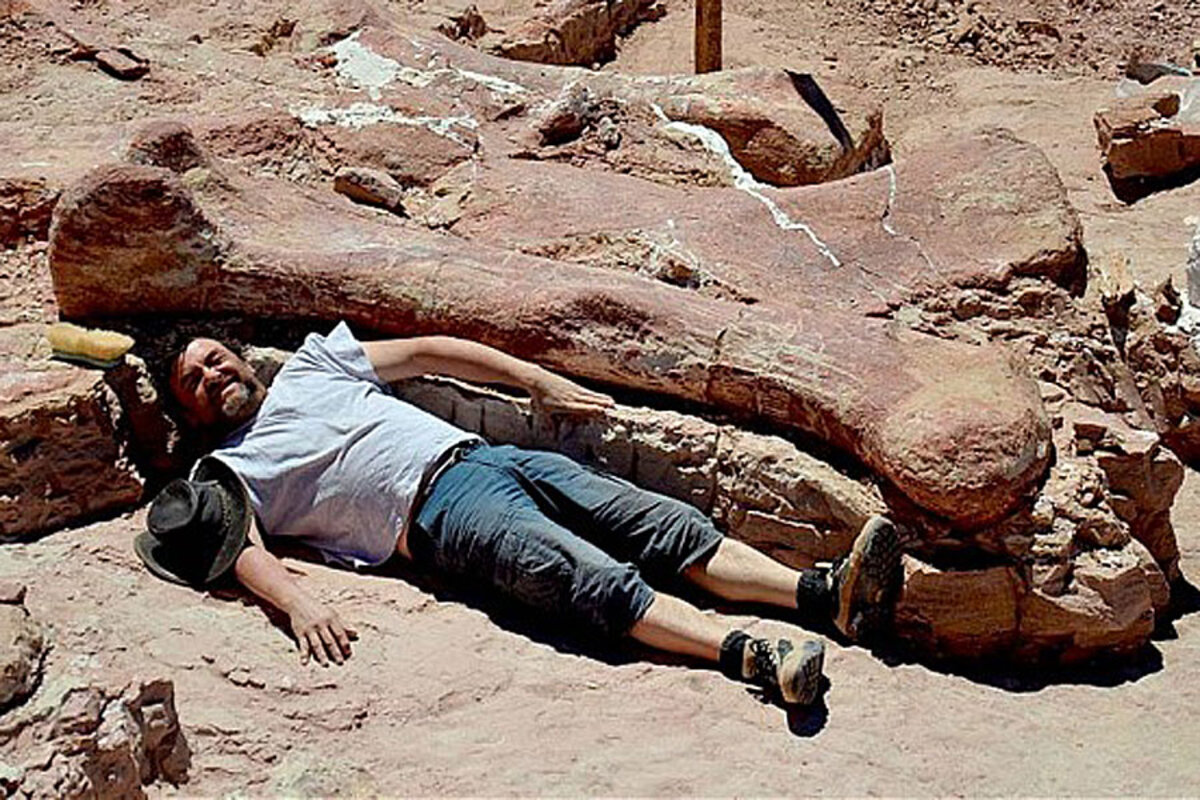
That classic photo perfectly captures one of the most mind-blowing aspects of paleontology: the sheer enormous size of some dinosaurs. When a person lies down next to (or on) a massive fossil bone, it instantly conveys just how gigantic these ancient creatures were—often dwarfing anything alive today.
The image you shared shows a bearded man in casual field gear (t-shirt, shorts, hat nearby) stretched out alongside an enormous fossilized dinosaur bone in a rugged desert badlands setting. The bone—likely a femur (thigh bone) from a giant sauropod—is so large that the person looks comically small by comparison, emphasizing the bone’s length (easily over 2 meters or 6–8 feet) and girth.
This kind of “human for scale” shot is a staple in paleontology fieldwork. It helps communicate scale to the public, as numbers alone (e.g., “2.4 meters long”) don’t hit the same way as seeing a full-grown adult next to it.
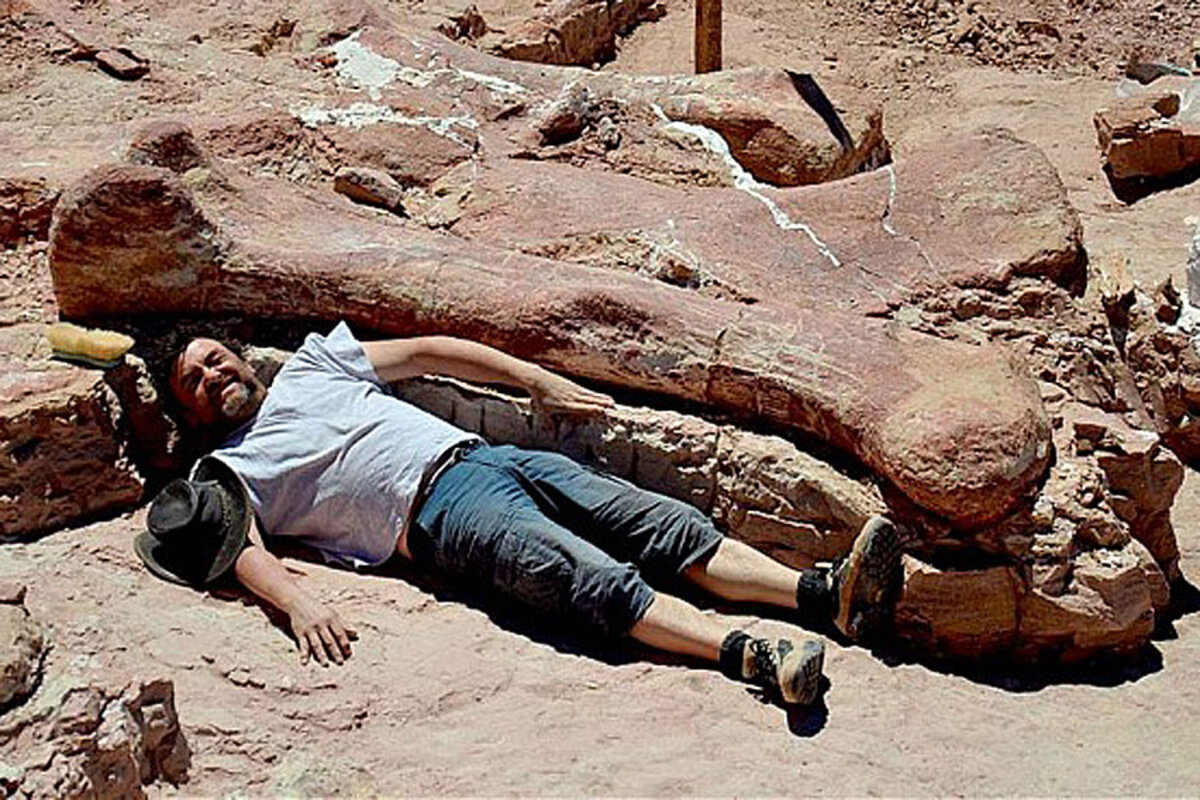
(Another view of a paleontologist lying beside a massive sauropod femur in the Patagonian desert, highlighting the bone’s incredible proportions against a human body.)
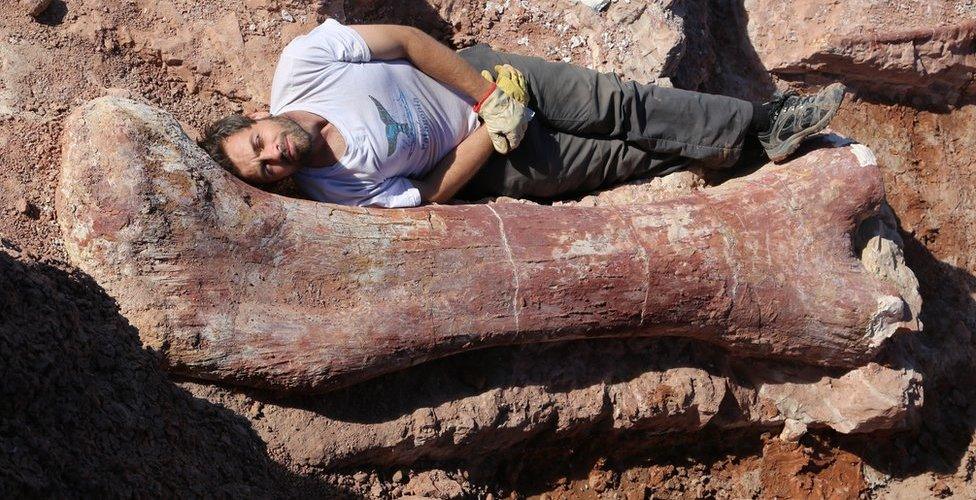
(Iconic photo of a researcher reclined along the length of a Patagotitan femur, arms spread wide—the bone stretches well beyond head and feet, showing why these titanosaurs are considered among the largest land animals ever.)
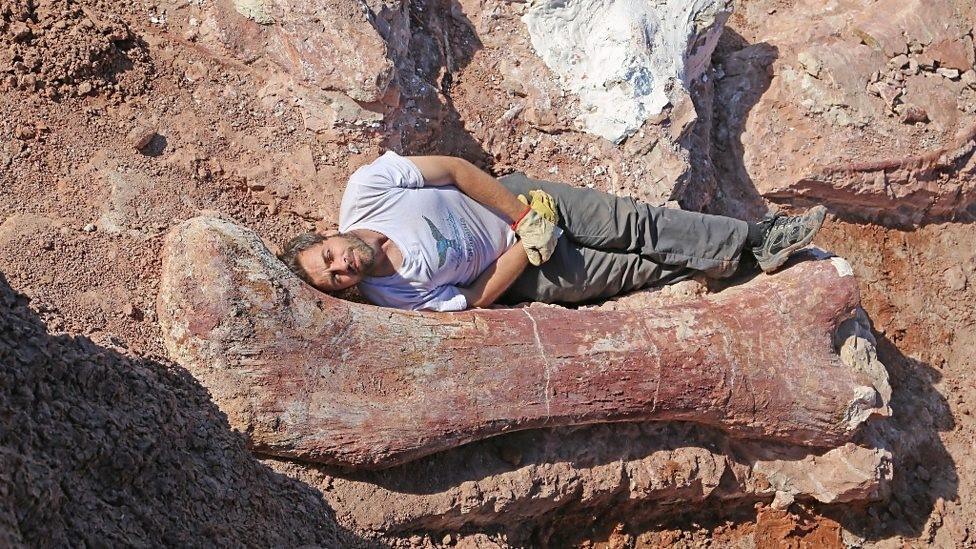
(Close-up field shot of the same massive reddish-brown femur fossil, with the person nestled against its curve in the rocky excavation site.)
What Dinosaur Bone Is This?
Photos like yours are most famously associated with the discovery of Patagotitan mayorum, one of the largest known dinosaurs (a titanosaur sauropod from ~100 million years ago in what is now Patagonia, Argentina). In 2013–2014, paleontologists from the Museo Paleontológico Egidio Feruglio uncovered multiple individuals, including femurs measuring over 2.4 meters (nearly 8 feet) long—among the biggest thigh bones ever found.
The bone in your image matches the style and setting of those Patagotitan finds: exposed in arid badlands, partially excavated, with white plaster or protective markings, and that classic “person lying for scale” pose to dramatize the size.
Similar shots exist for other titanosaurs (e.g., Argentinosaurus, Dreadnoughtus), but the Patagotitan femur photos—often featuring team members like Pablo Puerta or others—went viral for exactly this reason.

(Lab view of a sectioned Patagotitan femur on pallets, with a paleontologist lying across it to demonstrate even in pieces, the bone overwhelms a human frame.)
Why These Photos Matter
- Scale & Awe: They make abstract sizes real—imagine an animal whose single leg bone is taller than most people!
- Field Documentation: Paleontologists use people, rulers, or tools in photos for records, publications, and outreach.
- Public Engagement: Shots like this spark wonder about prehistoric life and inspire interest in paleontology.
For a deeper look at these giant discoveries, watch this video on the Patagotitan find and its massive bones: Biggest Dinosaur Ever Discovered – BBC News (search for BBC or Nat Geo coverage of “world’s biggest dinosaur Patagotitan” for footage of the excavation and scale comparisons).
These images never get old—they remind us how truly colossal some dinosaurs were, turning dry fossil facts into jaw-dropping reality. What’s your favorite “for scale” fossil photo?