Encountering Stupendemys geographicus: The Colossal Miocene Giant – A Life-Size Museum Replica and Scale Guide

Detailed Description (Professional, Tutorial-Style for Blog/Website Post)
Stupendemys geographicus, aptly named “stupendous turtle,” stands as the undisputed champion among freshwater turtles in the fossil record. This extinct side-necked turtle (family Podocnemididae) lived during the Middle Miocene to early Pliocene epochs (approximately 13 to 5 million years ago) in the lush riverine and lacustrine environments of what is now Venezuela, Colombia, and parts of Brazil and Peru. Recent paleontological discoveries, particularly from Venezuela’s Urumaco Formation and Colombia’s Tatacoa Desert, have revolutionized our understanding of this megafaunal species. This tutorial-style breakdown explores the science behind Stupendemys, the creation and display of museum replicas like the one shown, and tips for appreciating such exhibits—ideal for educators, paleo-enthusiasts, or museum curators planning similar installations.
Key Paleontological Facts About Stupendemys geographicus
- Size & Dimensions: The largest documented carapace (CIAAP-2002-01) measures a parasagittal (midline) length of 2.86 meters (~9.4 feet), with straight carapace lengths exceeding 2.4 meters in top specimens—surpassing even the Cretaceous marine giant Archelon (2.2 meters). Total body length approached 3–4 meters in extreme cases, with weight estimates ranging from 744–1,145 kg (~1,640–2,525 pounds), making it roughly 100 times heavier than its closest living relative, the Amazon river turtle (Peltocephalus dumerilianus), and twice the size of today’s largest turtle, the leatherback sea turtle.
- Unique Anatomical Features: Males exhibited prominent bony horns projecting from the anterior edges of the carapace (likely keratin-sheathed in life), possibly for intraspecific combat or display—absent in presumed females, indicating clear sexual dimorphism. The shell was thick and robust, with a low-arched profile that flattened with age; juveniles showed irregular nodules, while adults had upturned margins and scalloped peripherals. The skull was triangular with inflated prefrontals, small side-oriented eyes, and adaptations for a generalist omnivorous/durophagous diet (plants, fruits, mollusks, and possibly small vertebrates).
- Ecosystem & Predators: Stupendemys thrived in swampy, river-dominated floodplains alongside megafauna like giant rodents, river dolphins, and massive crocodylians (e.g., Purussaurus, whose bite marks appear on some shells). Its enormous size offered protection against most threats, though predation scars suggest intense survival pressures.
- Discovery History: First described in 1976 by Roger C. Wood from 1972 Harvard excavations in Venezuela; major advances came in 2020–2021 with near-complete carapaces, skulls, and juvenile remains confirming taxonomy and biology.
Here are some excellent visual references showing the scale and details of Stupendemys replicas and fossils in museum settings:

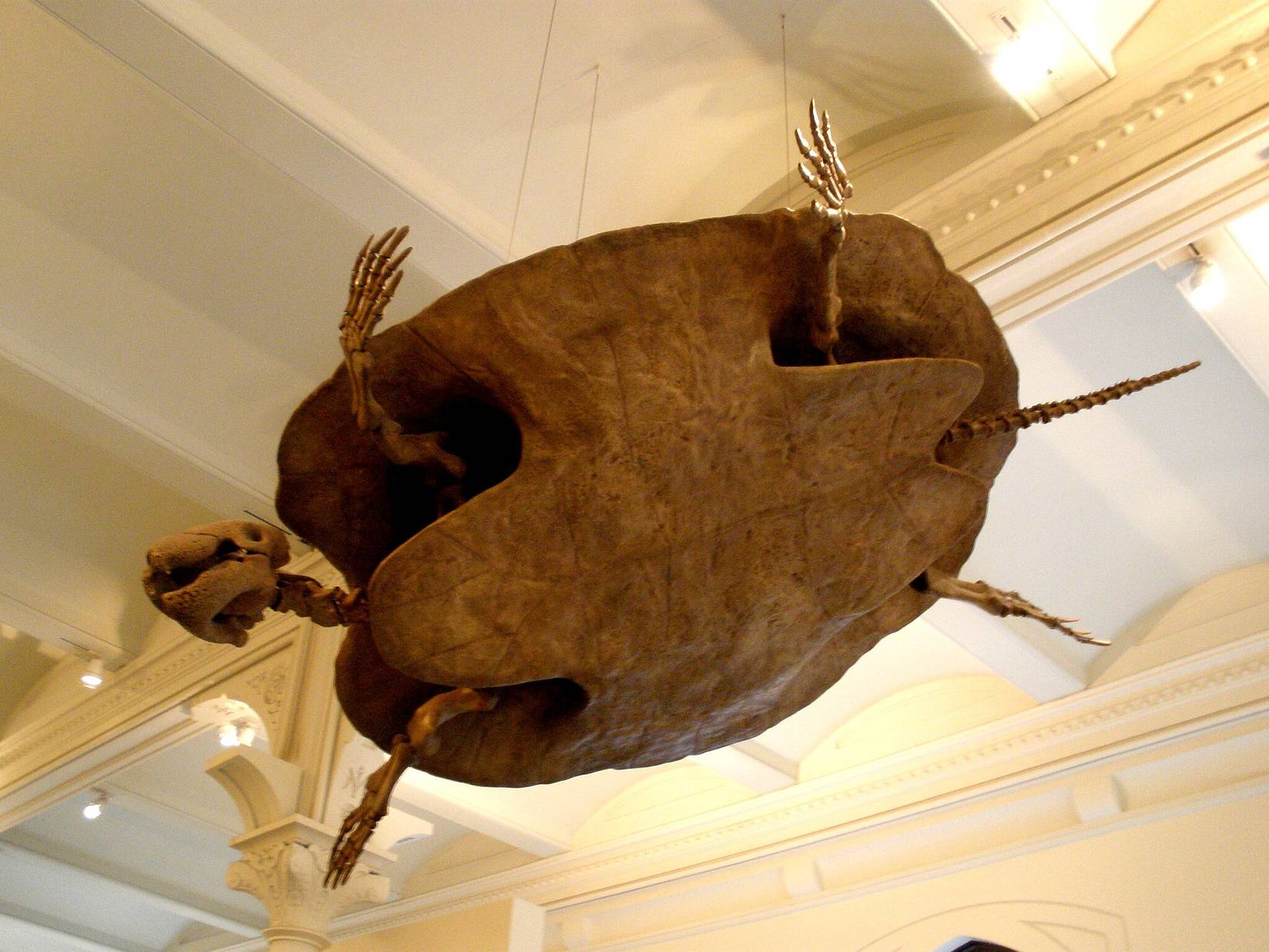
These images highlight how replicas faithfully recreate the weathered, bone-like texture and sheer bulk of the original fossils, often positioned for dramatic scale comparisons.
Creating & Displaying Museum Replicas (Practical Tutorial Insights)
Museum replicas like the one photographed are typically fiberglass or composite casts molded from original fossils or high-fidelity 3D scans:
- Research & Modeling — Start with CT scans or photogrammetry of key specimens (e.g., MCZ(P)-4376 or CIAAP-2002-01) to ensure anatomical precision.
- Molding & Casting — Use silicone for flexible detail molds, then cast in lightweight yet durable fiberglass resin. Add artificial aging (cracks, discoloration) for realism.
- Installation — Mount on sturdy metal frames or platforms with safety railings; pair with interpretive panels (as seen here) explaining size, era, and ecology. Position for visitor interaction—low viewpoints amplify the “wow” factor.
- Educational Enhancements — Include comparative silhouettes (e.g., vs. modern leatherback or human), touch-safe texture samples, or AR apps for virtual reconstructions.
This exhibit not only showcases paleontological wonder but also illustrates evolutionary gigantism driven by abundant resources, predation pressure, and stable habitats. Whether you’re visiting in person or exploring online, Stupendemys reminds us of the astonishing diversity that once filled ancient rivers. Perfect for posts on prehistoric megafauna, museum highlights, or science education! What prehistoric giant fascinates you most? Share below. 🐢🌿