Encounter with the Giant Mosasaurus: A Tutorial-Style Guide to This Impressive Late Cretaceous Marine Reptile Exhibit and Its Real-World Scale

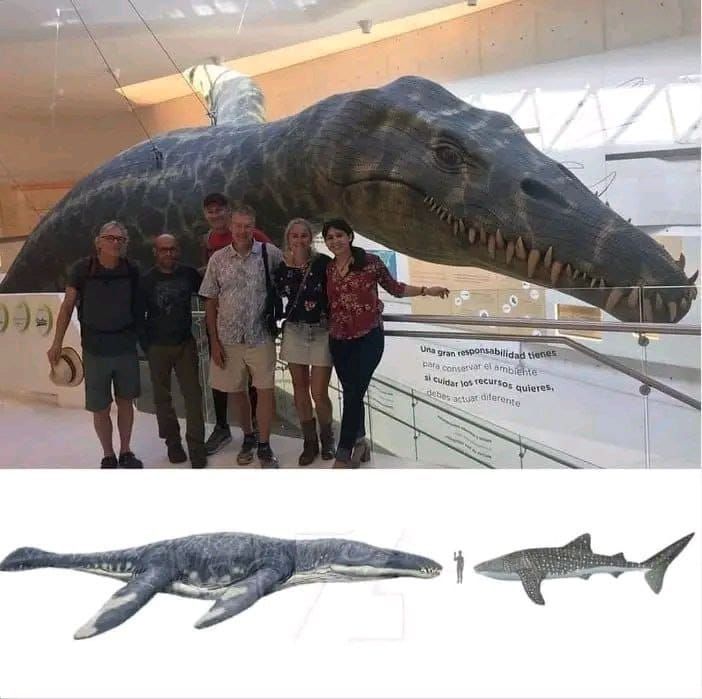
Step into the awe-inspiring world of prehistoric oceans with this captivating group photo featuring a massive life-size Mosasaurus replica on prominent display in a modern museum setting. The enormous model, suspended or mounted with its powerful jaws wide open, towers over a cheerful group of visitors, providing dramatic scale perspective. This professional, detailed tutorial breaks down the exhibit, the science behind Mosasaurus, accurate size comparisons, and tips for appreciating such impressive reconstructions—perfect for paleontology enthusiasts, families, educators, and anyone fascinated by ancient marine life.
Step 1: Visual Examination and Exhibit Features
The photograph shows a highly detailed, realistic Mosasaurus model in a spacious, light-filled museum gallery with modern architecture and educational signage. The creature’s body is painted in a mottled gray-blue pattern with darker dorsal (back) shading and lighter ventral (belly) areas—reflecting countershading for camouflage in open water, similar to modern sharks and sea turtles.
Key Visible Details:
- Massive Head and Jaws: The elongated skull features rows of conical, serrated teeth ideal for gripping slippery prey like fish, ammonites, and other marine reptiles.
- Body Structure: Streamlined form with four flipper-like limbs (adapted from lizard forelimbs and hindlimbs), a long, powerful tail for propulsion, and a flexible, serpentine neck.
- Group for Scale: Five adults and one younger person stand directly in front of the jaws, emphasizing the model’s immense proportions—the head alone dwarfs the people, with the full body extending far overhead and into the background.
- Educational Signage: A prominent Spanish-language panel reads “Una gran responsabilidad tienes para conservar el ambiente si los recursos quieres, debes actuar diferente” (translated: “You have a great responsibility to conserve the environment; if you want the resources, you must act differently”), highlighting conservation themes tying prehistoric extinctions to modern environmental stewardship.
This setup is typical of traveling or permanent exhibits featuring high-quality fiberglass or resin replicas designed for museums, science centers, and educational venues.
Here are comparable life-size Mosasaurus replicas and museum displays with visitors for scale reference:
Step 2: Geological and Biological Context
Mosasaurus (type genus of the mosasaurs) was not a dinosaur but an extinct marine squamate reptile (closely related to modern monitor lizards and snakes) that dominated Late Cretaceous seas approximately 82–66 million years ago. Fossils are found worldwide, with major discoveries in Europe (e.g., Maastricht, Netherlands), North America, and beyond.
These apex predators evolved paddle-like limbs and powerful tails for efficient swimming, reaching depths and pursuing fast prey. Their double-hinged jaws allowed them to swallow large meals whole, much like modern snakes.
Practical Identification Tip: Distinguish Mosasaurus from plesiosaurs (long-necked) or ichthyosaurs (dolphin-like) by its lizard-like skull, extra row of palatal teeth, and robust, scaled body.
Step 3: Size Breakdown and Comparisons
Real Mosasaurus hoffmannii specimens reached up to 11–17 meters (36–56 feet) in length and weighed an estimated 3.8–15+ tons, depending on species and estimates. The exhibit model appears to represent a large adult in the upper range.
Human & Modern Animal Scale:
- The group photo clearly shows the model dwarfing people (average human ~1.7 m tall).
- Compared to a modern great white shark (typically 4–6 m long, max ~6.1 m, ~2–3 tons), Mosasaurus was significantly longer and more massive—often 2–3 times the length.
For visual reference, see these size comparison illustrations showing Mosasaurus alongside humans and great white sharks:
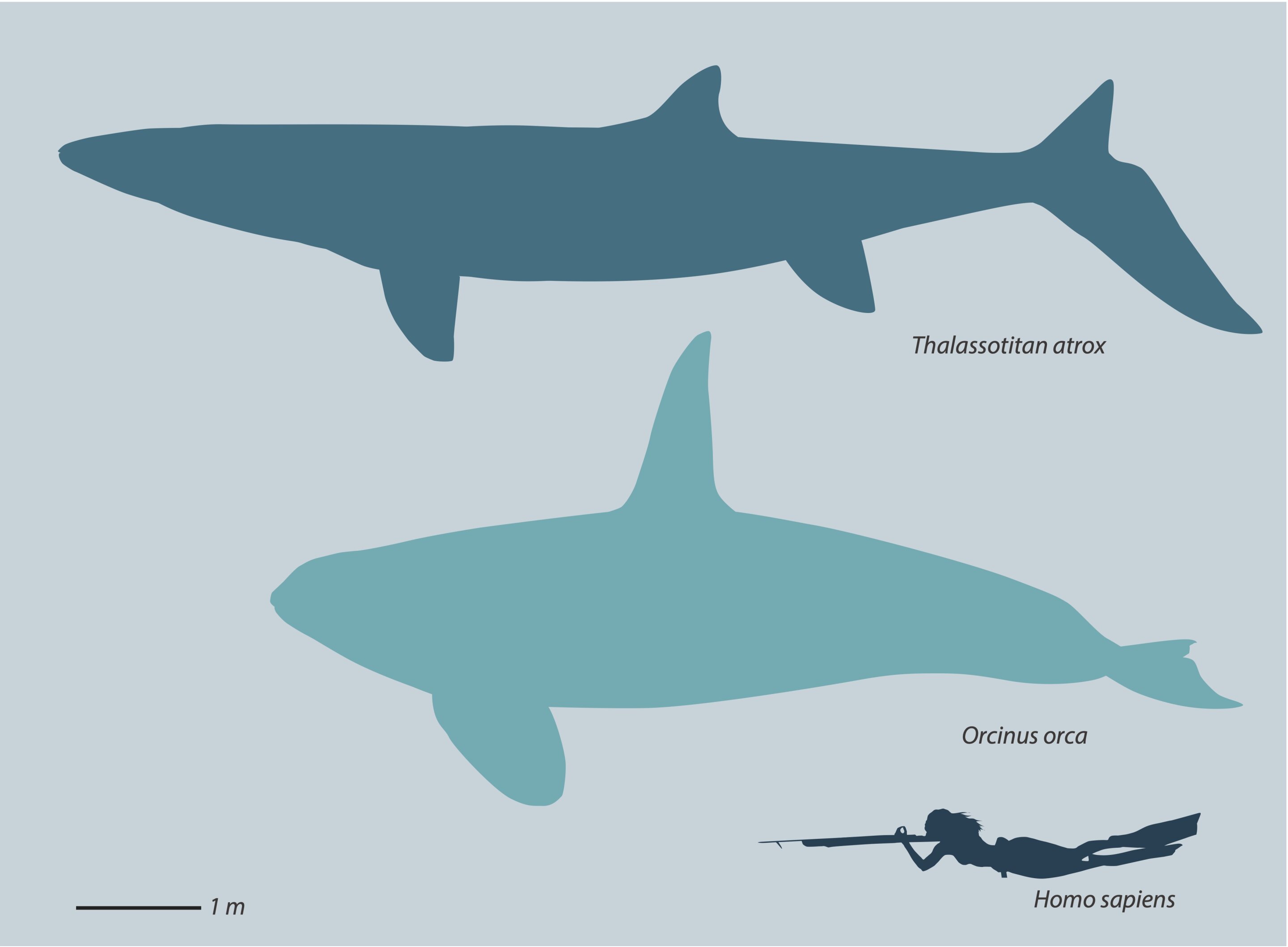

Paleobiological Insight: As ambush predators, mosasaurs used stealth, speed bursts, and powerful bites. Recent studies reveal countershaded, keeled scales for reduced drag—enhancing their shark-like efficiency.
Tutorial Exercise: Use the photo to estimate proportions—measure the head length relative to a person’s height, then extrapolate to known fossil data for a hands-on size appreciation.
Step 4: Exhibit Design, Preparation, and Visitor Tips
Such large-scale replicas are crafted from fiberglass, resin, or metal composites based on 3D scans of real fossils, painted for realism, and mounted securely (often suspended from ceilings for dramatic effect).
Authenticity & Care Notes:
- Museum replicas prioritize scientific accuracy over Hollywood exaggerations (e.g., Jurassic World’s oversized version).
- For visitors: Approach from different angles to appreciate the teeth, flippers, and tail curvature; read signage for conservation messages linking past marine extinctions to today’s climate challenges.
Display Recommendations:
- Position for optimal viewing—low-angle lighting highlights textures.
- Pair with interactive elements like touch models or VR for deeper engagement.
- Maintain stable environment (controlled temperature/humidity) to preserve the model.
Step 5: Why This Exhibit Matters — Broader Implications
This striking Mosasaurus display serves as a powerful reminder of ancient ocean ecosystems, the rise of marine reptiles after the Permian extinction, and the fragility of biodiversity. It inspires reflection on conservation: just as the K-Pg extinction wiped out mosasaurs, human actions today threaten modern marine life.
Recommended Resources:
- Books: “Oceans of Kansas” by Michael J. Everhart for mosasaur paleontology.
- Museums: American Museum of Natural History, Natural History Museum (London), or local science centers with marine reptile exhibits.
- Online: Explore fossil databases and 3D models on platforms like Sketchfab.
This memorable group moment with the mighty Mosasaurus captures the thrill of paleontology—bringing deep time to life. Share your own museum adventures or questions in the comments—we’d love to hear them! 🌊🦈