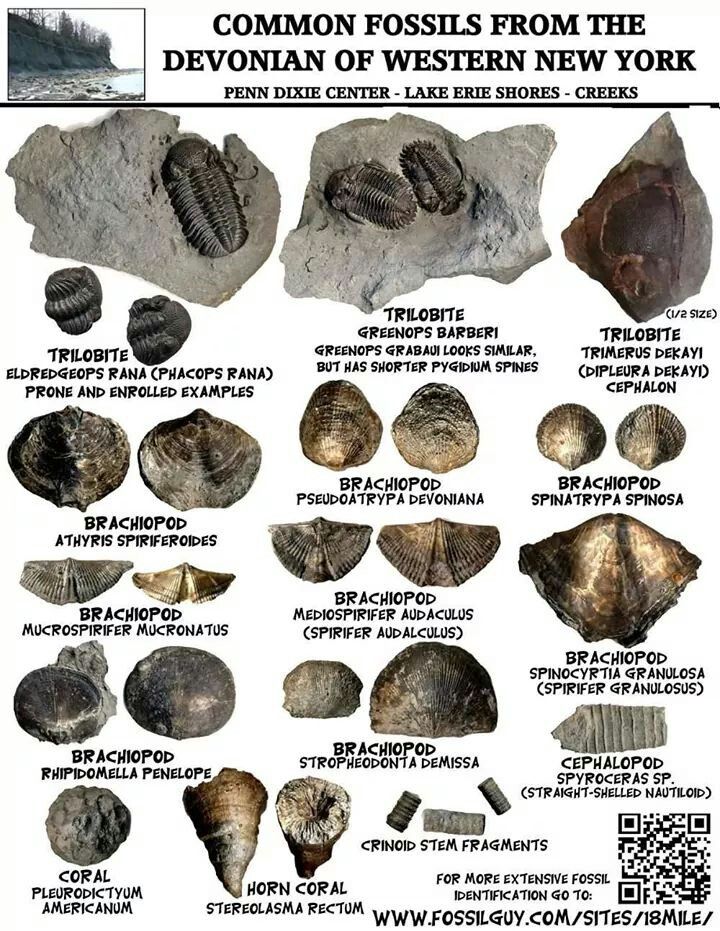
Field Guide to Common Devonian Fossils of Western New York – Penn Dixie Fossil Park, Lake Erie Shores & Creek Exposures (Full-Color Identification Chart)

Detailed Description (Professional Museum-Grade Educational Poster – Perfect for Parks, Classrooms, Gift Shops & Online Sales)
This museum-quality, full-color identification poster is the definitive field companion for fossil hunters exploring the world-renowned Middle Devonian outcrops of Western New York – home to the Penn Dixie Fossil Park & Nature Reserve, the Lake Erie bluffs, and countless creek beds from Hamburg to Buffalo. Printed on heavy-duty, UV-resistant, matte-laminated cardstock (24″ × 36″), this chart is designed to withstand years of classroom use, field trips, or display in nature centers.
Geological Context & Stratigraphy
- Age: Middle Devonian (~393–382 Ma) – Givetian Stage
- Formations Featured:
- Moscow Formation (Windom Shale Member)
- Tully Limestone (limited exposure)
- Kashong & Wanakah Shales
- Paleoenvironment: Shallow, warm, tropical epicontinental sea teeming with diverse marine life – part of the Hamilton Group fauna, one of the best-preserved Devonian ecosystems in the world.
Specimens Illustrated (All at 1/2 Natural Size Unless Noted)
TRILOBITES (Class Trilobita – Iconic Index Fossils)
- Eldredgeops rana (Phacops rana)
- Prone & enrolled pygidia
- Large schizochroal eyes, smooth glabella
- Most common trilobite at Penn Dixie
- Greenops barberi
- Smaller than Eldredgeops, with short pygidial spines
- Delicate genal spines, highly sought by collectors
- Trimerus dekayi(1/2 size shown)
- Large, smooth, oval cephalon
- Often found as disarticulated head shields
BRACHIOPODS (Phylum Brachiopoda – Dominant Benthic Filter Feeders)
- Athyris spiriferoides
- Smooth, biconvex, spiral brachidia internally
- Common in shale layers
- Mucrospirifer mucronatus
- Wing-like extensions, fine plications
- “Butterfly brachiopod”
- Pseudoatrypa devoniana
- Subrectangular outline, coarse ribs
- Mediospirifer audaculus (Spirifer audaculus)
- Wide hinge, deep sulcus
- Classic “devil’s wing” shape
- Spinatrypa spinosa
- Covered in hollow spines (fragile, often missing)
- Spinocyrtia granulosa (Spirifer granulosus)
- Coarse granulations, robust shell
- Rhipidomella penelope
- Small, smooth, subcircular – “lamp shell”
- Stropheodonta demissa
- Concavo-convex, fine radial striae
CORALS & COLONIAL ORGANISMS
- Pleurodictyum americanum
- Tabulate coral with hexagonal corallites
- Often associated with the worm Hicetes
- Stereolasma rectum
- Solitary rugose (horn) coral
- Conical, with vertical septa
CEPHALOPODS & TRACE FOSSILS
- Straight-shelled nautiloid (Cephalopod)
- Fragmentary internal molds
- Septa visible in cross-section
- Crinoid stem fragments (ossicles)
- Star-shaped columnals
- Abundant in shale hash layers
Educational Features Built In
- All specimens photographed from actual Penn Dixie collections
- Scientific names updated to current taxonomy (2024)
- Comparative morphology notes (e.g., Greenops vs. Eldredgeops pygidial spines)
- QR code links to interactive digital key at FossilGuy.com/sites/18mile
- Collector tips: Best layers, tools, and preservation styles
- Scale bar & size reference grid for field comparison
Ideal For:
- Penn Dixie Fossil Park visitors (official park chart)
- Earth science classrooms (grades 6–12, college intro geology)
- Nature centers & museums along the Great Lakes
- Gift shops, park stores, and online fossil retailers
- Amateur paleontology clubs & fossil fairs
Product Specifications
- Dimensions: 24 × 36 inches (61 × 91 cm)
- Material: 100 lb coated matte cardstock + aqueous gloss laminate
- Finish: Fold-resistant, waterproof, UV-protected
- Hanging: Ready for framing or push-pin display
- ISBN: 978-1-7344682-1-6
- Printed in USA
“From the first trilobite a child finds to the rare complete Greenops a veteran collector dreams of – this chart turns every creek walk into a journey 385 million years back in time.”
Order now and bring the Devonian seafloor to life – the ultimate visual key to one of North America’s greatest fossil localities.