Monkeys are among the most fascinating primates on Earth, showcasing incredible diversity in behavior, habitat, and physical adaptations. This guide is designed as an educational tutorial to help you understand the major categories of monkeys—Old World and New World—based on a popular infographic that highlights key examples from each group. We’ll delve into their evolutionary differences, habitats, characteristics, and specific species featured in the image. Whether you’re a student, wildlife enthusiast, or educator, this detailed overview will provide step-by-step insights into primate classification, ecology, and conservation. By the end, you’ll have a solid foundation for identifying and appreciating these remarkable animals.
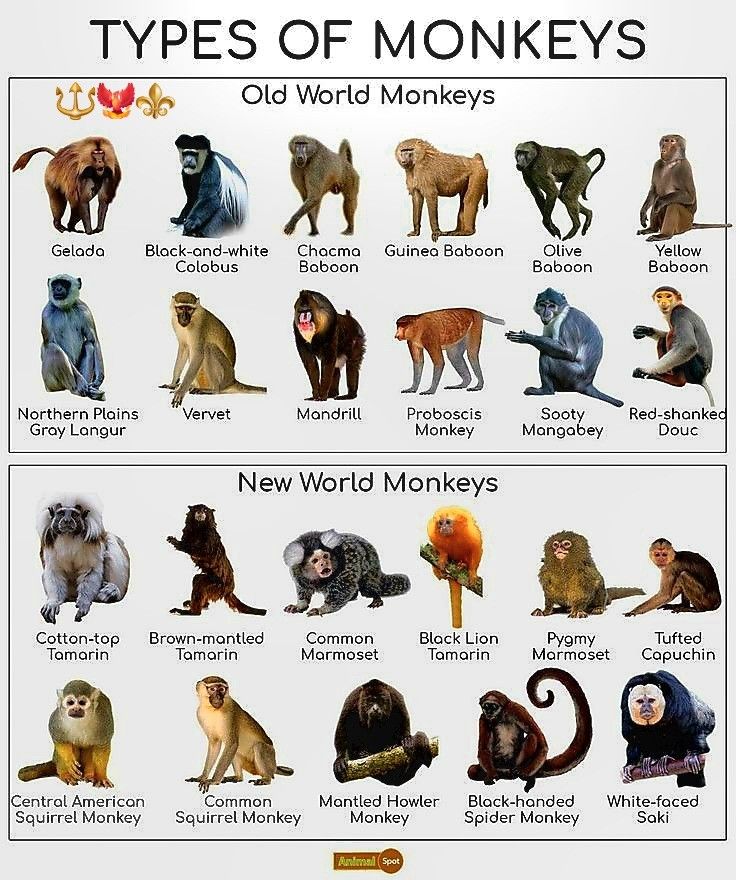
To begin, monkeys are broadly divided into two main groups: Old World monkeys (found primarily in Africa, Asia, and parts of Europe) and New World monkeys (native to Central and South America). This division stems from their evolutionary divergence around 35-40 million years ago, leading to distinct adaptations suited to their respective environments. The infographic categorizes them visually, with illustrations of 12 Old World species and 11 New World species, emphasizing their morphological variety.

Key Differences Between Old World and New World Monkeys
Understanding the distinctions between these groups is essential for primate studies. Old World monkeys belong to the family Cercopithecidae and are generally larger, more ground-dwelling, and adapted to diverse ecosystems like savannas and forests. New World monkeys, classified under the parvorder Platyrrhini (encompassing families like Callitrichidae, Cebidae, Aotidae, Pitheciidae, and Atelidae), are typically smaller, arboreal, and equipped with prehensile tails for life in the treetops.
Here’s a comparative table summarizing the primary differences:
| Characteristic | Old World Monkeys | New World Monkeys |
|---|---|---|
| Geographic Location | Africa, Asia, and Europe | Central and South America |
| Nose Shape | Narrow septum with downward-facing nostrils | Wide septum with side-facing, flat nostrils |
| Habitat Preference | Often terrestrial (ground-based) | Primarily arboreal (tree-dwelling) |
| Tail | Non-prehensile (cannot grasp objects) | Often prehensile (acts like a fifth limb) |
| Buttocks | Have ischial callosities (bare sitting pads) | Lack ischial callosities |
| Thumbs | Fully opposable for better dexterity | Opposable in some, but less developed |
| Size Range | Medium to large (e.g., mandrills up to 110 lbs) | Small to medium (e.g., pygmy marmosets at 4-6 oz) |
| Diet | Omnivorous, with some folivorous (leaf-eating) | Mostly frugivorous and insectivorous |
| Social Structure | Complex hierarchies, often in large troops | Smaller family groups, cooperative breeding |
| Vision | Trichromatic (full color vision like humans) | Mostly dichromatic, except in some species |
These adaptations reflect their evolutionary paths: Old World monkeys evolved in open landscapes with predators, favoring strength and social complexity, while New World monkeys thrived in dense rainforests, emphasizing agility and tail use.
Old World Monkeys: Adaptations and Featured Species
Old World monkeys, comprising about 138 species across 24 genera, are the largest primate family. They are characterized by cheek pouches for storing food, downward-pointing nostrils, and non-prehensile tails. Divided into two subfamilies—Cercopithecinae (cheek-pouched, omnivorous) and Colobinae (leaf-eating with complex stomachs)—they inhabit rainforests, savannas, shrublands, and mountains. Many species face threats from habitat loss and hunting, making conservation crucial.
The infographic showcases a selection of these primates. Below is a detailed tutorial-style breakdown of each, including identification tips, habitat, behavior, and conservation status (based on IUCN data where available). We’ll start with general observation steps: Look for narrow noses, robust builds, and ground-foraging behaviors.
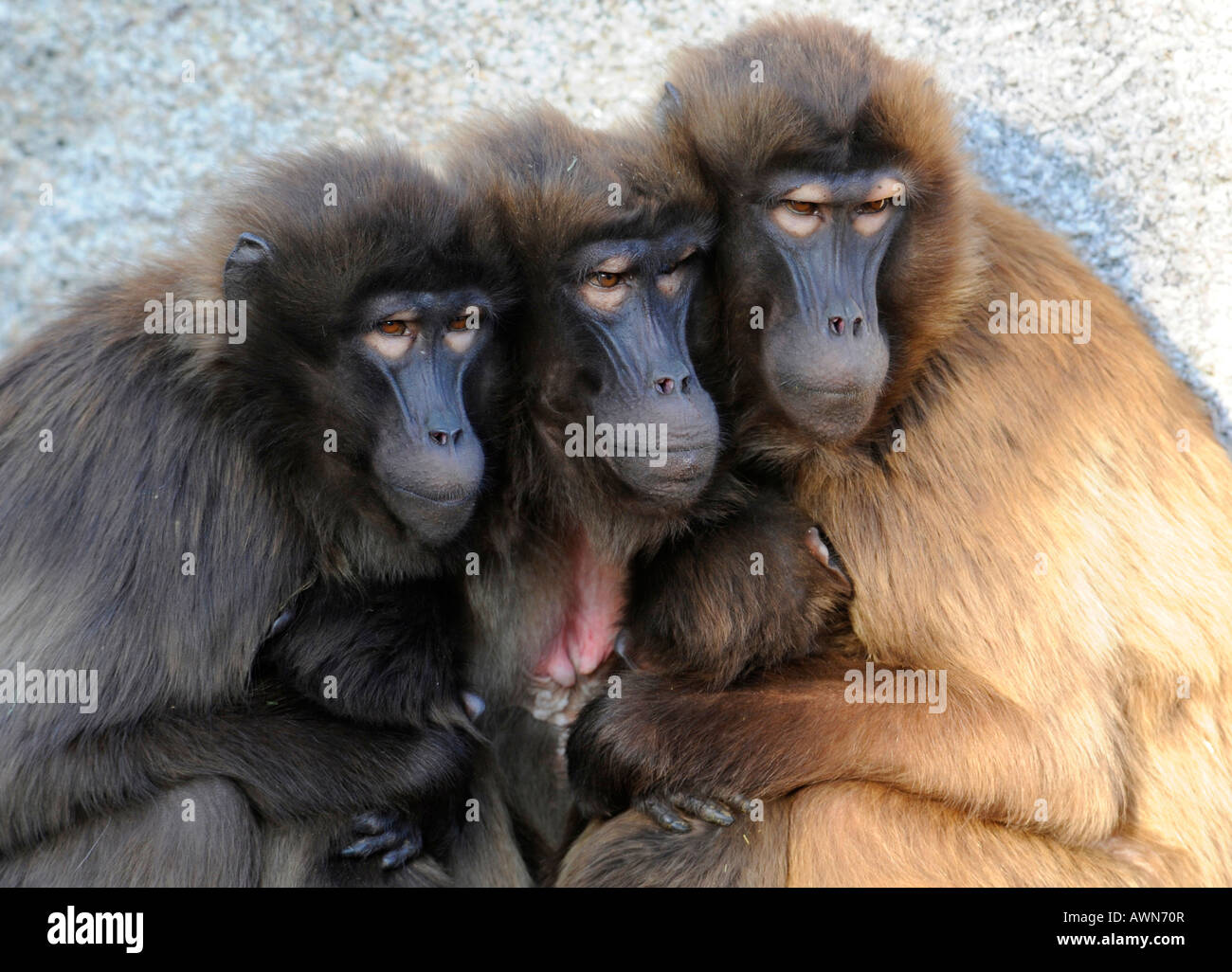
- Gelada (Theropithecus gelada): Often called the “bleeding-heart monkey” due to the red chest patch on males, geladas are unique grassland dwellers in Ethiopia’s highlands. They form large herds of up to 1,200 individuals, grazing on grass like mini-cows (a rare primate adaptation). Males have impressive manes and long canines for display. Conservation: Vulnerable; threats include agriculture encroachment. Tip: Observe their “lip flip” threat display in social interactions.
- Black-and-White Colobus (Colobus guereza): These arboreal leaf-eaters from African forests have striking black fur with white mantles and tails. They lack thumbs, aiding branch swinging, and have multi-chambered stomachs for digesting foliage. Social in small groups, they communicate with roars. Conservation: Least Concern, but localized threats from deforestation.
- Chacma Baboon (Papio ursinus): Found in southern Africa, these adaptable omnivores live in troops of 20-150, foraging on the ground for fruits, insects, and small animals. Males are large (up to 100 lbs) with sharp canines. Known for complex social hierarchies and raiding human areas. Conservation: Least Concern.
- Guinea Baboon (Papio papio): Native to West Africa, these smaller baboons inhabit savannas and woodlands. They form multi-male, multi-female groups and eat a varied diet. Less aggressive than other baboons. Conservation: Near Threatened due to habitat loss.
- Olive Baboon (Papio anubis): Widespread in equatorial Africa, named for their olive-green fur. Highly social, with troops up to 150, they adapt to various habitats and diets. Known for tool use, like digging for roots. Conservation: Least Concern.
- Yellow Baboon (Papio cynocephalus): From East Africa, these slender baboons have yellowish fur and live in open woodlands. They form alliances for protection and forage opportunistically. Conservation: Least Concern.
- Northern Plains Gray Langur (Semnopithecus entellus): Inhabiting India and nearby regions, these leaf-eaters have gray fur and black faces. Sacred in Hindu culture, they live in troops and leap impressively between trees. Conservation: Least Concern, but human conflicts arise.
- Vervet (Chlorocebus pygerythrus): Small, agile monkeys from sub-Saharan Africa with green-tinged fur. They use alarm calls specific to predators (e.g., eagles vs. leopards). Omnivorous and adaptable to human areas. Conservation: Least Concern.
- Mandrill (Mandrillus sphinx): The world’s most colorful monkey, males have vibrant blue-and-red faces. From Central African rainforests, they live in huge hordes (up to 800) and forage on the ground. Conservation: Vulnerable; hunted for bushmeat.
- Proboscis Monkey (Nasalis larvatus): Endemic to Borneo, males have large, pendulous noses for amplifying calls. Arboreal and semi-aquatic, they swim to escape predators and eat leaves/fruits. Conservation: Endangered due to palm oil plantations.

- Sooty Mangabey (Cercocebus atys): From West African forests, these grayish monkeys have white eyelids and live in large groups. Omnivorous, with cheek pouches. Important in SIV research (related to HIV). Conservation: Vulnerable.
- Red-Shanked Douc (Pygathrix nemaeus): Vibrant, arboreal leaf-eaters from Vietnam and Laos with red legs and gray bodies. They live in family groups and are highly endangered from hunting and war legacies. Conservation: Critically Endangered.
New World Monkeys: Adaptations and Featured Species
New World monkeys encompass about 179 species across 23 genera, all platyrrhines with flat noses and side-facing nostrils. They are mostly small, tree-dwelling, and use prehensile tails as an extra hand. Diets focus on fruits, insects, and tree sap, with cooperative breeding common. Threats include deforestation in the Amazon.
Follow these steps for identification: Note the broad nose, smaller size, and tail usage. The infographic highlights examples from families like Callitrichidae (small marmosets/tamarins) and Cebidae (capuchins/squirrel monkeys).
- Cotton-Top Tamarin (Saguinus oedipus): Critically endangered from Colombia, with white punk-like crests. Tiny (1 lb), they live in family groups, eating insects and fruits. Twins are common, carried by fathers. Conservation: Focus on habitat protection.
- Brown-Mantled Tamarin (Saguinus fuscicollis): From Amazon basins, these small tamarins have brown backs and cooperative groups. Insectivores with claw-like nails for tree clinging. Conservation: Least Concern.
- Common Marmoset (Callithrix jacchus): Native to Brazil, these gum-eaters have white ear tufts. Used in biomedical research. Live in small families. Conservation: Least Concern.
- Black Lion Tamarin (Leontopithecus chrysopygus): Endangered from Brazil, with black fur and golden rumps. Arboreal frugivores in fragmented forests. Conservation efforts include reintroduction.
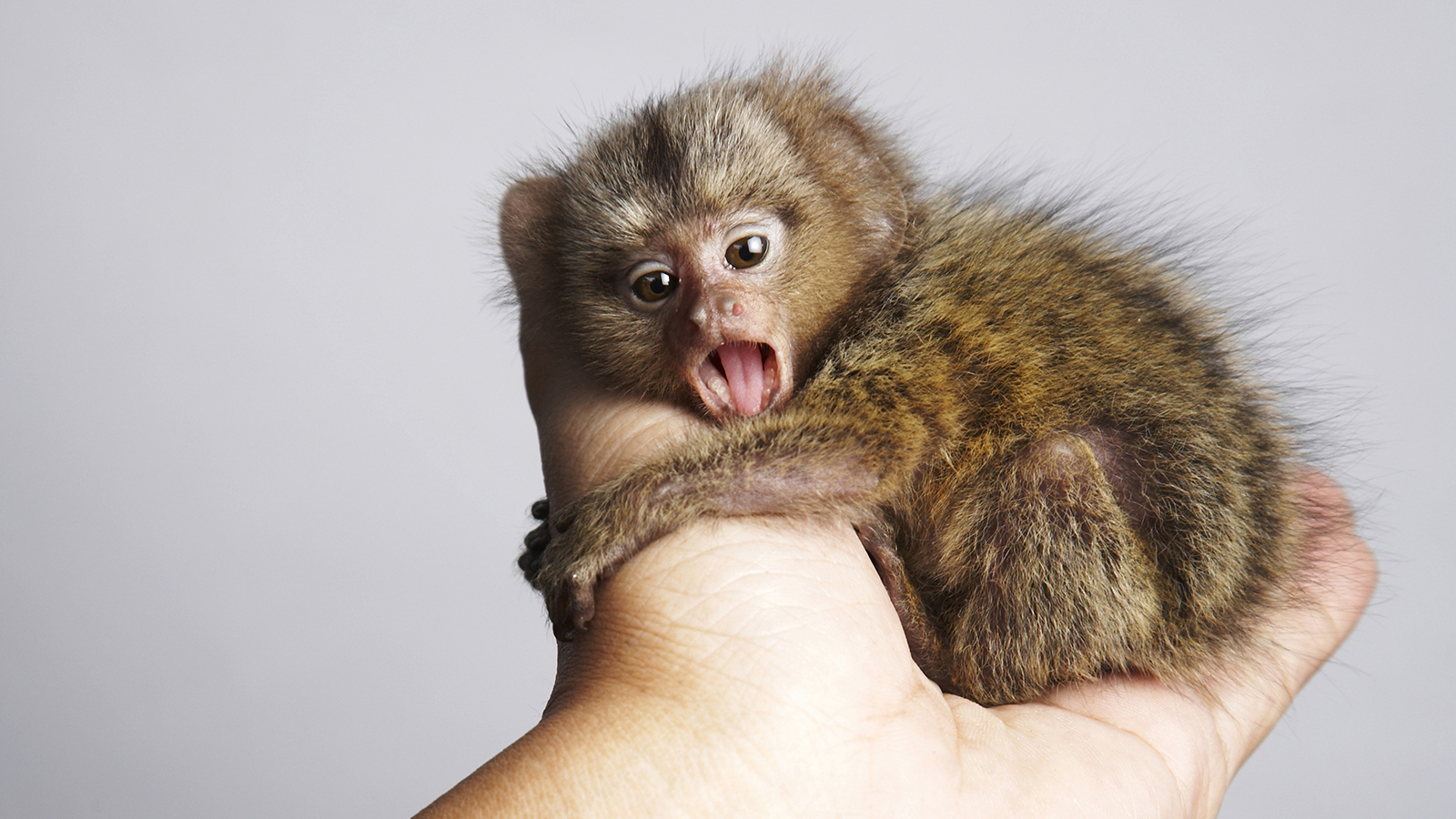
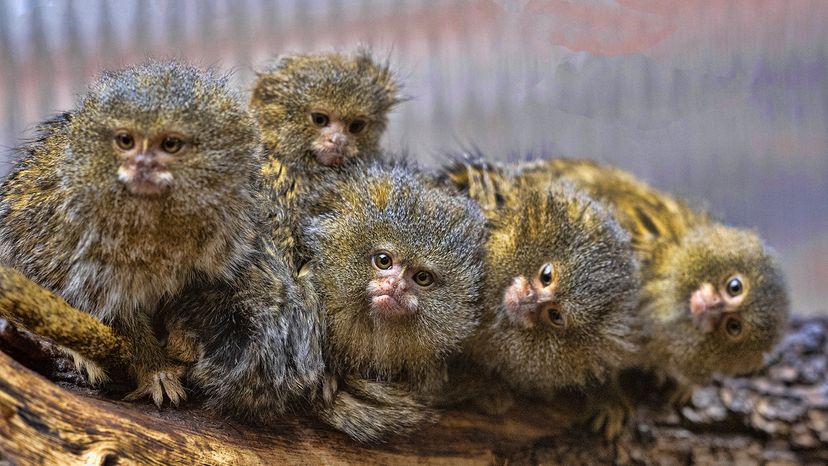
- Pygmy Marmoset (Cebuella pygmaea): The world’s smallest monkey (4-6 inches), from Amazon rainforests. They gouge trees for sap and live in tight family units. Conservation: Vulnerable.
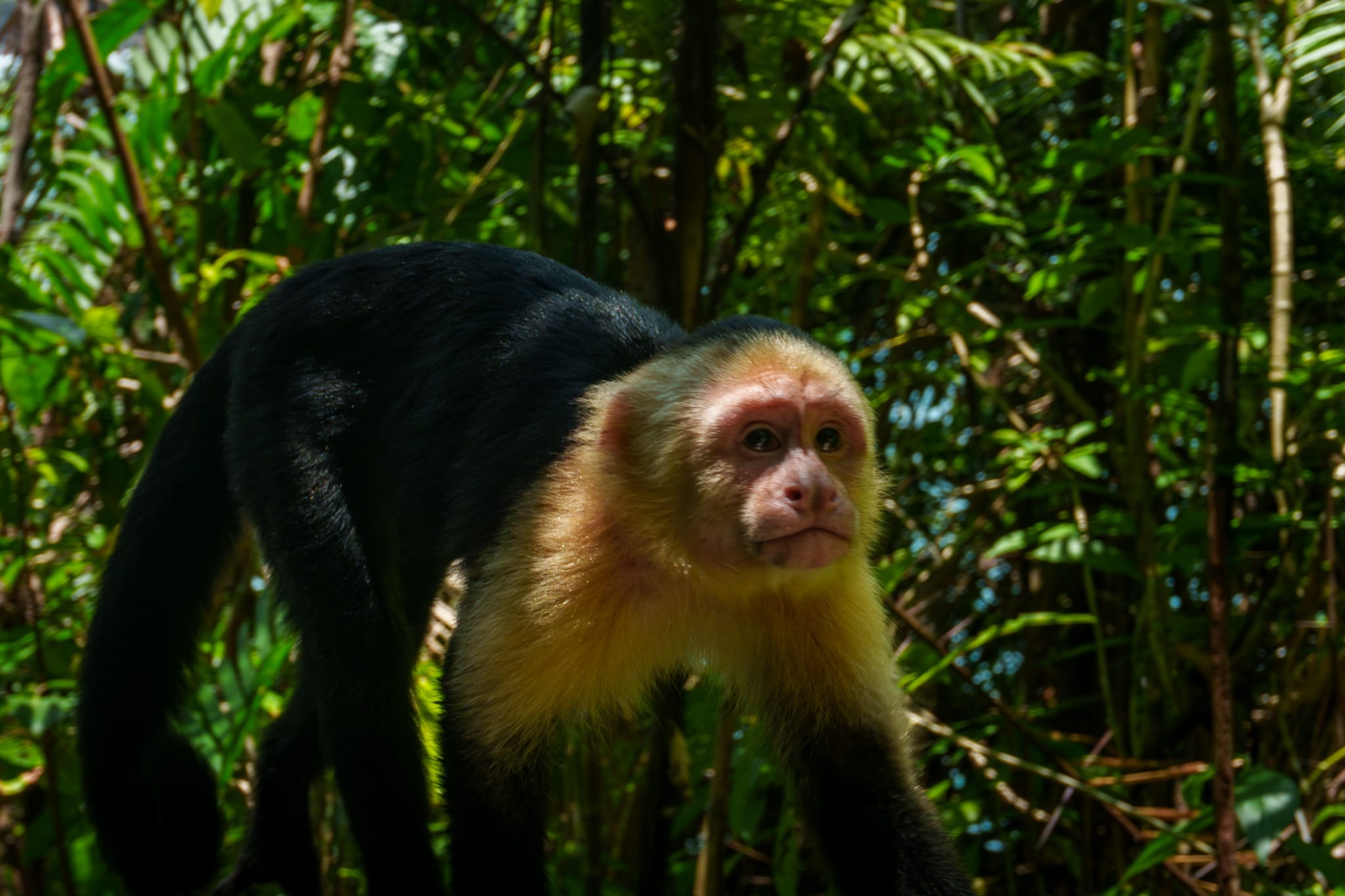
- Tufted Capuchin (Sapajus apella): Intelligent tool-users from South America, with dark caps. Omnivorous, cracking nuts with stones. Social in troops. Conservation: Least Concern.
- Central American Squirrel Monkey (Saimiri oerstedii): Endangered from Costa Rica/Panama, with orange backs. Highly social, insect-hunting in groups. Conservation: Habitat corridors needed.
- Common Squirrel Monkey (Saimiri sciureus): Widespread in Amazon, small with white masks. Form large troops (up to 300), eating fruits/insects. Conservation: Least Concern.
- Mantled Howler Monkey (Alouatta palliata): From Central/South America, known for deafening howls (up to 140 dB). Folivorous, with prehensile tails. Conservation: Vulnerable.
- Black-Handed Spider Monkey (Ateles geoffroyi): Endangered arboreal acrobats from Mexico to Panama, with long limbs and tails. Frugivores aiding seed dispersal. Conservation: Anti-poaching needed.
- White-Faced Saki (Pithecia pithecia): From northern South America, males have white faces. Leap between trees, eating seeds/fruits. Monogamous pairs. Conservation: Least Concern.
Conclusion and Conservation Tutorial
This guide, inspired by the infographic, illustrates the rich tapestry of monkey diversity. To engage further, try sketching species from photos or visiting zoos with ethical primate programs. For conservation: Support organizations like the WWF, avoid products driving deforestation (e.g., unsustainable palm oil), and educate others on wildlife trade bans. By understanding these primates, we contribute to their preservation in a changing world.