10-Minute Daily Sketch Prompts to Improve Fast
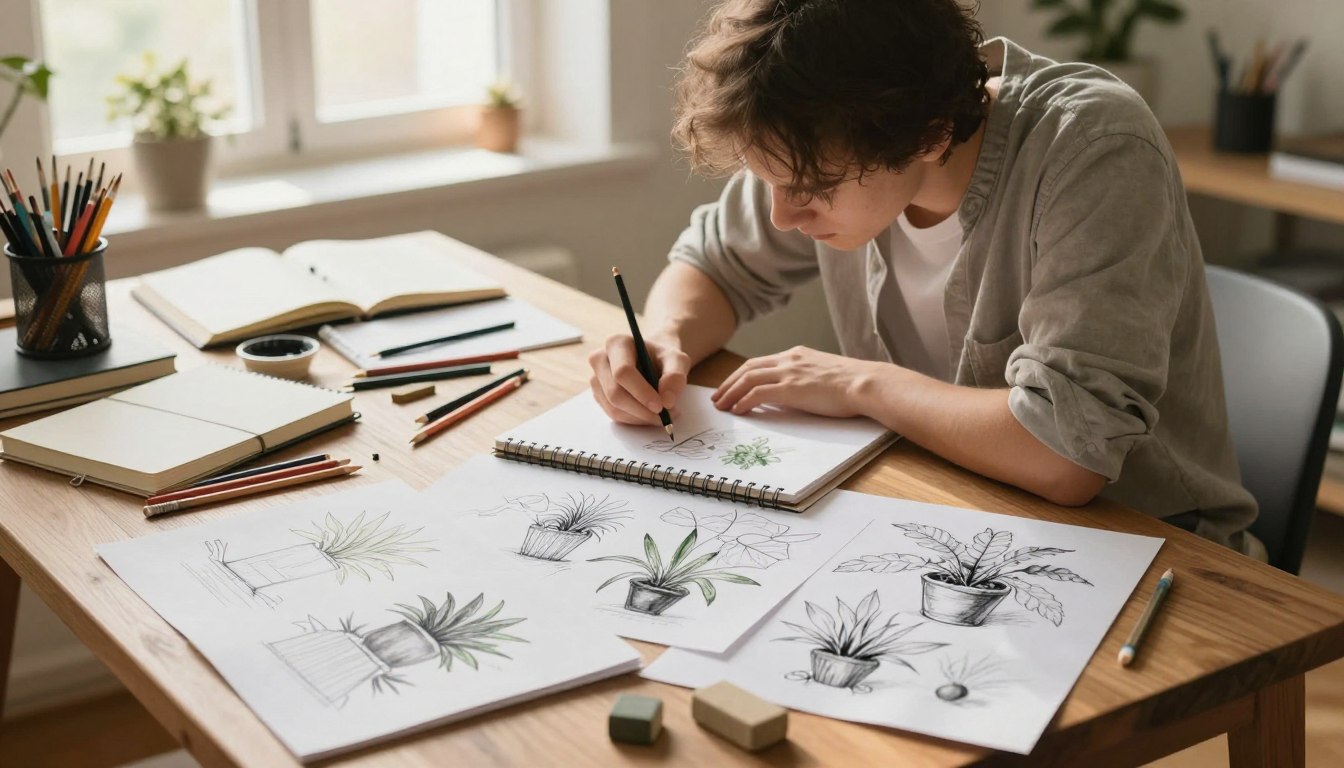
Are you looking to improve your drawing skills quickly and effectively? Incorporating daily sketching into your routine can be a game-changer. By dedicating just a few minutes each day to sketching, you can significantly enhance your artistic abilities.

ketch Prompts
Using sketch prompts can help guide your daily practice, ensuring you stay focused and motivated. These prompts can be as simple as drawing an object or as complex as creating a detailed scene. The key is to keep your practice sessions short and enjoyable, allowing you to improve your drawing skills without feeling overwhelmed.
Key Takeaways
- Daily sketching can significantly improve your drawing skills.
- Using sketch prompts helps keep your practice sessions focused.
- Short practice sessions can be more effective than long, infrequent ones.
- Consistency is key to improving your artistic abilities.
- Daily sketching can be a fun and creative way to express yourself.
The Power of Daily Sketching Practice
The journey to artistic mastery begins with a simple, daily commitment to sketching. By incorporating sketching into your daily routine, you can significantly enhance your artistic skills and foster artistic growth. Daily sketching practice is not just about creating art; it’s about developing a habit that cultivates your ability to observe, interpret, and render the world around you.
Why Consistency Matters More Than Talent
Consistency is the backbone of skill development in sketching. While natural talent can provide a good foundation, it’s the regular practice that hones your skills and transforms you into a proficient artist. The importance of consistency can be seen in several areas:
- Develops muscle memory, making drawing more intuitive
- Enhances observational skills, allowing for more accurate representations
- Builds confidence, encouraging experimentation and risk-taking
The Science Behind Skill Development Through Regular Practice
Research in neuroscience and psychology supports the idea that regular practice is crucial for skill development. The process of learning and mastering a skill, such as sketching, involves creating new neural pathways in the brain. Regular, consistent practice strengthens these pathways, making the skill more automatic over time. As Malcolm Gladwell famously noted in his book “Outliers,” “Practice isn’t the thing you do once you’re good. It’s the thing you do that makes you good.”
“The only way to do great work is to love what you do.” – Steve Jobs
By understanding the science behind skill development, artists can better appreciate the value of their daily sketching practice, staying motivated to continue improving their craft.
How 10-Minute Exercises Accelerate Your Progress
Incorporating short, focused sketch exercises into your daily routine can significantly enhance your artistic progress. By dedicating a brief period each day to sketching, you can develop a consistent practice habit that fosters improvement and creativity.
The Psychology of Time Constraints
Time constraints can have a profound effect on the creative process. Parkinson’s Law states that “work expands to fill the time available for its completion.” By limiting the time available for a sketch, you can actually boost your productivity and focus. This phenomenon is known as the Zeigarnik effect, where unfinished tasks remain in your mind until completed.
“The most important thing is to create, not to compete. The moment you start comparing yourself to others, you’re no longer creating.”
Building Focus Through Brief, Intentional Practice
Brief, intentional practice sessions can significantly improve your focus. By concentrating on a single task for a short duration, you can enhance your ability to concentrate and reduce distractions. This focused approach to practice allows you to make the most of your time and energy.

sketch exercises
Creating a Sustainable Habit That Sticks
Creating a sustainable habit requires consistency and patience. To make daily sketching a habit, start small and be consistent. Begin with a manageable daily goal, such as 10 minutes, and gradually increase the duration as needed. It’s also helpful to schedule your sketching time and stick to it, just as you would any other important appointment.
| Habit | Frequency | Duration |
| Daily Sketching | Once a day | 10 minutes |
| Weekly Review | Once a week | 30 minutes |
Essential Tools and Setup for Quick Daily Sketching
Embracing daily sketching begins with understanding the essential tools and setup required for consistent practice. Having the right supplies and environment can significantly impact your ability to maintain a daily sketching habit.
Minimal Supply Recommendations
To start, you’ll need a few basic supplies. A sketchbook, a pencil, and an eraser are the minimum required. Consider a sketchbook with a mix of blank and grid pages to accommodate different sketching styles. A pencil with a medium hardness (HB) is versatile for both fine details and shading.
Creating a Dedicated Sketch Prompt Journal
Creating a dedicated sketch prompt journal can help organize your daily exercises. This journal can be a separate section in your sketchbook or a entirely new notebook. Having prompts readily available can inspire and guide your daily sketches, ensuring you stay on track.

sketching tools
Digital vs. Traditional Approaches
The choice between digital and traditional sketching methods depends on personal preference. Traditional methods offer tactile feedback, while digital tools provide flexibility and ease of editing. Many artists combine both methods to leverage their respective advantages.
By setting up your space and choosing your tools thoughtfully, you can create an environment that fosters creativity and consistency in your daily sketching practice.
Fundamental Sketch Prompts for Technical Skills
Technical skills are the backbone of any artist’s repertoire, and daily sketch prompts can help hone them. By focusing on specific exercises, artists can improve their overall drawing abilities and tackle more complex subjects with confidence.
Line Quality and Control Exercises
Improving line quality is fundamental to developing strong drawing skills. Try exercises that focus on varying line weights, such as drawing different types of lines (straight, curved, hatching) with varying pressures and speeds. For instance, practice drawing a series of parallel lines with different spacings and thicknesses to enhance control and consistency.
Value and Shading Challenges
Understanding value and shading is crucial for creating depth and dimension in your drawings. Practice shading exercises using different techniques, such as hatching, cross-hatching, and stippling. Start with simple still-life compositions and gradually move to more complex subjects, observing how light interacts with different surfaces.

technical drawing exercises
Perspective and Spatial Relationship Studies
Mastering perspective is key to creating convincing and realistic drawings. Practice drawing simple shapes in one-point, two-point, and three-point perspectives. Gradually move on to more complex scenes, focusing on how objects relate to each other spatially. This will help you understand how to create a sense of depth and distance on a flat surface.
Composition and Design Mini-Exercises
Good composition is essential for creating engaging and balanced artwork. Practice simple composition exercises, such as arranging basic shapes into harmonious compositions or creating thumbnail sketches of different scenes. Experiment with the rule of thirds, symmetry, and other compositional techniques to develop your skills.
| Exercise | Focus | Benefits |
| Line Quality Exercises | Control, Consistency | Improved drawing accuracy, Enhanced expressiveness |
| Value and Shading | Depth, Dimension | Better understanding of light and shadow, More realistic drawings |
| Perspective Studies | Spatial Relationships | Convincing and realistic drawings, Improved sense of depth |
| Composition Exercises | Balance, Harmony | Engaging and balanced artwork, Enhanced creativity |
By incorporating these fundamental sketch prompts into your daily practice, you’ll see significant improvements in your technical skills and overall artistic abilities.
Subject-Based Sketch Prompts to Expand Your Repertoire
Expanding your artistic repertoire requires consistent practice and diverse subject matter. By exploring different subjects, you can develop a wide range of skills and discover new areas of interest. This section will guide you through various subject-based sketch prompts to help you grow as an artist.

subject-based sketch prompts
Figure and Gesture Drawing Prompts
Figure drawing is a fundamental skill for many artists. To improve, try using short poses (1-5 minutes) to capture the essence of the figure. You can also practice gesture drawing by focusing on the overall movement and flow of the body. Use a variety of media, such as charcoal or ink, to challenge yourself and create dynamic sketches.
- Draw from life or use reference images
- Experiment with different poses and angles
- Focus on capturing the gesture and movement
Still Life and Object Studies
Still life drawing allows you to practice rendering texture, form, and composition. Set up a still life arrangement using household objects or fruit, and challenge yourself to capture the details and relationships between the objects. You can also practice drawing individual objects, focusing on their shape, texture, and value.
- Use a variety of objects to create interesting compositions
- Experiment with different lighting setups
- Pay attention to the textures and values
Landscape and Environment Sketches
Landscape drawing can help you develop your skills in capturing atmosphere and perspective. Practice sketching outdoors or use reference images to create detailed landscapes. Focus on capturing the mood and essence of the scene, and don’t be afraid to simplify or abstract elements to enhance the composition.
- Practice sketching different types of landscapes (urban, rural, natural)
- Pay attention to the values and atmosphere
- Experiment with different media and techniques
Imaginative and Concept Art Exercises
Imaginative and concept art exercises can help you develop your creative skills and explore new ideas. Try creating sketches based on prompts or themes, such as “a futuristic city” or “a mythical creature.” Use your imagination to create unique and compelling compositions, and don’t be afraid to experiment and take risks.
- Use prompts or themes to inspire your sketches
- Experiment with different styles and techniques
- Focus on capturing the essence and mood of the concept
Advanced Sketch Prompts for Artistic Growth
To take your sketching to the next level, it’s essential to challenge yourself with advanced prompts that foster artistic growth. These prompts are designed to help you explore new techniques, styles, and ways of expressing yourself through art.
Style Exploration and Development
Exploring different styles is a crucial part of artistic development. By trying out various techniques and mediums, you can discover what works best for you and your art. Try sketching with different tools, such as charcoal, ink, or watercolors, to see how they affect your style.
- Experiment with abstract shapes and forms
- Practice mimicking the styles of your favorite artists
- Create a series of sketches that blend different styles
Storytelling Through Quick Sketches
Storytelling is a powerful aspect of art, allowing you to convey emotions and narratives through your sketches. Quick sketches can help you capture the essence of a story or scene. Try to tell a story through a sequence of sketches, focusing on different elements each time.
| Story Element | Sketch Focus | Key Techniques |
| Character Development | Capturing expressions and poses | Gesture drawing, facial details |
| Setting | Depicting environment and atmosphere | Perspective, shading, texture |
| Action and Movement | Conveying motion and energy | Dynamic lines, motion blur |
Emotional Expression and Mood Studies
Your art can be a reflection of your emotions and inner experiences. By focusing on emotional expression and mood, you can create sketches that resonate with others. Practice capturing different moods and emotions through your art, using color, texture, and composition to convey your intended feeling.
By incorporating these advanced sketch prompts into your daily practice, you’ll be able to explore new aspects of your artistry and continue to grow as an artist.
Tracking Your Progress and Measuring Improvement
As you embark on your daily sketching journey, tracking your progress becomes essential to understanding your growth. By regularly monitoring your improvement, you can identify areas that need more attention and adjust your practice accordingly.
Creating Before-and-After Comparisons
One effective way to measure your improvement is by creating before-and-after comparisons. Set aside time every few weeks to complete a sketch using a specific prompt, then compare it to your earlier work. This visual comparison will help you see how far you’ve come and what still needs improvement.
Setting Specific Skill-Based Goals
Setting specific skill-based goals is crucial for focused improvement. Identify particular skills you want to develop, such as mastering line quality or improving shading techniques. By setting clear goals, you can tailor your daily sketching practice to address these areas directly.
Using Digital Tools to Document Growth
In today’s digital age, there are numerous digital tools available to help you document your artistic growth. Consider using apps or software that allow you to store and organize your sketches digitally. This not only helps in tracking progress but also makes it easier to share your work and get feedback from others.
By implementing these strategies, you’ll be able to track your progress effectively and make the most out of your daily sketching practice.
Overcoming Common Challenges in Daily Sketch Prompts
As artists embark on a daily sketching journey, they often encounter common hurdles. These challenges can range from creative blocks to difficulties in maintaining a consistent schedule. Understanding these obstacles is the first step to overcoming them.
Dealing with Creative Block
Creative block can be a significant obstacle. To overcome it, try changing your environment or using different mediums. Setting constraints can also stimulate creativity. For example, limiting your sketch to a specific theme or time frame can help.
Finding Time in a Busy Schedule
Finding time to sketch can be challenging. Prioritizing tasks and using a planner can help. Breaking sketching into smaller chunks, like 10-minute exercises, can make it more manageable and help maintain consistency.
Maintaining Motivation When Progress Seems Slow
Maintaining motivation is crucial. Setting realistic goals and tracking progress can help. Celebrating small achievements along the way can also keep you motivated. It’s about understanding that progress is not always linear.
Conclusion: Transforming Your Art Through Consistent Practice
Developing a consistent practice of daily sketching can significantly enhance your sketching skills and lead to overall art improvement. By dedicating just a few minutes each day to sketching, you can cultivate a deeper understanding of various artistic techniques and principles.
Through consistent practice, you’ll be able to track your progress, identify areas for improvement, and refine your skills. The daily sketch prompts outlined in this article provide a structured approach to achieving your artistic goals, helping you stay focused and motivated.
As you continue on your artistic journey, remember that the key to success lies in persistence and dedication. By incorporating daily sketching into your routine, you’ll be well on your way to transforming your art and unlocking your full creative potential.