What Are Fossils? Understanding the Basics of Ancient Life
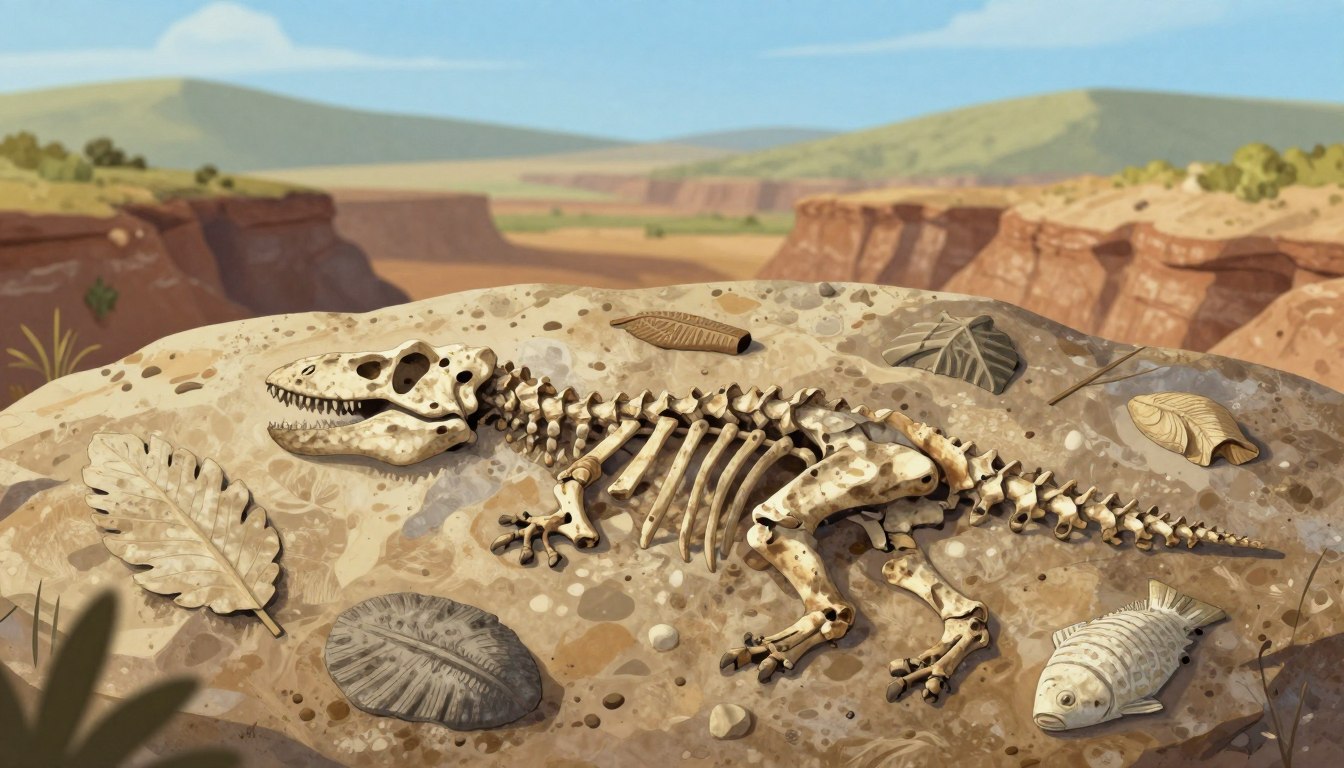
Fossils are the remains or imprints of plants, animals, and other organisms from the past. They provide a window into the history of life on Earth, allowing us to study the evolution of species and ecosystems.

what are fossils
The study of fossils is known as paleontology, a field that has greatly contributed to our understanding of ancient life. By analyzing fossils, scientists can reconstruct the environments and conditions of the past, shedding light on the Earth’s history.
Key Takeaways
- Fossils are the remains or imprints of ancient organisms.
- Paleontology is the study of fossils and their significance.
- Fossils provide insights into the evolution of species and ecosystems.
- The study of fossils helps us understand the Earth’s history.
- Fossils are a crucial tool for reconstructing ancient environments.
What Are Fossils: The Preserved Remnants of Ancient Life
To understand what fossils are, we must first consider the definition and criteria used by scientists to classify them. Fossils are not just any remains of ancient life; they must meet specific criteria to be considered as such.
Scientific Definition and Criteria
A fossil is defined as the preserved remains or trace of an ancient organism. The scientific community relies on specific criteria to determine whether a specimen is a fossil. These criteria include the object’s age, its origin, and whether it provides evidence of past life.
The Minimum Age Requirement
One of the key criteria for a specimen to be considered a fossil is its age. Generally, to be classified as a fossil, a specimen must be at least 10,000 years old. This age threshold distinguishes fossils from more recent remains.
Distinguishing Fossils from Other Natural Objects
Fossils are often confused with other natural objects, such as rocks or mineral deposits. However, fossils provide direct evidence of past life, whereas other objects do not. The process of fossilization involves the replacement of original organic material with minerals, preserving the structure of the organism.
Understanding the definition and criteria for fossils is crucial in the field of paleontology. By applying these criteria, scientists can accurately identify and study fossils, gaining insights into the history of life on Earth.
The Remarkable Process of Fossilization
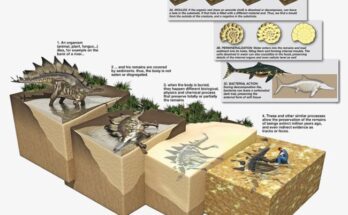
Fossilization is an intricate process that transforms organic remains into lasting relics of the past. This complex phenomenon has captivated scientists and the general public alike, offering a window into the history of life on Earth.
Requirements for Successful Preservation
For fossilization to occur, specific conditions must be met. Two crucial factors are:
- Rapid burial, which protects the remains from scavengers and oxygen
- The presence of hard parts, such as bones or shells, which are more likely to be preserved
Rapid Burial and Oxygen-Free Environments
Rapid burial is essential as it shields the organic matter from oxygen, reducing the likelihood of decay. Environments with low oxygen levels, such as deep-sea sediments or swamps, are ideal for this process.
Presence of Hard Parts
Organisms with hard parts, like bones or exoskeletons, have a higher chance of being fossilized. These hard structures can withstand the pressures and processes involved in fossilization.
Common Fossilization Methods
Several methods contribute to the fossilization process, each preserving different aspects of ancient organisms.
Permineralization and Replacement
Permineralization occurs when mineral-rich water seeps through the sediment, depositing minerals into the tiny spaces within the organism’s remains, gradually replacing the original material.
Carbonization and Compression
Carbonization involves the compression of organic material, leaving behind a carbon-rich film that outlines the organism’s structure.
Molds, Casts, and Impressions
Molds are created when the original organic material dissolves, leaving a cavity. If this cavity is filled with sediment, it forms a cast. Impressions are detailed marks left in the surrounding sediment.
The combination of these factors and processes results in the creation of fossils, providing a tangible link to the past.
Major Types of Fossils in the Paleontological Record
The study of fossils reveals a wide array of types, from direct physical remains to indirect evidence of ancient activity. These diverse fossils collectively contribute to our understanding of the history of life on Earth.
Body Fossils: Direct Physical Remains
Body fossils are the direct remains of ancient organisms, providing tangible evidence of their existence.
Bones, Teeth, and Shells
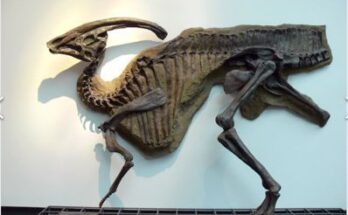
Bones, teeth, and shells are among the most common body fossils. They are durable and can withstand the test of time, offering insights into the anatomy and diversity of ancient life forms.
Soft Tissue Preservation
In rare cases, soft tissues are preserved, giving scientists a glimpse into the detailed anatomy of ancient organisms. This type of preservation is exceptional and usually occurs under unique conditions.
Trace Fossils: Evidence of Ancient Activity
Trace fossils are the indirect evidence of ancient life, representing the activities or behaviors of organisms rather than their physical remains.
Footprints and Trackways
Footprints and trackways provide valuable information about the locomotion and behavior of ancient animals. They are crucial for understanding the interactions between different species and their environments.
Burrows and Borings
Burrows and borings are trace fossils that indicate the presence of organisms that dug or bored into sediments. These traces offer insights into the ecological roles of ancient organisms.
Coprolites and Gastroliths
Coprolites (fossilized feces) and gastroliths (stomach stones) are trace fossils that provide information about the diet and digestive processes of ancient animals.
Chemical and Molecular Fossils
Chemical and molecular fossils are the remnants of ancient organisms preserved at the molecular level. These fossils can include specific biomarkers or other organic molecules that provide insights into the biochemistry of ancient life.
Amber: Preservation in Ancient Tree Resin
Amber is a unique medium for fossil preservation, capturing organisms or parts of organisms in ancient tree resin. It provides a window into the past, preserving delicate structures that would otherwise be lost.
| Type of Fossil | Description | Examples |
| Body Fossils | Direct physical remains of organisms | Bones, teeth, shells, soft tissues |
| Trace Fossils | Evidence of ancient activity or behavior | Footprints, trackways, burrows, borings, coprolites, gastroliths |
| Chemical and Molecular Fossils | Molecular remnants of ancient organisms | Biomarkers, organic molecules |
| Amber Fossils | Organisms preserved in ancient tree resin | Insects, small vertebrates, plant material |
Where Fossils Are Typically Discovered
The formation and preservation of fossils are closely tied to specific geological conditions found in various locations globally. Fossils are not randomly distributed; instead, they are typically found in areas where the right combination of conditions existed in the past.
Ideal Geological Conditions for Fossil Formation
Fossil formation requires a unique set of geological conditions. These include rapid burial, low oxygen environments, and the presence of minerals that can replace original organic material. Areas with minimal tectonic activity and stable sedimentary basins are more likely to preserve fossils over millions of years.

fossil locations
Famous Fossil-Bearing Formations in North America
North America is home to numerous significant fossil-bearing formations. Some of the most notable include:
- The Morrison Formation in the western United States, known for its Jurassic dinosaur fossils.
- The La Brea Tar Pits in California, famous for preserving Ice Age fossils.
- The Green River Formation in Wyoming, Utah, and Colorado, which contains well-preserved fish and plant fossils from the Eocene epoch.
Renowned International Fossil Sites
Beyond North America, there are many internationally recognized fossil sites. These include:
- The Burgess Shale in Canada, known for its Cambrian explosion fossils.
- The Messel Pit in Germany, a UNESCO World Heritage site with exceptionally preserved Eocene fossils.
- The Liaoning Province in China, famous for its feathered dinosaur fossils.
These locations provide valuable insights into Earth’s history and the evolution of life on our planet.
The Scientific Importance of Fossil Records
The study of fossils provides invaluable insights into the Earth’s past, shaping our understanding of the present and future. Fossils are not just relics of ancient life; they are crucial for understanding the complex history of our planet.
Reconstructing Evolutionary History
Fossils are essential for reconstructing the evolutionary history of various species. By analyzing fossil records, scientists can trace the lineage of organisms and understand how they adapted to their environments over time. Phylogenetic analysis relies heavily on fossil evidence to establish relationships between different species.
Understanding Extinct Ecosystems
Fossil records offer a window into extinct ecosystems, allowing scientists to study the interactions between ancient organisms and their environments. This knowledge helps in understanding how ecosystems responded to past environmental changes, providing valuable lessons for conservation efforts today.
Tracking Climate Change Through Deep Time
Fossils are critical for understanding long-term climate patterns. By examining the fossil record, researchers can reconstruct ancient climates and identify patterns of climate change over millions of years. This information is vital for modeling future climate scenarios and informing climate policy.
Biostratigraphy: Dating Rock Layers Using Fossils
Biostratigraphy, the use of fossils to date rock layers, is a fundamental technique in geology. By correlating fossil assemblages across different regions, scientists can establish a chronological framework for sedimentary rocks, helping to reconstruct the Earth’s geological history.
In conclusion, the scientific importance of fossil records cannot be overstated. They are a cornerstone of Earth sciences, providing insights into evolutionary history, extinct ecosystems, climate change, and the geological timeline. As research continues, our understanding of the Earth’s past will only deepen, shedding light on the complexities of our planet’s history.
Groundbreaking Fossil Discoveries That Changed Science
Groundbreaking fossil discoveries have dramatically altered the scientific landscape, providing unprecedented insights into the history of life on Earth. These significant fossil discoveries have not only shed light on the evolution of various species but have also challenged existing theories and opened new avenues for research.
Transitional Fossils That Filled Evolutionary Gaps
Transitional fossils are crucial in understanding the evolutionary process, as they exhibit characteristics of both the ancestral and descendant species. Two notable examples are Archaeopteryx and Tiktaalik.
Archaeopteryx: Between Dinosaurs and Birds
Archaeopteryx is a prime example of a transitional fossil, displaying a unique combination of reptilian and avian characteristics. This discovery has been instrumental in establishing the link between dinosaurs and birds.
Tiktaalik: The Fish-Tetrapod Transition
Tiktaalik represents a significant transitional form between fish and tetrapods, showcasing the evolutionary adaptations that enabled the transition from aquatic to terrestrial environments.

transitional fossils
Dinosaur Discoveries That Rewrote History
Dinosaur fossils have been pivotal in rewriting our understanding of these prehistoric creatures. Notable discoveries include feathered dinosaurs from China and the first complete Tyrannosaurus rex skeleton.
Feathered Dinosaurs from China
The discovery of feathered dinosaurs in China has revolutionized our understanding of dinosaur biology, suggesting that many theropod dinosaurs were feathered rather than scaly.
The First Complete Tyrannosaurus rex
The discovery of a complete Tyrannosaurus rex skeleton has provided invaluable insights into the biology and behavior of this iconic predator.
Human Evolution Illuminated Through Fossils
Fossils have played a crucial role in understanding human evolution, with discoveries like Lucy and Homo naledi shedding light on our ancestral lineage.
Lucy and the Australopithecines
Lucy, an Australopithecus afarensis specimen, has been instrumental in understanding the evolution of bipedalism in early hominins.
Homo naledi and Recent Discoveries
The discovery of Homo naledi has expanded our knowledge of human evolution, highlighting the complexity and diversity of the human genus.
These groundbreaking fossil discoveries have not only expanded our knowledge of the past but have also underscored the importance of continued exploration and research into Earth’s ancient history.
How Scientists Date and Analyze Fossils
Scientists employ various methods to date and analyze fossils, shedding light on Earth’s ancient past. The process involves determining the age of fossils and understanding their significance in the geological record.
Relative Dating Methods
Relative dating methods allow scientists to determine the age of fossils relative to other fossils found in the same geological formation. This is achieved through:
Stratigraphy and Superposition
The principle of superposition states that in any undisturbed sequence of rocks deposited in layers, the youngest layer is on top and the oldest on the bottom. Stratigraphy is the study of these rock layers.
Index Fossils and Correlation
Index fossils are fossils of species known to have lived during a specific time period. By identifying these fossils in different rock layers, scientists can correlate the layers and determine their relative age.
Absolute Dating Techniques
Absolute dating techniques provide a numerical age for fossils. The most common method is:
Radiometric Dating
Radiometric dating measures the decay rate of radioactive isotopes into stable isotopes. This method is used to date rocks and minerals that contain these isotopes.
Other Chronometric Methods
Other methods include luminescence dating, which measures the energy released when minerals are heated, and electron spin resonance, which measures the number of trapped electrons in a sample.
Modern Technology in Fossil Analysis
Modern technology has revolutionized the field of paleontology. Techniques such as:
CT Scanning and 3D Reconstruction
CT scanning allows scientists to non-invasively examine the internal structure of fossils. 3D reconstruction helps in visualizing complex fossil morphology.
Molecular and Isotopic Analysis
Molecular analysis involves studying the chemical composition of fossils, while isotopic analysis examines the isotopic signature of fossil materials.
| Dating Method | Description | Application |
| Relative Dating | Determines age relative to other fossils | Stratigraphy, Index Fossils |
| Absolute Dating | Provides numerical age | Radiometric Dating, Luminescence Dating |
| Modern Technology | Analyzes fossil structure and composition | CT Scanning, Molecular Analysis |
By combining these methods, scientists can gain a comprehensive understanding of fossils and their place in Earth’s history.
Fossil Excavation and Preservation Techniques
The journey from discovering a fossil to preserving it involves several critical steps. Fossil excavation and preservation are complex processes that require a deep understanding of both field and laboratory techniques.
Field Collection Methods
Field collection is the first step in fossil preservation. It involves careful planning and execution to ensure that fossils are uncovered without damage.
Prospecting and Site Assessment
Prospecting for fossils requires a thorough understanding of geological formations and the likelihood of finding fossils in certain areas. Once a potential site is identified, a detailed assessment is conducted to determine the extent of the fossil deposits.
Excavation Tools and Techniques
Excavation involves the use of various tools, from simple hand tools like brushes and chisels to more complex machinery. The choice of tool depends on the type of fossil and the surrounding rock.
Laboratory Preparation of Specimens
Once fossils are excavated, they are taken to a laboratory for further preparation. This stage is crucial for revealing the details of the fossil.
Mechanical and Chemical Preparation
Laboratory preparation may involve mechanical methods, such as using vibrating needles to remove rock, or chemical methods, where acids are used to dissolve the surrounding matrix.
Consolidation and Restoration
After preparation, fossils often require consolidation to strengthen them and restoration to return them to a state that is representative of their original form.
Long-term Conservation Practices
Long-term conservation is essential to ensure that fossils remain intact for future generations. This involves storing fossils in controlled environments and monitoring their condition.
Key conservation practices include:
- Maintaining stable temperature and humidity levels
- Using archival-quality materials for storage
- Minimizing handling to reduce damage
By following these techniques, fossils can be preserved for years to come, providing valuable insights into the history of life on Earth.
Fossil Collecting as a Hobby and Educational Tool
Fossil collecting is a fascinating hobby that combines adventure, science, and history, offering a unique window into the ancient past. For those interested in exploring this field, there are several key aspects to consider.
Getting Started with Amateur Fossil Hunting
To begin fossil collecting, one needs to understand the basics of where and how to find fossils. This involves researching areas known for their fossil-rich geological formations.
Essential Equipment and Resources
Some essential tools for fossil hunting include a geologist’s hammer, chisels, brushes, and a good field guide. Online resources and local fossil clubs can also provide valuable information.
Best Practices for Beginners
Beginners should start by learning about the types of fossils they are likely to find in their area and practicing identification skills. Joining a guided fossil hunt can be a great way to gain experience.
Legal and Ethical Considerations
Fossil collecting is subject to various legal and ethical considerations. Understanding these is crucial for responsible collecting.
Public vs. Private Land Regulations
Collectors must be aware of the laws regarding fossil collecting on public versus private land. In many areas, collecting fossils on public land is regulated or prohibited.
Scientific Significance and Reporting Finds
Significant fossil discoveries should be reported to local museums or paleontological societies. This not only helps in the scientific community but also ensures the preservation of important finds.
Building and Maintaining a Personal Collection
Once fossils are collected, proper care and storage are essential. This includes cleaning, cataloging, and storing specimens in a suitable environment.
| Equipment | Use |
| Geologist’s Hammer | Breaking up rock to expose fossils |
| Brushes | Gently cleaning fossils |
| Field Guide | Identifying fossils |
Common Misconceptions About Fossils
The world of fossils is filled with myths and misconceptions that need to be addressed. Fossils are often misunderstood, and their significance is sometimes exaggerated or distorted.
Fossils vs. Artifacts and Rocks
One common misconception is the confusion between fossils, artifacts, and rocks. Fossils are the preserved remains or traces of ancient organisms, whereas artifacts are objects made or used by humans. Rocks, on the other hand, are naturally occurring mineral aggregates. Understanding the differences is crucial for accurate interpretation.
The Rarity of Complete Specimens
Many people believe that fossils are often found complete and intact. However, the reality is that complete fossils are extremely rare. The fossilization process is complex, and many factors can lead to the destruction or degradation of fossils over time.
Addressing Pseudoscientific Claims
Pseudoscientific claims about fossils can be misleading. For instance, some claim that fossils prove the existence of supernatural beings or events.
“Fossils are evidence of past life, not supernatural phenomena.”
It’s essential to rely on scientific evidence and credible sources when interpreting fossils.
Fossils and the Age of the Earth
Some pseudoscientific claims revolve around the age of the Earth. Scientific evidence from fossil records and other geological data confirms that the Earth is approximately 4.5 billion years old.
Manufactured or Misidentified “Fossils”
There are instances where “fossils” are either manufactured or misidentified. It’s crucial to verify the authenticity of fossil specimens through rigorous scientific testing.
The Incomplete Nature of the Fossil Record
The fossil record is inherently incomplete due to the biases in fossil preservation and discovery. This incompleteness can lead to gaps in our understanding of evolutionary history. However, continued discoveries help to fill these gaps and provide a more comprehensive picture of the past.
Conclusion: The Enduring Legacy of Ancient Life
The study of fossils provides a unique window into the history of life on Earth, revealing the complexities and diversity of ancient ecosystems. The legacy of fossils continues to captivate scientists and the general public alike, offering insights into the evolution of life and the Earth’s past environments.
As we have explored, fossils are more than just remnants of ancient life; they are a key to understanding the Earth’s history, including major events, climate changes, and the evolution of various species. The significance of fossils extends beyond the scientific community, inspiring curiosity and wonder about the natural world.
In conclusion, the legacy of fossils serves as a reminder of the Earth’s rich history and the importance of preserving our natural heritage for future generations. By continuing to explore, study, and appreciate fossils, we can deepen our understanding of ancient life and its relevance to our world today.