The Gut Punch (Solar Plexus Strike): Anatomy, Technique, and Why It Works – Illustrated Tutorial

Description / Full Blog Post Content:
Mastering the Solar Plexus Punch – The Devastating “Gut Punch” Explained
A Step-by-Step Breakdown for Artists, Martial Artists, and Fight Scene Illustrators
The solar plexus punch—commonly called the “gut punch” or “body shot to the plexus”—is one of the most iconic and physiologically effective strikes in combat sports, self-defense, boxing, MMA, anime fight choreography, and cinematic action sequences. When drawn or animated correctly, it instantly communicates overwhelming force, sudden incapacitation, and dramatic storytelling potential.
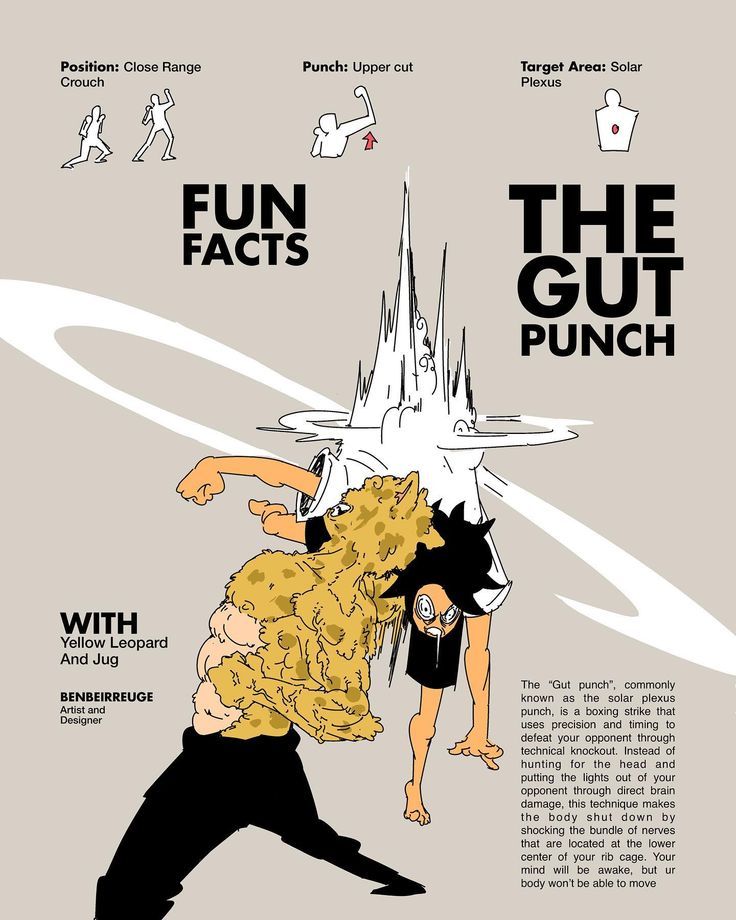
This tutorial uses a dynamic, high-contrast ink illustration to dissect exactly how the uppercut to the solar plexus is executed, why it drops opponents so quickly, and how artists can portray its visual and emotional impact with authenticity and power.
Whether you’re illustrating manga fight panels, storyboarding movie sequences, designing game combat animations, or simply studying real martial technique for more believable action art, understanding the mechanics behind the “gut punch” will elevate your work.
What Makes the Solar Plexus Punch So Effective?
The target is the solar plexus—a dense bundle of nerves (the celiac plexus) located just below the sternum, roughly at the center of the torso where the rib cage meets the soft upper abdomen.
When struck cleanly with precision and timing, the impact:
- Compresses the diaphragm → temporarily paralyzes breathing
- Shocks the vagus nerve network → causes a massive parasympathetic nervous system response
- Triggers an intense vasovagal reaction → heart rate drops, blood pressure falls, muscles lose power
- Results in the classic “lights on, nobody home” effect: the opponent remains conscious but physically unable to move or breathe effectively for several seconds (sometimes longer)
Unlike a head punch that aims for brain trauma or knockout via concussion, the solar plexus strike shuts the body down through the autonomic nervous system. The opponent’s mind is awake, but the body simply refuses to obey.
This physiological reality is why the gut punch is a favorite in fiction: it allows dramatic moments where characters stagger, drop to their knees, gasp, or fold in half without requiring an instant KO.
Correct Technique Breakdown (From the Illustration)
1. Position & Stance
- Close range crouch – The attacker drops their center of gravity low, bending the knees and leaning slightly forward.
- This loads explosive upward power from the legs and hips while staying inside the opponent’s guard.
- Weight transfer: rear leg drives upward like a spring; front leg braces and pivots.
2. Punch Type
- Uppercut – The fist travels on a steep vertical-to-diagonal arc from low to high.
- Palm faces inward or slightly toward the attacker (classic boxing/Muay Thai uppercut grip).
- Elbow stays tight to the body during the wind-up, then explodes upward.
3. Target Zone
- Centerline, just below the xiphoid process (bottom tip of the sternum).
- Aim slightly upward and inward so the fist drives under the rib cage toward the diaphragm and nerve cluster.
4. Delivery Mechanics
- Rotate hips and shoulders violently upward.
- Exhale sharply on impact (many fighters grunt or yell to maximize core tension).
- Follow through: don’t stop at contact—continue driving upward as if trying to lift the opponent off their feet.
5. Visual Impact on the Target
- Body folds forward at the waist (the classic “crumple”).
- Legs buckle or give way.
- Arms often drop limply; head snaps forward or downward.
- Facial expression: eyes wide, mouth open in a gasp, sometimes drool or spit from the sudden diaphragm spasm.
How to Draw the Gut Punch – Artist’s Guide
Composition & Dynamic Flow
- Use strong diagonal or upward-curving motion lines to emphasize the explosive rise of the punch.
- Exaggerate the forward collapse of the receiving body—create a sharp “V” shape with the torso folding over the hips.
- Place the point of impact at a golden ratio sweet spot or near the center of visual weight for maximum drama.
Silhouette & Readability
- Make the punching arm and fist read clearly against the background.
- Contrast the attacker’s extended, powerful posture with the defender’s broken, defensive one.
- Use negative space around the impact zone to draw the eye straight to the solar plexus.
Shock & After-Effects
- Add radiating “shockwave” lines, speed lines, or stylized energy bursts from the point of impact.
- Show sweat drops flying, hair whipping, clothing rippling.
- For manga/anime style: include spit/drool trails, bulging veins, sweat sprays, and exaggerated gasping expressions.
Common Mistakes to Avoid
- Punching too high (sternum instead of below it) → looks like a chest shot, less dramatic.
- Flat, horizontal fist path → misses the upward-driving power of a true uppercut.
- Both characters standing straight → loses the crouch → explode contrast.
- No reaction lines or secondary motion → impact feels static.
Real-World Context & Variations
- Boxing: Classic liver shot (slightly to the side) or straight solar plexus uppercut.
- Muay Thai: “The upward elbow” or knee variation targets the same zone.
- Self-defense: Palm-heel, fist, or even a knee strike to the solar plexus.
- Fiction: Often stylized with massive knockback, slow-motion crumple, or even temporary paralysis for dramatic tension.
Practice Challenge
- Sketch 5 quick thumbnails of a solar plexus uppercut from different angles (side view, ¾ view, low angle worm’s-eye, high angle).
- Draw the same strike once with perfect realistic anatomy, then again in exaggerated anime/manga style.
- Create a 3-panel sequence: wind-up → impact → reaction/fold.
The solar plexus punch is more than just a cool-looking hit—it’s a physiologically sound technique that tells a powerful visual story in a single frame. Master its form, impact, and reaction, and your fight scenes will carry real weight and believability.
Grab your pen, drop into that low crouch on paper, and let the uppercut fly.
Happy drawing—and stay safe out there. 🥊⚡