Impermeable vs. Permeable Pavement: A Comprehensive Guide to Sustainable Driveway Design and Stormwater Management

Description:
In modern residential and landscape design, the choice of paving material for driveways, patios, walkways, and other hardscapes has significant implications for stormwater management, environmental health, property resilience, and long-term maintenance. Traditional impermeable surfaces like conventional concrete and asphalt create rapid runoff, contributing to flooding, erosion, water pollution, and strain on municipal drainage systems. In contrast, permeable (also called pervious or porous) paving allows rainwater to infiltrate directly into the ground, mimicking natural hydrology and offering a sustainable alternative.
This in-depth tutorial compares the two approaches using clear sectional diagrams, explains their mechanisms, highlights key benefits and considerations, and provides practical guidance for homeowners, landscape architects, and developers. The focus is on residential applications, particularly driveways, where permeable systems can transform problem areas into eco-friendly, functional spaces.
How Impermeable Pavement Works (Not Recommended for New Installations)
Impermeable surfaces block water infiltration completely. Rainfall accumulates on the surface and flows as runoff toward the lowest point—often streets, storm drains, or adjacent landscapes.
- Cross-section breakdown:
- Rainfall hits the solid surface (e.g., concrete or asphalt).
- Water sheets off quickly, carrying pollutants (oil, sediments, chemicals) into waterways.
- Minimal infiltration occurs; most water is directed to engineered drainage.
- Underlying layers include a compacted subbase and subgrade, but with no intentional storage or filtration.
- Consequences:
- Increased flood risk during heavy rain.
- Higher peak flows overwhelm storm sewers.
- Reduced groundwater recharge.
- Potential for pooling, ice formation, and hydroplaning.
- Contributes to urban heat island effect and polluted runoff.
This approach is increasingly discouraged in many municipalities due to its environmental impact.
Here are real-world examples of impermeable driveways showing significant surface runoff and pooling during rain:

How Permeable Pavement Works (Highly Recommended)
Permeable systems are engineered to allow water to pass through the surface and into a deep aggregate base for temporary storage and gradual infiltration into the native soil.
- Cross-section breakdown:
- Rainfall penetrates the porous surface (joints in pavers, voids in porous concrete/asphalt, or open grids).
- Water flows into a thick, open-graded subbase (crushed stone reservoir) that stores and slowly releases it.
- Filtration occurs as water percolates through layers, removing pollutants before recharging groundwater.
- Excess (in very heavy storms) may overflow safely or connect to underdrains.
- Key advantages:
- Dramatically reduces runoff volume (often 70–100% infiltration on-site).
- Prevents flooding and erosion.
- Improves water quality by filtering contaminants.
- Recharges groundwater and supports local aquifers.
- Reduces urban heat island effect (cooler surface temperatures).
- Eliminates puddling and ice buildup on the surface.
- Can qualify for green building credits, rebates, or stormwater credits in many regions.
Here are detailed cross-section diagrams illustrating permeable pavement infiltration compared to impermeable runoff:

Real-World Examples of Permeable Driveways in Action
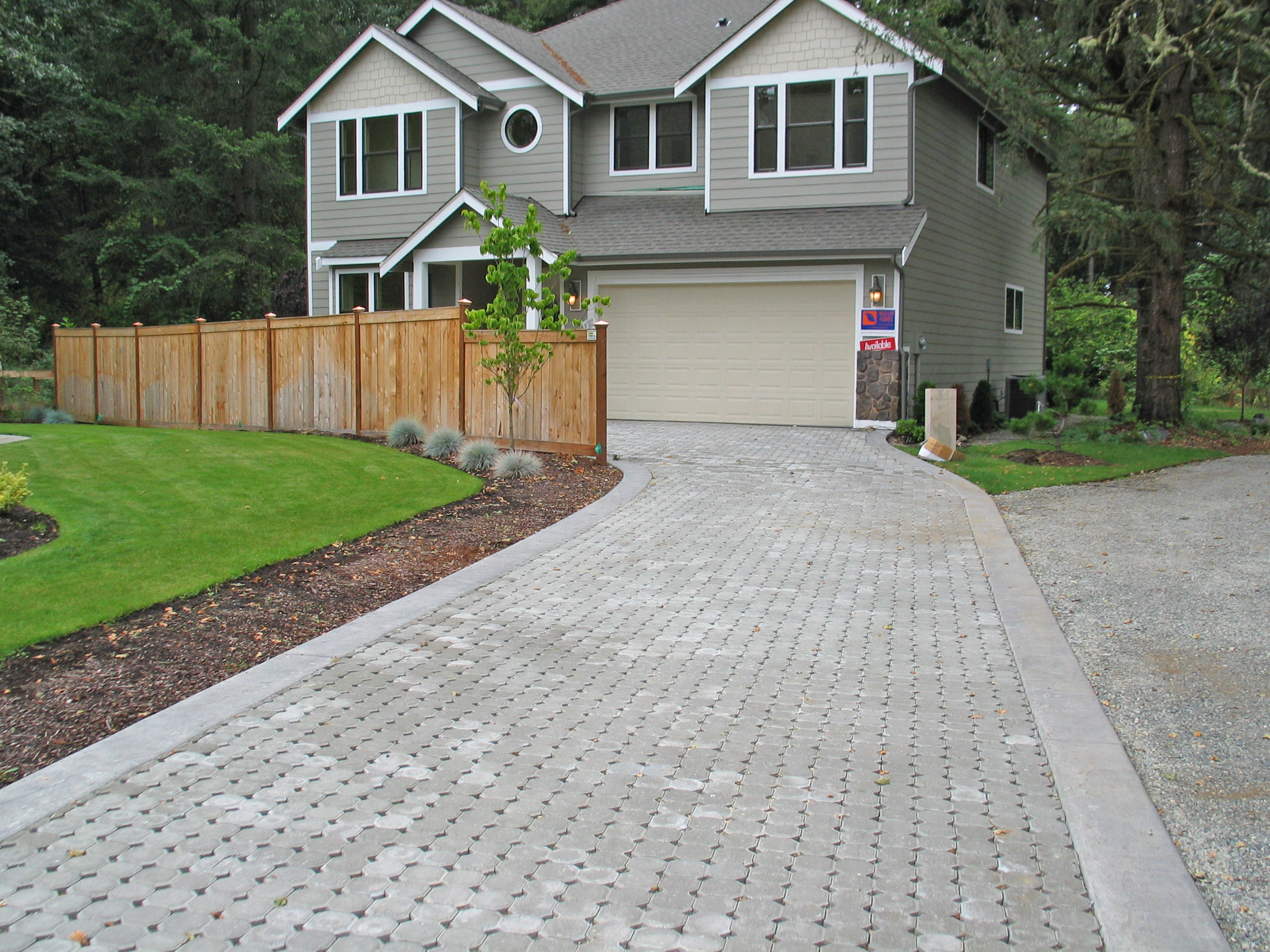
Permeable pavers create attractive, durable surfaces that handle vehicle loads while allowing full infiltration—no visible runoff even after heavy rain.
Residential permeable paver driveways demonstrating excellent drainage and aesthetic appeal:

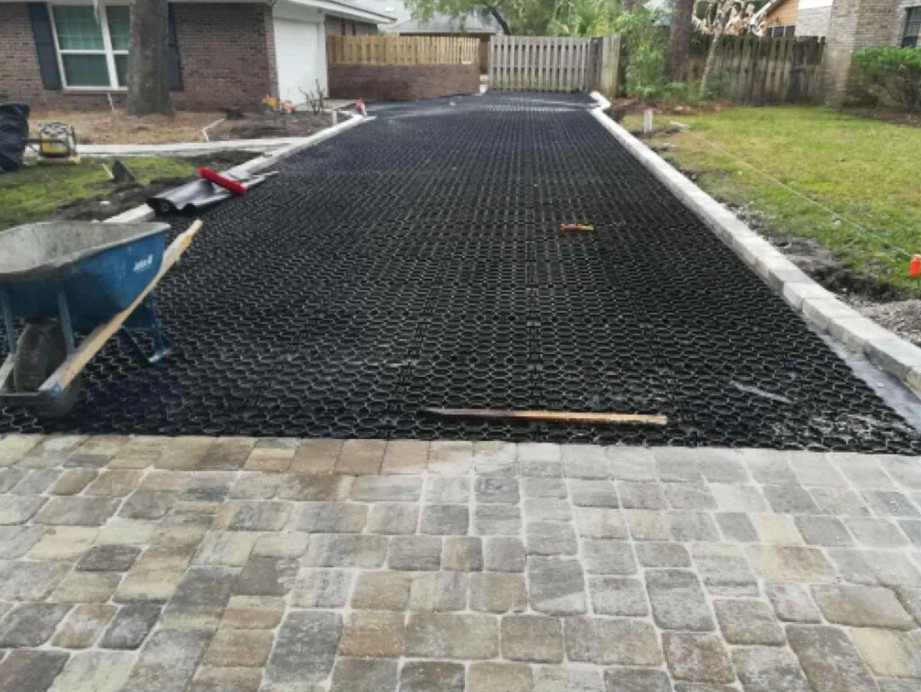
More examples of installed permeable systems showing water soaking in without puddles:

Common Types of Permeable Paving for Residential Use
- Permeable interlocking concrete pavers — Most popular; wide joints filled with permeable aggregate; excellent aesthetics and strength.
- Porous/pervious concrete or asphalt — Solid-looking surface with internal voids; good for larger areas.
- Plastic grid systems (with grass/gravel fill) — Cost-effective, eco-friendly; supports vegetation for a green look.
- Permeable brick or natural stone — Traditional appearance with modern drainage benefits.
Practical Considerations & Best Practices
- Suitability: Ideal for well-drained soils (sands/loams); may need underdrains in clay-heavy areas.
- Installation: Requires deeper excavation (12–24+ inches) for the stone reservoir; professional installation recommended.
- Maintenance: Vacuum sweeping 1–2 times/year to prevent clogging; occasional joint refilling.
- Cost: Higher upfront (20–50% more than traditional), but long-term savings on drainage infrastructure, flooding repairs, and potential rebates.
- Load capacity: Properly designed systems support light to medium vehicles (driveways, patios); consult local codes for specifics.
By choosing permeable pavement, homeowners contribute to sustainable stormwater management, enhance property value, and create more resilient landscapes. In regions like California with increasing rainfall variability and water conservation goals, this approach is especially valuable.
Considering a permeable driveway or patio for your property? Have experience with these systems? Share your thoughts, local regulations, or project photos in the comments—we’d love to hear from you!