Unveiling the Styracosaurus Skeleton: A Comprehensive Guide to Anatomy, History, and Paleontological Significance

Introduction to the Styracosaurus
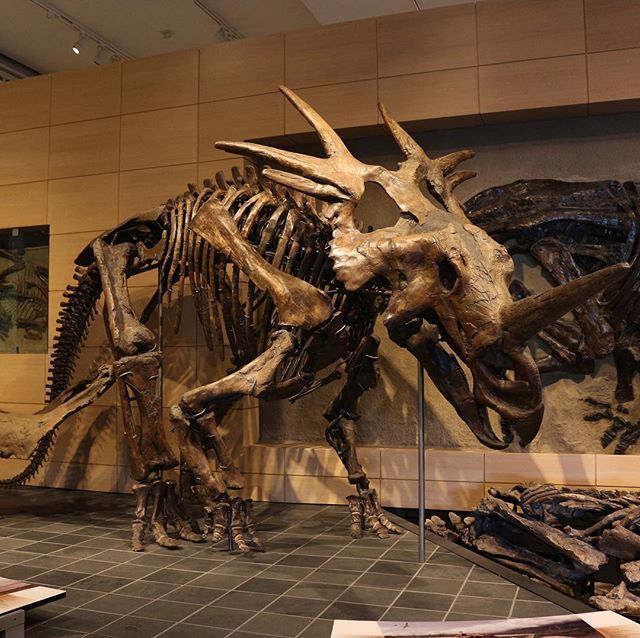
The image captures a stunning mounted skeleton of a Styracosaurus, a remarkable ceratopsid dinosaur from the Late Cretaceous period, displayed in a museum setting with wooden paneling and a tiled floor. This quadrupedal herbivore, whose name translates to “spiked lizard” from Greek, is instantly recognizable by its elaborate frill adorned with long parietal spikes and a prominent nasal horn. In this detailed guide, we’ll explore the Styracosaurus step by step, much like a tutorial on paleontological analysis: starting with visual identification, moving to anatomical breakdown, historical discovery, behavioral insights, and modern significance. Whether you’re a student, enthusiast, or researcher preparing for a museum visit or academic study, this post provides a professional, in-depth resource to appreciate this prehistoric marvel.
Begin by examining the overall posture in the image: the skeleton is posed in a dynamic, forward-leaning stance, emphasizing its robust build and defensive features. Measuring approximately 5.5 meters (18 feet) in length and standing about 1.8 meters (6 feet) tall at the hips, with an estimated weight of up to 3 tons, the Styracosaurus was a mid-sized dinosaur built for stability on four sturdy legs. Its body structure suggests a life of foraging on low-lying vegetation in floodplain environments, where it could use its bulk to deter predators.

Step 1: Analyzing the Skull and Frill – The Defining Features
Like a tutorial in skeletal anatomy, let’s dissect the most iconic part: the skull. Start with the frill, a bony extension from the back of the head, which in Styracosaurus features four to six long parietal spikes, each extending up to 50-55 centimeters (20-22 inches) outward and backward. These spikes, visible prominently in the image arching from the frill’s edge, likely served dual purposes: defense against predators like Tyrannosaurus or display for mating rituals. Note how the frill itself is relatively short compared to relatives like Triceratops, but framed with both long and shorter horns for added intimidation.
Next, focus on the horns: the massive nasal horn, protruding up to 60 centimeters (2 feet) from the snout, dominates the profile in the photo. Unlike the brow horns of Triceratops, Styracosaurus had smaller jugal horns on the cheeks and possibly epoccipitals (smaller spikes) along the frill’s margin. The beak-like mouth, equipped with shearing cheek teeth in continuous dental batteries, indicates a diet of slicing tough plants like ferns and cycads. To analyze this in a museum setting, compare the skull’s robustness to modern analogs like rhinoceroses – hence its nickname, the “Cretaceous Rhinoceros.”
In the image, observe the open jaw structure, revealing the arrangement for grinding vegetation. This setup allowed for efficient processing of fibrous material, a key adaptation for survival in herbivorous niches.
Step 2: Examining the Body and Limbs – Build and Locomotion
Moving down the skeleton as in a step-by-step anatomical tutorial, the vertebral column shows a short tail and a sturdy spine supporting the heavy head. The ribcage, broad and barrel-shaped, protected vital organs while accommodating a large digestive system for fermenting plant matter. The forelimbs, shorter than the hindlimbs, are positioned to bear weight, with broad feet for stability on uneven terrain.
In the displayed pose, the legs are splayed slightly, highlighting the quadrupedal gait. Paleontologists infer a walking speed of about 3-5 km/h (2-3 mph), with potential for short bursts to escape threats. The pelvis and limb bones, visible in the photo, demonstrate strong muscle attachments, suggesting powerful movements despite the animal’s size.
Step 3: Historical Discovery and Fossil Record
To contextualize like a historical tutorial, trace the origins. The first Styracosaurus specimen was discovered in 1913 by Charles M. Sternberg in Alberta’s Dinosaur Provincial Park, Canada, and described by paleontologist Lawrence Lambe as Styracosaurus albertensis. Another notable find came in 1915 by Barnum Brown, who unearthed a nearly complete skeleton now housed in museums. Fossils primarily hail from the Dinosaur Park Formation, dating to around 75 million years ago, in regions that were once lush coastal plains.
Bone beds containing multiple individuals suggest herding behavior, possibly for protection in groups. Reconstructions, like the one in the image, often incorporate casts from various specimens, as complete skeletons are rare. For researchers, studying these involves techniques like CT scanning to reveal internal structures without damage.
Step 4: Behavioral and Ecological Insights
Building on the evidence, envision the Styracosaurus in its environment. As a herbivore, it likely browsed on ground-level flora in herds, using its spikes for intra-species displays or defense against carnivores. The frill may have also functioned in thermoregulation or species recognition.
In a tutorial-style analysis, compare it to relatives: unlike the three-horned Triceratops, Styracosaurus emphasized frill spikes, possibly indicating different evolutionary pressures in its habitat.
Step 5: Modern Significance and Museum Displays
Today, Styracosaurus skeletons like the one photographed are star attractions in institutions such as the American Museum of Natural History (AMNH) or the Canadian Museum of Nature. They educate on extinction events, like the Cretaceous-Paleogene boundary, and inspire STEM fields. For visitors, tips include noting restoration details – many horns are reconstructed due to breakage in fossils.
In conclusion, this Styracosaurus skeleton encapsulates millions of years of evolutionary history, offering endless learning opportunities. Use this guide to deepen your appreciation during your next museum trip or research endeavor.